Transcription of Bridge Resource Family Handbook - okdhs.org
1 1-98-2 Bridge ResourceFamily HandbookStrengthening FamiliesHelping Children Stay ConnectedOklahoma Department of Human ServicesChild Welfare Services1-98-28-21-9 Bridge ResourceFamily HandbookStrengthening FamiliesHelping Children Stay ConnectedAcknowledgementsPortions adapted with permission from the Oklahoma State Department of Health Good Health adapted with permission from the Illinois Department of Children and Family Services Foster Family you would like a copy of this guidebook on a CD, contact the Bridge Family Resource Center at 1-800-376-9729 Copies are available for download at Pub. No.
2 09-351 Revised 7/2014 This publication is authorized by Oklahoma Department of Human Services Director Ed Lake and printed by DHS in accordance withstate and federal regulations at a cost of $16, for 6,109 copies. Copies have been deposited with the Publications Clearinghouseof the Oklahoma Department of Libraries. DHS offices may request copies on ADM-9 (23AM009E) electronic supply of the public may obtain copies by calling 1-877-283-4113 (toll free), by faxing an order to (405) 962-1741, or by downloadinga copy at of ContentsSection to the Oklahoma Department of Human Services1-1 Bridge Resource Family1-1 DHS Practice Standards and Bridge Resource Family Guiding Principles1-2 DHS Policy1-5 DHS Organization1-6 DHS Organizational Chart1-8 DHS Regional Map1-9 DHS Directory County Offices1-10 Section System What is Trauma?
3 2-2 Resilience in Children2-3 Trauma-Focused Treatment2-4 Medication2-5 Trauma-Informed Resources2-5 Self-Care Caregivers Also Need Care2-6 Section 3. Rights and ResponsibilitiesResource Parents Rights3-1 Resource Family Inquiries and Requirements3-3 Resource Parents Roles and Responsibilities3-5 Resource Specialists Roles and Responsibilities3-8 Parental Substitute Authority3-10 Discipline3-10 Religious and Cultural Welfare Investigations3-16 Fair Hearings3-19 Written Plan of Compliance3-19 Section 4. Out-of-Home Care Bridge Resource ParentChildren s Rights4-1 The Sibling Bond4-2 Visitation4-5 Frequently Asked Placement Questions4-8 Considering a Placement4-9 When a Child is Placed4-10 Protecting and Nurturing Children4-11 Ways to Integrate a Child into the Resource Home4-12 Building a Relationship with the Child4-12 Travel and Vacations4-13 Life Books4-13 When a Child Leaves4-14 Section of the Team5-1 Family Team Meeting5-4 Initial Meeting5-5 Reassessment5-5 Section Kinship ResourcesFamily Assessment6-1 Pre-Service and Temporary Assistance for Needy Families6-2 Child Care6-2 Discipline
4 In Kinship Resources6-2 Kinship Training Stipend6-2 Kinship Start-Up Stipend6-3 What You Need to Know About Becoming a Bridge Kinship Resource6-3 Section AssistanceMaintenance Payment7-1 Claims7-1 Difficulty of Care7-2 Social Security Survivors Benefits and Supplemental Security Income Benefits7-4 Section Family TrainingPre-Service Training8-1 Expiration of Pre-Service Training8-1In-Service Training8-1 Books and Video Training8-1 Online Training8-1 Foster Parent College8-1 The Learning Management System8-2 Other Training Opportunities8-3 Section Procedures/LegalChild s Grievance9-1 Resource Parent s Grievance9-1 Foster Care Mediation9-2 Bridge Resource Parent Suspected Abuse or Neglect9-3 Legal Liability of Resource Parents9-3 Civil Law9-3 Criminal Law9-3 Child Passenger Restraint Law9-4 Section ServicesChild Care10-1 Informal Arrangements or Babysitting10-1 Alternate Caregiver10-2 Respite10-2 Resource Parent Liability Insurance10-3 Foster Parent Association and Support Groups10-3 Section CourtAbuse and Neglect Referral Process11-1 Juvenile Court Process11-2 Emergency Custody Hearing11-2 Adjudicatory Hearing11-2 Dispositional Hearing11-2 Review Hearing11-2
5 Permanency Hearing11-2 Resource Parent Participation11-3 Permanency Planning Report11-3 Notice of Removal11-3 Termination of Parental Rights11-3 Adoption and Safe Families Act11-4 Multi-Ethnic Placement Act of Child WelfareAbout IWCA12-1 Section Education Services13-1 Rights of Children with Disabilities13-2 Evaluation13-2 Individualized Education Program13-3 Home School13-3 SoonerStart13-4 Section CareSoonerCare14-1 Child Health Check-Up14-2 Records14-3 Psychotropic Medications14-3 Medical Consent14-3 Medical Emergencies14-4 Financial Responsibility14-4 Transportation14-5 Health-Related Responsibilities14-6 Universal Precautions14-6 Proper Handwashing Procedures14-7 Resources14-8 HIV14-8 Signs of a Child s Temperature14-10 Immunization Requirements14-11 Vaccine-Preventable Diseases14-12 First Aid Kit14-14 Medical Library14-15 First Aid for Poisoning14-24 Nutrition Healthy Eating Tips14-26 Fitness14-29 Oral Health Care14-31 Section DevelopmentDiscovering Your Child s Developmental Needs15-1 Developmental Checklists Birth to 1815-1 Self-Esteem15-17 Separation and Loss15-18 Section HealthCommon Reactions to Placement16-1 Stages of Grief16-2 Tips to Help Decode
6 A Child s Behavior16-4 Biting in the Toddler Years16-5 Toilet Learning16-7 Sexual Behavior of Children16-8 Caring for Children from Chemically Dependent Families16-11 Talking About Substance Abuse16-12 Runaway or Abducted Children16-16 Section 17. Parenting Pregnant YouthSpecialized of Legal Parents and Father17-1 Counseling17-1 Parenting the Child17-1 Rights of Pregnant and/or Parenting Youth17-2 Section Living ProgramDHS Independent Living Program18-1 Independent Living: A Brief History18-1 Independent Living Philosophy18-2 Living Service Matrix18-3 Assessment and Service Planning18-5 Educational Opportunities18-5 Youth Development Funds18-7 Independent Living Youth Contingency Funds18-7 Incentive Payments18-7 Yes I Can Alumni Network18-8 The University of Oklahoma National Resource Center for Youth Services18-8 Things You Can Do to Help Youth Prepare for Independent Living18-9 Section Post-Adoption Services ProgramDetermination of Special Needs19-1 Funding Sources19-2 Adoption Assistance Benefits19-3 Duration of Benefits19-4 Application and Amount of
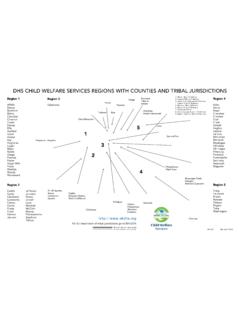
7 Adoption Assistance19-5 Frequently Asked Questions19-5 Resource Family Information Chart19-7 Reuniting Families19-9 Confidential Intermediary Search Foster Parent Resources20-1 Oklahoma Tribes20-1 General Resources20-1 Health and Development20-2 Child Care20-2 Education20-3 Tax Deduction20-3 Support Services20-3 Welcome to OKDHSTab 211-07-08 Section 1. WelcomeWelcome to the Oklahoma Department of Human Services Bridge Resource Family DHS Practice Standards and Bridge Resource Family Guiding Principles DHS PolicyDHS OrganizationDHS Organizational Chart DHS Regional Map DHS Directory County OfficesWelcome1-98-2 Welcome to the Department of Human ServicesWelcome to the Oklahoma Department of Human Services (DHS) Foster Care Program.
8 Thank you so much for committing to making a difference in a child s life. You are vital to our work with families in crisis. Foster Family care means an essential temporary Child Welfare (CW) service for a child and parents, legal guardian, or custodian when the child s safety cannot be ensured in his or her own home due to the risk of child abuse, neglect or special circumstances necessitating out-of-home care on a temporary basis in a home away from the child s parents, legal guardian or custodian. The feelings of loss and disconnection families experience as a result of being separated can remain with children and parents forever.
9 Foster Family care services are aimed at turning the losses into gains and maintaining essential connections for children and families, thereby making the connections stronger than before. When this cannot safely be accomplished, identifying an alternate permanent plan for each child s care is need to be prepared for the changes a child placed in your home will make in your daily lives, and we hope this Handbook will be a helpful guide in your foster parent journey. Updates will be sent as Child Welfare Services is taking a close look at how we work with children and families. We know that in order for children to achieve permanency as quickly as possible, we must honor, respect and learn from families.
10 We must also listen to the voices of children and include the people most important to the child in making decisions that affect the child and the Family . For children placed in out-of-home care this can sometimes be a challenge. The Bridge practice was developed and is being utilized when placing children in out-of-home care. It is called Bridge because bridges provide a connection from one place to another, and that is what we want to do connect children and families. For years, families who opened their hearts and homes to children in need of out-of-home care were referred to as foster families and their homes referred to as foster homes.