Transcription of Fibrous Glass Dust (CAS#: 65997-17-3) 15 mg/cuM …
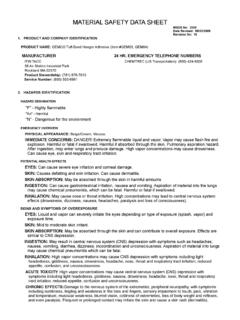
1 Material Safety Data Sheet May be used to comply with OSHA's Hazard Communication Standard, 29 CFR Standard must be consulted for specific requirements. Department of Labor Occupational Safety and Health Administration (Non-Mandatory Form) Form Approved OMB No. 1218-0072 IDENTITY (As Used on Label and List Style) 2025HC Note: Blank spaces are not permitted. If any item is not applicable, or no information is available, the space must be marked to indicate that. Section I Manufacturer's Name IMG Emergency Telephone Number 714-771-2401 Address (Number, Street, City, State, and ZIP) Telephone Number for Information 714-771-2401 NA Date Prepared May 10, 2012 NA Signature of Preparer (optional) Section II - Hazardous Ingredients/Identity Information Hazardous Components (Specific Chemical Identity.)
2 Common Name(s)) OSHA PEL ACGIH TLV Other Limits Recommended %(optional) Fibrous Glass Dust (CAS#: 65997-17-3) 15 mg/cuM 10 mg/cuM 3 fibers/cc (NIOSH) 5mg/cu M- respirable Section III - Physical/Chemical Characteristics Boiling Point N/A Specific Gravity (H2O = 1) Vapor Pressure (mm Hg) N/A Melting Point >1000 F Vapor Density (AIR = 1) N/A Evaporation Rate (Butyl Acetate = 1) N/A Solubility in Water N/A Appearance Light Tan or White Fabric Section IV - Fire and Explosion Hazard Data Flash Point (Method Used) 250% C by TOC Flammable Limits LEL N/A UEL N/A Extinguishing Media Water, carbon dioxide, or dry chemical Special Fire Fighting Procedures.
3 Thermal decomposition of fiber coating may produce an Irritating mixture of smoke and fumes. Fire fighters should wear full protective gear including NIOSH approved self-contained breathing apparatus. Unusual Fire and Explosion Hazards NONE (Reproduce locally) OSHA 174, Sept. 1985 Section V - Reactivity Data Stability Unstable Conditions to Avoid None Known Stable X Incompatibility (Materials to Avoid) Strong oxidizing agents Hazardous Decomposition or Byproducts Carbon monoxide, carbon dioxide Hazardous Polymerization May Occur Conditions to Avoid None Known Will Not Occur X Section VI - Health Hazard Data Route(s) of Entry: Inhalation? yes Skin? no Ingestion?
4 N/A Health Hazards (Acute and Chronic) See attachment Carcinogenicity: NTP? No IARC Monographs? No OSHA Regulated? No Signs and Symptoms of Exposure Skin, Eye ,and Respiratory Tract Irritation Medical conditions generally Aggravated by exposure: Generally aggravated by exposure: any condition generally aggravated by mechanical irritants in air or on skin. Emergency and first aid procedures :Eye Contact: Flush with water for 15 minutes-get medical assistance if irritation persists. Skin Contact: Wash with soap and water after contact. Inhalation: Drink water to clear throat, blow nose to evacuate fibers. Section VII - Precautions for Safe Handling and Use Steps to Be Taken in Case Material is Released or Spilled: Prevent the spread of fiberglass dust & avoid dust generation conditions.
5 Those involved in clean up of particulates should use appropriate personal protective equipment. (See section VIII). Vacuum clean dusts. If sweeping is necessary, use a dust suppressant. Waste Disposal Method: In most cases, woven fiberglass scrap can be disposed of in a sanitary landfill in accordance with Federal, State, & local regulations. Check with local authorities any questions concerning disposal. Precautions to Be taken in Handling and Storing: Store and use in a manner that will prevent airborne particulates in the workplace. Other Precautions None Known Section VIII - Control Measures Respiratory Protection (Specify Type) where dust level exceeds the TLV, use NIOSH approved respirator to protect against nuisance dusts. Ventilation Local Exhaust Recommended for processing machinery where dust generation is apparent.
6 Special Not normally required. Mechanical (General)Yes, where local exhaust ventilation is not feasible. Other Not normally required. Protective Gloves and barrier creams if necessary. Eye Protection Safety glasses with side shield goggles. Other Protective Clothing or Equipment Work aprons or smocks are recommended. Wear loose fitting long sleeved clothing. NIOSH approved air supplied or self contained respirator. Work/Hygienic Practices Wash thoroughly after work. For non routine & emergency situations we recommend laundering work clothes separately and wiping out the washer at the end of every cycle. * : 1986 - 491 - 529/45775