Transcription of LEICESTERSHIRE AUTISM OUTREACH SERVICE (A …
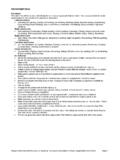
1 LEICESTERSHIRE AUTISM OUTREACH SERVICE (A Social Skills programme for Students with Asperger Syndrome in Mainstream Secondary Schools) AUTISM OUTREACH SERVICE Specialist Teaching Services Room 600, Rutland Building County Hall Glenfield LEICESTERSHIRE LE3 8RA SERVICE Manager: George Thomas Telephone: 0116 305 9400 e-mail: Guidelines for setting up a Friendship programme The Friendship programme is aimed at students with AS within mainstream secondary placements. Ideally the students should be Year 8 or above, but Year 7 students could take part in the Summer Term. Some of the issues discussed in the programme require a level of maturity that might not be seen in younger students. It is important that the group feel comfortable with each other so it is useful to select students from one tutor group who are familiar with each other.
2 Group Dynamics: Maximum of 6 students (even number preferable) cohort made up of ASD students (maximum of 2), other students with social and communication needs; and at least 1 positive role model who is able to contribute to discussions and behave in an appropriate and mature way during the sessions. The school will need to send a letter out to the parents of selected students which outlines the intentions of the programme and seeks their permission for the inclusion of their child. An example of this is enclosed. A space will need to be identified, which is big enough to allow the students to move around freely, isn t overly cluttered with furniture, but has access to chairs, table space and a flip chart, if possible.
3 This space will need to be available each week. This is essential, to allow the programme to run with consistency. The Friendship programme is a 10-week course that requires an hour for each session. It will be important to identify a slot on the timetable that will allow for the students to be released from an activity PHSE, PE for the duration of the programme . The person running the group will require the support of one member of staff, whose role will be to manage students' behaviour, assist with discussions, take part in role-play, and support the students in their activities. This person would need to have a sound understanding of ASD, know the focus student/s well; and feel confident and able to take an active role in the programme .
4 FRIENDSHIP programme Session One Introduction: Adult introduces themselves and the concept of the stress line lay the rope out on the floor with the flashcards of stressed and calm at either end. Stand at a specific point on the rope to symbolise how you are feeling, and encourage the students to do the same. Adult introduces the programme The focus is on how we get on with others ways to make and keep friends, how we sort out problems with friends when they happen Practicalities of the group when, where, how many weeks, outline of sessions The sorts of things the group will be doing games, talking, listening, role-play, relaxation. Introduce Star Chart System Explain the star chart system each person makes a secret vote for the person in the group whom they feel showed the qualities of a good friend, during that friendship session.
5 The person with most votes receives a friendship star, and the person with the most stars at the end of the 10 week programme receives a special prize. (Schools could look at how they could support this perhaps a 5 gift voucher from WH Smith?) Warm Up Game (see list) Balloon Game Chat Time: Ground rules Discuss general school rules who makes them, why we have them etc Group to devise a list of 4/5 rules which they all agree to follow each week. Use bank of suggestions to help them to think of their own choices of rules (flashcards ideas for rules). Display the rules visually on the wall each week. Encourage the group to think about an agreed consequence for breaking the rules.
6 Advise the group that you will make the decisions about behaviour management when someone needs to take time-out. Advise the group that, if at any time someone feels uncomfortable with a discussion or activity, they may choose to sit and watch. Activity: Ice Breakers Group awareness standing in order of a) height, b) birthdays, c) initial letter of names, door numbers, the time they got up that morning etc. (Explain the parallel with games some involve looking, others good listening, sharing information, asking questions etc) Mime sharing information about self with the group favourite activity, favourite food. Chat time: (carry this over to Week 2 if short of time) Brainstorm the qualities of a good friend display on flipchart each week.
7 For example: Kind Caring Trustworthy Good at sharing Good listener Understand your thoughts and feelings. Reflection Time: Ask the group to turn their chairs to face out of the circle. Turn the relaxation music on and encourage the students to think about today s session. Ask them to reflect on who they felt showed the qualities of a good friend, in this session, and how they did that. Treats or Sweets Session Two (Ensure the rules, consequences and qualities of a good friend are displayed on the wall) Warm Up Game Name 6 Chat Time: Go over the rules, consequences and qualities of a good friend. Remind students of the voting system. Identify what makes friendships fun: Shared interests Shared enjoyment of activities Similar sense of humour Feel good about self in friend's company - relaxed, confident, secure Time to talk with someone who thinks about the world in a similar way to you Brainstorm the positive comments you can make to a friend when playing a game (flashcards comments and their meanings): For example: 'This is great fun!
8 ' (Showing enthusiasm) 'I'm really enjoying this' (Sharing positive feelings) 'Come on, Tim - you can do it!' (Encouraging others) 'Well done, Ann - you did really well!' (Celebrating another's success) 'I didn't do very well - never mind - it's only a game' (Not getting stressed) 'Don't worry Matt - you tried your best' (Boosting someone who hasn't done well) 'It's good to see John and Dan's team winning' (Allowing others to succeed) 'Do you want to go first or second?' (Being a good team player) Ask the group to pair comments with their meanings. Activity: Fan the Kipper Step One: Pair up - one of each partnership to stand at opposite ends of the room from each other. Kipper to be fanned by one partner, across the room to the other partner.
9 This partner then takes over and fans the kipper back to the start. This part of the activity is a competition - to see which partnership wins the race. Step Two: As a whole group - split the group so that half the students are at one end of the room and half at the other. Kipper to be fanned by player 1 across the room to player 2 who fans it back to player 3 etc. The group have a time limit to see how quickly they can complete the task as a team - this time limit will depend on group size. The group could complete the task again to see if they can beat their previous time. An alternative to Fan the Kipper could be a Domino race - setting up the dominoes across the room so that when the first one is knocked over, the whole line falls down.
10 Again this could be done in pairs as a race, and then as a whole group against the clock. As the game is played, encourage the students to make positive comments about their partner/rest of group's contributions to the game and about how they themselves are feeling. Reflection Time: Ask the group to turn their chairs to face out of the circle. Turn the relaxation music on and encourage the students to think about today s session. Ask them to reflect on who they felt showed the qualities of a good friend, in this session, and how they did that. Star Chart Treats or Sweets Session Three (Ensure the rules, consequences and qualities of a good friend are displayed on the wall) Warm Up Game Fruit Salad Chat Time: Discussion on Circles of Friendship and the idea that friendships are flexible: Use own photos to introduce family and flexibility of friendships.