Transcription of BABESIOSIS IN PIT BULL TERRIERS - ProtaTek …
1 BABESIOSIS IN PIT bull TERRIERS By Chris Cook, RVT ProtaTek Reference Laboratory There are two species of Babesia which may affect dogs: Babesia canis and Babesia gibsoni. While any breed of dog is susceptible to infection with Babesia spp., infections appear to be more endemic among Greyhounds and Pit Bulls. Pit bull TERRIERS and related breeds are more prone than any other breed to be infected with, and serve as carriers of, Babesia gibsoni. Although canine BABESIOSIS affects dogs worldwide, in the United States B. canis and B. gibsoni are more prevalent in southern and central, and eastern states, respectively. However, due to the transient nature of people and the transfer of dog ownership, there is no state unaffected. In some countries where BABESIOSIS is not known to occur, a pre-export negative B. canis and/or test is required prior to allowing entry How does infection occur? In nature, Babesia spp.
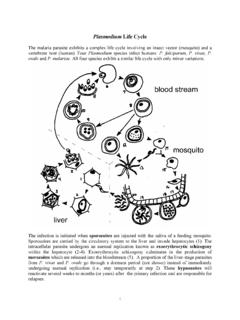
2 Is transmitted primarily by ticks. Rhipicephalus sanguineous (brown dog tick) is responsible for the transmission of B. canis whereas R. sanguineous and Dermacentor spp. of ticks are believed to transmit B. gibsoni. An infected tick must feed on a dog for 2-3 days to transfer the babesia organism. Once this transfer occurs, the babesia organism continues to develop as it moves through the blood stream and invades red blood cells (rbc). When the organism matures in the rbc, that cell will rupture and release the organisms into the blood stream to infect additional rbcs. Although BABESIOSIS is primarily considered to be a tick-borne disease it can also be transmitted by dog bites, blood transfusions, contaminated needles or surgical instruments. In utero transmission from dam to pups may also occur. Dog bites and in utero transmission are most likely the primary means by which B. gibsoni is perpetuated within the Pit bull breeds.
3 Clinical signs and pathology Clinical BABESIOSIS is generally most severe in puppies and dogs less than 2 years of age. Clinical signs such as weakness, pale color, fever, anorexia, enlarged lymph nodes, depression, enlarged spleen and/or liver and a rapid pulse may be exhibited by some dogs affected with BABESIOSIS . The spleen serves as a major source in the immune defense against babesia infections as it is directly involved in sequestration and destruction of the organisms. Thus, the disease can be devastating in dogs that have had a splenectomy (spleen removed) or have an autoimmune disorder, thereby compromising their natural immune defenses. The anemia which may develop is due to the direct parasitic destruction of rbcs or by the consumption of infected rbcs by the immune system. In many cases, there is a marked decrease in platelets. In some cases, icterus and elevated liver enzymes and bile acids will develop, suggesting liver disease which may be directly or indirectly due to the babesia infection.
4 Affected dogs may develop an acute onset of neurologic signs which may include muscle tremors, incoordination, hind limb paralysis, nystagmus, seizures, stupor and coma. The onset of cerebral BABESIOSIS is due primarily to the clogging of small capillaries of the brain with infected rbcs which attach by receptors to the endothelial cells lining the capillaries resulting in lowered blood flow and hemorrhages. While many normal healthy dogs will have no outward symptoms at all, these dogs can serve as carriers of infection and will spread the disease to other dogs via tick transmission, dog bites and in utero transmission. During times of stress, due to other disease processes or mental situations, carrier dogs may also have a relapse of the disease and exhibit clinical signs. Dogs diagnosed with autoimmune hemolytic anemia or liver disease should have babesia on the list of rule outs as to the cause.
5 How is Babesia diagnosed? In dogs acutely infected with babesia, organisms may be observed on a blood smear, especially from a blood specimen obtained from a capillary source (ear, toenail). If babesia organisms are found, the patient is confirmed infected. However, the organism can be hard to find and may rarely be found in samples from chronically infected dogs or carrier dogs that aren't showing symptoms of the disease. If organisms cannot be detected, there are other methods for testing. The indirect fluorescent antibody (IFA) test is performed on serum or plasma and is used to establish antibody titers to B. canis and B. gibsoni. However, if it is extremely early in the disease process or in an animal that is immunosuppressed, antibodies may not be present. Antibody titers may be measured at varying magnitudes in asymptomatic carrier dogs such as affected Pit Bulls. A titer is a measurement of the amount or concentration of antibodies in a blood sample and can be helpful in determining whether medical treatment should be a consideration in carrier dogs.
6 In general, the higher the titer, the greater the chances that an asymptomatic carrier dog actually has a circulating parasitemia and is more capable of transmitting the infection under the right conditions. Due to the endemic status within the breed, all Pit Bulls and related breeds should be routinely screened for infection with babesia, particularly B. gibsoni, especially female Pit Bulls intended for breeding. In addition, any blood donor dog should be tested prior to joining a donor program and periodically during their blood donor career. The IFA test for B. canis and B. gibsoni is available through specialized diagnostic laboratories, such as ProtaTek Reference Laboratory. Molecular diagnosis of Babesia spp. infection in dogs via polymerase chain reaction (PCR) of whole blood has become available. This is an extremely sensitive test that can be used to diagnose BABESIOSIS and distinguish between the different species.
7 However, there have been issues with false positive/negative results. To avoid this, blood samples should be collected early in the course of clinical disease, before medications have been started and submitted to an experienced, quality lab. Treatment Canine BABESIOSIS is treatable, however, not necessarily curable ( chemotherapy can reduce/ eliminate symptoms but the dog may still test positive and may remain as a permanent carrier). Infections caused by Babesia canis are more readily cleared than those caused by B. gibsoni. Doxycycline and Clindamycin are affordable, generally well tolerated treatment options for dogs with low to moderate titers against B. canis and showing mild clinical signs of BABESIOSIS . However, these drugs will not clear the infection. In the US the "big gun" treatment is Imidocarb Dipropionate ( Immizol). The drug is usually administered in 2 injections (given 2 weeks apart).
8 The drug is most effective in clearing infections caused by B. canis. Although the drug is beneficial in treating clinical disease caused by B. gibsoni, it is less effective in clearing the infection caused by this agent. Side effects are generally of short duration and may include, but are not limited to: muscle tremors, hypersalivation, elevated heart rate, shivering, fever, facial swelling, tearing of the eyes, restlessness and bowel evacuation. The injection is expensive and painful. It should be given deep into the muscle and administered only by qualified veterinarians. Pre-treatment with an injection of atropine may help alleviate or prevent potential side effects. In dogs that are exhibiting low antibody titers and are asymptomatic, this treatment is not worth the risks and side effects. Prevention Tick control. Carefully remove ticks asap. If blood transfusion is needed, confirm that blood is from a babesia negative dog.
9 (as well as other tick- borne diseases). Prevent potential for dog to dog bites, dog fights. Avoid situations that involve contaminated needles/surgical instruments. Do not breed female dogs seropositive for babesia, B. gibsoni in particular. Thank you for choosing ProtaTek Reference Lab. If you have any questions, please do not hesitate to give us a call at Updated 16 September 2008