Transcription of MATERIAL SAFETY DATA SHEET 1. Product and …
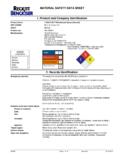
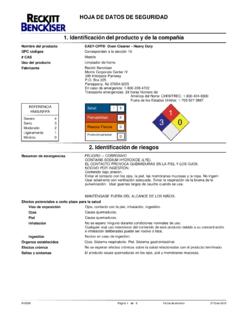
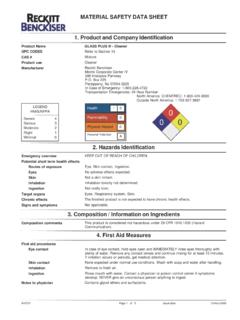
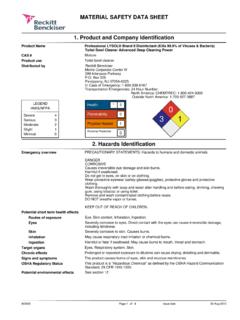
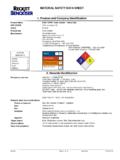
1 MATERIAL SAFETY DATA SHEETP roduct Product and Company IdentificationspaceUPC CODES Refer to Section 16spaceCAS #MixturespaceProduct useAntisepticspaceManufacturerReckitt Benckiser Healthcare LTDD ansom LaneHull, England HU8 7 DSIn Case of Emergency: 1-800-888-0192 Transportation Emergencies: 24 Hour Number: North America: CHEMTREC: 1-800-424-9300 Outside North America: 1-703-527-3887spacePersonal ProtectionPhysical HazardFlammabilityHealthB032/MinimalSlig htModerateSeriousLEGEND43210 Severe320 HMIS/NFPA spaceEmergency overviewWarnings: For external use not use: in the eyes or over large areas of the a doctor before use if you have: deep wounds or puncture wounds, animal bites orserious use and ask a doctor if: irritation, sensitization, or allergic reaction occurs. Thesemay be signs of a serious use and ask a doctor if: the condition gets worse or lasts more than one OUT OF REACH OF Hazards IdentificationspaceRoutes of exposurePotential short term health effectsEye, Skin contact, Inhalation, cause eye irritation.
2 Avoid contact with use (as an antiseptic) if rash or irritation not use undiluted on external use organsEyes. Respiratory system. effectsThe finished Product is not expected to have chronic health and symptomsEye irritationspaceCAS # - 1088-04-0 Ingredient(s) - 108002-09-3 Pine oil10 - Composition / Information on IngredientsspacePage 1 of 7#2014726-Mar-2010 Issue dateEye contactFirst aid proceduresIf splashed in eyes, immediately rinse eyes with plenty of water, remove any contactlenses and continue rinsing eyes for at least 15 minutes. Consult a physician or getmedical First Aid MeasuresspaceSkin contactDiscontinue use (as an antiseptic) if rash or irritation to fresh air. If irritation persists or there is any trouble breathing, get immediatemedical swallowed, get medical help or contact a poison control centre right not induce to physicianContains pine adviceIf you feel unwell, seek medical advice (show the label where possible).
3 Ensure thatmedical personnel are aware of the MATERIAL (s) involved, and take precautions to protectthemselves. Show this SAFETY data SHEET to the doctor in attendance. Keep out of reachof propertiesCombustible by OSHA Fire Fighting MeasuresspaceSuitable extinguishing mediaExtinguishing mediaDry chemical. Foam. Carbon extinguishing mediaNot availablespaceSpecific hazards arising fromthe chemicalProtection of firefightersNot availablespaceProtective equipment forfirefightersFirefighters should wear full protective clothing including self contained combustion productsMay include and are not limited to: Oxides of to mechanicalimpactExplosion dataNot availablespaceSensitivity to static dischargeNot availablespacePersonal precautionsKeep unnecessary personnel away. Do not touch or walk through spilled MATERIAL . Donot touch damaged containers or spilled MATERIAL unless wearing appropriate protectiveclothing. Keep people away from and upwind of Accidental Release MeasuresspaceMethods for containmentStop leak if you can do so without risk.
4 Prevent entry into waterways, sewers,basements or confined for cleaning upBefore attempting clean up, refer to hazard data given above. Small spills may beabsorbed with non-reactive absorbent and placed in suitable, covered, labelledcontainers. Prevent large spills from entering sewers or waterways. Contact emergencyservices and supplier for advice. Never return spills in original containers for external use only. Avoid contact with eyes. Discontinue use (as an antiseptic) if rashor irritation occurs. Do not use undiluted on skin. Use good industrial hygiene practicesin handling this MATERIAL . When using do not eat or Handling and StoragespaceStorageKeep out of reach of in a closed container away from incompatible away from heat, open flames or other sources of at temperatures between 20 and 25 C (68-77 F).spacePage 2 of 7#2014726-Mar-2010 Issue dateExposure limitsIngredient(s)ChloroxylenolExposure LimitsNot establishedACGIH-TLVOSHA-PELNot establishedIsopropanolTWA: 200 ppmACGIH-TLVSTEL: 400 ppmOSHA-PELTWA: 400 ppmPine oilACGIH-TLVMist.
5 5 mg/m3 OSHA-PELNot Exposure Controls / Personal ProtectionspaceEngineering controlsGeneral ventilation normally / face protectionPersonal protective equipmentAvoid contact with handling in large quantities or responding to emergency situations, the use ofappropriate eye protection is responders should wear full eye and face protectionMay cause mild skin irritation after prolonged or repeated responders should wear impermeable and body protectionNo special requirements under normal use responders should wear impermeable clothing and footwear whenresponding to a situation where contact with the liquid is protectionNot normally required under normal use responders should wear self-contained breathing apparatus (SCBA) to avoidinhalation of vapours generated by this Product during a spill or other hygiene considerationsWashing with soap and water after use is recommended as good hygienic practice toprevent possible eye irritation from hand Physical and Chemical PropertiesspaceColorBrownspaceFormLiquid spaceOdorCharacteristic Pine / PhenolicspaceOdor thresholdNot availablespacePhysical (Basic)spaceMelting pointNot availablespaceFreezing pointNot availablespacePour pointNot availablespaceBoiling pointNot availablespaceFlash F (40 C) TagliabuespaceEvaporation rateNot availablespaceFlammability limits in air, lower, %by volumeNot availablespaceFlammability limits in air, upper, %by volumeNot availablespaceVapor pressureNot availablespacePage 3 of 7#2014726-Mar-2010 Issue dateVapor densityNot availablespaceSpecific (Water =1)spaceRelative densityNot availablespaceOctanol/water coefficientNot availablespaceSolubility (H2O)
6 MisciblespaceAuto-ignition temperatureNot availablespaceVOC (Weight %)Not availablespaceViscosityNot availablespacePercent volatileNot availablespaceChemical stabilityStable under recommended storage Stability and ReactivityspaceConditions to avoidDo not mix with other materialsAcids. decomposition productsMay include and are not limited to: Oxides of of hazardous reactionsHazardous polymerization does not analysis - LC50 Ingredient(s) mg/l/4h ratIsopropanol16970 mg/l/4h ratPine oilNot Toxicological InformationspaceComponent analysis - Oral LD50 Ingredient(s)ChloroxylenolLD503830 mg/kg ratIsopropanol4396 mg/kg ratPine oil3200 mg/kg ratspaceEyeEffects of acute exposureMay cause eye irritation. Avoid contact with use (as an antiseptic) if rash or irritation not use undiluted on external use finished Product is not expected to have chronic health effectsThe finished Product is not expected to have chronic health - Threshold Limit Values - CarcinogensIsopropanol67-63-0A4 - Not Classifiable as a Human CarcinogenIARC - Group 3 (Not Classifiable)Isopropanol67-63-0 Monograph 71 [1999]; Supplement 7 [1987]; Monograph 15 [1977]CarcinogenicityThe finished Product is not expected to have chronic health finished Product is not expected to have chronic health effectsThe finished Product is not expected to have chronic health finished Product is not expected to have chronic health MaterialsNot availablespacePage 4 of 7#2014726-Mar-2010 Issue dateEcotoxicity - Freshwater Algae DataIsopropanol67-63-096 Hr EC50 Desmodesmus subspicatus: >1000 mg/L.
7 72 Hr EC50 Desmodesmussubspicatus: >1000 mg/LEcotoxicity - Freshwater Fish Species DataChloroxylenol88-04-096 Hr LC50 Oncorhynchus mykiss: mg/L [static]; 96 Hr LC50 Lepomismacrochirus: mg/L [static]Isopropanol67-63-096 Hr LC50 Pimephales promelas: 9640 mg/L [flow-through]; 96 Hr LC50 Pimephalespromelas: 11130 mg/L [static]; 96 Hr LC50 Lepomis macrochirus: >1400000 g/LEcotoxicity - Water Flea DataChloroxylenol88-04-048 Hr EC50 Daphnia magna: - 9 mg/L [Static]Isopropanol67-63-048 Hr EC50 Daphnia magna: 13299 mg/LPine oil8002-09-348 Hr EC50 Daphnia magna: 17 - 28 mg/L [Flow through]EcotoxicityComponents of this Product have been identified as having potential Ecological InformationspaceEnvironmental effectsNot availablespaceAquatic toxicityNot availablespacePersistence / degradabilityNot availablespaceBioaccumulation / accumulationNot availablespacePartition coefficientNot availablespaceMobility in environmental mediaNot availablespaceChemical fate informationNot availablespaceWaste codesNot Disposal ConsiderationsspaceDisposal instructionsReview federal, provincial, and local government requirements prior to from residues / unusedproductsNot availablespaceContaminated packagingNot availablespaceUN/ID No.
8 UN Department of Transportation (DOT)Not Regulated by ground transport - See 49 CFR (F) .14. Transport InformationspacePage 5 of 7#2014726-Mar-2010 Issue dateTransportation of Dangerous Goods (TDG - Canada) Not Regulated by ground transport - See TDG Part spaceIMDG (Marine Transport) UN 1993, Flammable Liquid (Isopropyl alcohol, Pine Oil), Class 3, PG III, Limited Quantity, (Flashpoint 40 C) spaceIATA/ICAO (Air) UN 1993, Flammable Liquid (Isopropyl alcohol, Pine Oil), Class 3, PG III, Limited Quantity or Consumer Commodity, ID 8000 if acceptable to the air carrier. - CERCLA/SARA - Section 313 - Emission % de minimis concentration (only if manufactured by the strong acid process, nosupplier notification)US Federal regulationsThis Product is a "Hazardous Chemical" as defined by the OSHA HazardCommunication Standard, 29 CFR components are on the EPA TSCA Inventory Registration.
9 Registered with Regulatory Informationspace29 CFR hazardouschemicalOccupational SAFETY and Health Administration (OSHA)Yesspace spacePage 6 of 7#2014726-Mar-2010 Issue dateHazard categoriesSuperfund Amendments and Reauthorization Act of 1986 (SARA)Immediate Hazard - YesDelayed Hazard - NoFire Hazard - YesPressure Hazard - NoReactivity Hazard - NospaceSection 302 extremelyhazardous substanceNospaceSection 311 hazardous chemicalYesspaceClean Air Act (CAA)Not availablespaceClean Water Act (CWA)Not - California - 8 CCR Section 339 - Director's List of Hazardous - Massachusetts - Right To Know - Minnesota - Hazardous Substance - New Jersey - Right to Know Hazardous Substance ListIsopropanol67-63-0sn 1076 Pine oil8002-09-3sn - Pennsylvania - RTK (Right to Know) ListIsopropanol67-63-0 Environmental - Rhode Island - Hazardous Substance ListIsopropanol67-63-0 Toxic; FlammableState regulationsThis Product does not contain a chemical known to the State of California to causecancer, birth defects or other reproductive statusInventory nameOn inventory (yes/no)*Country(s) or regionYesA "Yes" indicates that all components of this Product comply with the inventory requirements administered by the governing country(s)Toxic Substances Control Act (TSCA) InventoryUnited States & Puerto RicospaceDisclaimerThis Product should only be used as directed on the label and for the purpose the best of our knowledge, the information contained herein is accurate.
10 However,neither the above named supplier nor any of its subsidiaries assumes any liabilitywhatsoever for the accuracy or completeness of the information contained herein. Finaldetermination of suitability of any MATERIAL is the sole responsibility of the user. Allmaterials may present unknown hazards and should be used with caution. Althoughcertain hazards are described herein, we cannot guarantee that these are the onlyhazards that Other InformationspaceFurther information12496-00044 - dettol - (750 mL) - 93066612496-00043 - dettol - (500 mL) - 93066612496-00042 - dettol - (250 mL) - 93066612496-00047 - dettol - (125 mL) - 930666spaceIssue date26-Mar-2010spaceEffective date15-Mar-2010spacePrepared byReckitt Benckiser Regulatory Department 800-333-3899spaceOther informationFor an updated MSDS, please contact the supplier/manufacturer listed on the firstpage of the 7 of 7#2014726-Mar-2010 Issue dat