Transcription of New Variant Rabbit Haemorrhagic Disease (RHDV2)
1 New Variant Rabbit Haemorrhagic Disease ( rhdv2 ) Information and Vaccination Options Update: 06 June 2016 In November 2015 we became aware of new Variant Rabbit haemorrhage Disease ( rhdv2 ) and a fewcasesthat have affected our members have recently been reported in Fur and Feather. However during the last few weeks there has been a rapid increase in cases within both the pet and show Rabbit communities. The BRC wishes to update all our members on this terrible Disease and what action is being taken to minimise its further spread, encourage best practice and protect stock. We also appreciate that not everyone is able to access the internet and social media ( facebook) so hope this is helpful in informing our wider membership and community. New information also continues to emerge and this has resulted in the BRC imposing broader containment with respect to shows and the movement of stock (see below). The following is the current information available from a variety of verified sources including the BRC, published veterinary medicine and other valid sources.
2 We are also in touch with virologists and other leading experts within Europe to further understand this virus and share best practice. Background Information: Rabbit Haemorrhagic Disease (RHD), also known as Rabbit calicivirus Disease (RCD) or viral Haemorrhagic Disease (VHD), and referred to herein as RHD, is a highly infectious and fatal Disease that affects both wild and domestic rabbits. The infectious agent responsible for the Disease is Rabbit Haemorrhagic Disease virus (RHDV), or Rabbit calicivirus (RCV). The virus infects only rabbits, and has been used in some countries to control Rabbit populations. However, there are now two distinct viral strains; RHDV and, the new rhdv2 . As you may be aware, the original RHD strain was initially a reportable animal Disease and managed centrally by DEFRA, it was subsequently re-classified as non-reportable and this is the current case with regards to rhdv2 .
3 The original strain, endemic in the UK, was brought under relative control through good husbandry, early diagnosis (from recognising noticeable, defined symptoms), local isolation together with preventative action through a vaccine that has been available for some time and used with good effect. However last year, (19th November 2015) rhdv2 was positively confirmed through a genetic laboratory testwhich requires the provision of liver tissue. So what is rhdv2 ? rhdv2 is a mutated form of the original RHD virus and differs in the following ways: Rabbits infected with the rhdv2 virus typically DO NOT show the symptoms that were common with the original RHD virus so it is far more difficult to diagnose from simple observation. Death from rhdv2 occur later and over a longer period of time than RHD: typically this is 3 9 days following infection and can last up to 5 days, instead of 2 6 days infection and lasting 3 4 days as generally observed with the original RHDV.
4 Although this is marginal it is important to note from a quarantine perspective. Only following post-mortem examination will initial diagnosis be possible, however a further genetic test is required to definitively confirm rhdv2 which is now recommended for unexplained deaths. In mainland Europe, rhdv2 is now very common and has now totally replaced RHDV in France where it was first identified in 2010 and spread country-wide where it was mainly transmitted through the wild Rabbit population with cross-over with domestic rabbits. In Italy it has not spread very wide given the differences in wild Rabbit population density. A research study has been published that describes the proliferation of rhdv2 in France since 2010 and of relevance to the current situation in the UK. Although rhdv2 is less virulent than original RHDV, its difficult early diagnosis actually means it is more challenging given rabbits can carry the Disease for a longer period of time without any visible signs of infection.
5 The following statement was released by the BRC on 11th May 2016: BRITISH Rabbit COUNCIL - IMPORTANT NOTICE With respect to the current issue surrounding continual outbreaks of the suspected virus rhdv2 and following the British Rabbit Council Governing Body Meeting held on Saturday 7th May 2016, the following statement is made: 1. Reporting of suspected cases of RHDV or rhdv2 : Current process to be enhanced by the completion of a proforma to be issued by the BRC Office for the recording of the events leading up to, during and after the outbreak. This will be developed into a database for information and learning towards further understanding of how to address the containment of the virus. 2. Testing for confirmation of RHDV or rhdv2 : The BRC will part support funding for Members on receipt of a detailed report produced by a laboratory having determined the outcome of the test whether positive or negative for the rhdv2 virus along with the receipt for costs of the testing.
6 3. Communication: The current radius for notification following a suspected case of RHD to be extended from 30 miles from the affected area to 50 miles. Any Club within the 50 mile affected area, who wish to cancel their pre-planned Show/s, would be granted a credit to be used against future show support applications from the BRC. All District Adviser's and Club Secretaries within the 50m radius to be notified of the suspected outbreak along with details. Information is currently linked in with the RWAF to understand details of outbreaks other than BRC Members and to utilise the current mapping approach to both Myxomatosis and RHD, with updates published as outbreaks occur building a database. Ensure regular communication is published using the BRC Website and BRC Facebook Group. Also updates communicated through the Official Journal Fur and Feather ensuring that effective support is made available to all affected parties with regular contact.
7 4. A Special Import Certificate (SIC) Form has been acquired by One Vet to import a joint RHDV and rhdv2 vaccine. We currently await information as to number of doses per ampoule, cost and availability. This information will be circulated as soon as available. It is hoped that the first delivery will be during May. 5. Transfer of Ownership of Rabbits (Show Requirements): With immediate effect no rabbits will be permitted to be shown until twenty-eight days has elapsed following a completed Transfer Form. It should be advised that when new rabbits are introduced to any stud they should be quarantined for a minimum of twenty-eight days. Any new rabbits should be fed and watered after the existing stud. It is further advised that any imported rabbits should be quarantined for a minimum of twenty-eight days following import and no imported rabbits will be permitted to be shown for twenty-eight days following the granting of both the Transfer and Import Notice.
8 Monitoring of all transfer requests will be completed by the BRC Office. This temporary measure will be continually evaluated. The following statement was released by the BRC on 31st May 2016: Further to the British Rabbit Council recommendation that Pet Classes be removed from Show Schedules and that the Pet Diploma with current Show Support has been withdrawn until further notice. In the case of Agricultural Shows where Pet Classes have already been advertised, if pet rabbits are normally entered on the day then efforts must be made to house them in a separate area from the exhibition rabbits. The Governing Body also recommends that no touch and feel areas are to be held during this difficult period at any Shows held under BRC rules until further notice. This temporary measure will be continually evaluated. The following statement was released by the BRC on 6thJune 2016: The Governing Body also recommends that no sale stock be sold at shows held under BRC rules until further temporary measure will be continually evaluated.
9 END OF BRC NOTICE Key Points: The original strain of RHD causes sudden death and has a high mortality rate (up to 90%) in unvaccinated rabbits. Young rabbits (<4weeks) have natural immunity that wears off over 4-6 weeks. rhdv2 has a lower and variable mortality rate (5-70% with an average of 20%). It can also affect rabbits under 4 weeks old. The rhdv2 is less virulent than the original strain. Although rabbits can die suddenly, some can recover and others may show no clinical signs at all. The virus that causes rhdv2 is very difficult to kill. It can survive outside the body and is resistant to temperature changes. It can survive at 50 degrees centigrade for an hour some washing machine cycles. The virus is very easily spread and it can survive in the digestive tract of animals that feed on carcasses of rabbits that have died. For example, faeces from crows, foxes and flying insects can infect rabbits. In the UK, definitive diagnosis of RHDV is difficult in the live animal.
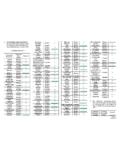
10 There is no blood test. Diagnosis is usually made after death. Post-mortem signs may or may not show definite signs. Microscopic examination of the liver and other organs will show signs that are highly suggestive. Confirmation of the diagnosis is RHDV or rhdv2 is made from PCR testing on the liver. It is not known how long a Rabbit that has recovered from RHDV remains infectious. A period of 30 days has been suggested. Vaccination options There are now several vaccination options that are compared in Table 1 below. Consultation with colleagues in the Netherlands and France support the use of Filavac which has recently been granted a UK special import license. Furthermore vets can now order the vaccine directly through obtaining a license on the VMD website and then placing orders with Filavie who manufacture the vaccine in France. Table 1: Vaccine comparison tables Vaccine Prices & Options for Vaccination: Filavie have supplied export prices (Table 2) for vets in the UK which exclude cold shipment and administration charges of Euros 80.