Transcription of Polymer processing methods - An easy guide
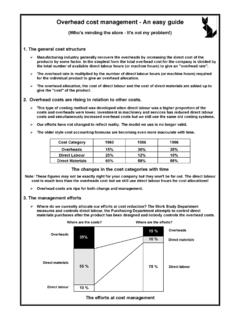
1 Polymer processing methods - An easy guide (The right process for the job - reducing costs by the right choice) 1. Thermoplastics processing methods Thermoplastics are materials which soften when heated and can then be formed whilst soft. After cooling they becoming rigid take up the applied form. The softening and forming processes are reversible. Thermoplastics are probably the most widely used type of Polymer . The group includes most of the commodity plastics such as polyethylene, PVC, polypropylene, nylons (polyamides) and polystyrene. processing MethodEquipment CostTooling CostCycle TimePrecisionEconomic QuantityExtrusionABDADI njection MouldingAAAAABlow MouldingABABAR otational MouldingBCCBBT hermoformingBCBCBT hermoplastic processing methods ABCDC ostsHighModerateLowTime<1 min 1-3 min>3 minContinuousPrecisionGoodModeratePoorNo t applicableQuantity> 10K100 to 10K<100>5 KmKey 2.
2 Polymers and processing methods Not all thermoplastics can be processed by all the methods . This table is a guide to what thermoplastics can be processed by each method. ProcessMaterialABSYesYesNoYesYesEVANoNoN oYesNoPAYesYesNoYesNoPCYesYesYesNoYesPE- LDYesYesYesYesNoPE-HDYesYesYesYesNoPMMAY esYesNoNoYesPOMYesYesYesNoNoPPYesYesYeNo YesPS / PS-HIYesYesYesYesYesPVC-UYesYesYesYesYes PVC-PYesYesYesYesYesSANYesYesYesNoNoPoly mers and processing MethodsRotational MouldingThermo-formingExtrusionInjection MouldingBlow Moulding easy guide 14 Tangram Technology Ltd. 1998 Phone: (07000) 780 971, Fax: (07000) 782 777, Web Site: 3. Thermosetting processing methods Thermosetting materials are materials that are formed whilst warm or hot but once formed they set in the formed shape.
3 Cooling and reheating do not make thermosetting materials go soft again. The forming process is not reversible. Thermosetting materials were the first type of Polymer to be produced Bakelite, but are still widely used for many applications. Typical thermosetting materials are phenol formaldehyde resins, urea formaldehyde resins, epoxy resins and most rubbers. processing MethodEquipment CostTooling CostCycle TimePrecisionEconomic QuantityCompression MouldingBABAAT ransfer MouldingBABAAI njection MouldingAAAAAL iquid CastingDCCBCDMC and SMCBABAARIM and RRIMBBBBBGRP (Hand Lay-up)DCCCCGRP (Spray and Match Die)BBBBBF ilament WindingBCCCCP ultrusionBBDBDT hermoset processing methods ABCDC ostsHighModerateLowNoneTime<2 min2-5 min>5 minContinuousPrecisionGoodModeratePoorNo t applicableQuantity> 10K100 to 10K<100>5 KmKey 4.
4 Features and processing methods process FeatureEquipment CostHighHighHighModerateModerateTooling CostModerateHighModerateLowLowCycle TimeContinuous<1 min<1 min>3 min1-3 minEconomic Quantity>5Km>10K>10K100 - 10K100 - 10 KPrecisionGoodGoodModerateModerateLowWal l Thickness ControlYesYesNoNoNoOpen-ended HollowsNoYesYesYesYesEnclosed HollowsNoNoYesYesNoVery Small ItemsNoYesNoNoNoIntricate ShapesYesYesYesNoNoLarge Enclosed VolumesNoNoYesYesNoInsertsNoYesNoYesNoMo ulded-in HolesNoYesNoNoNoThreadsNoYesYesNoNoFeatu res and processing MethodsExtrusionInjection MouldingBlow MouldingRotational MouldingThermo-forming