Transcription of Sanitation Scheduling Article - Nexcor Tech
1 Sanitation Scheduling If it s not on the schedule, it probably won t get done. by: Sonia Daniel-Sewell Contrary to popular belief, As needed is not a Sanitation schedule. But what does make Sanitation Scheduling ? A modern food-processing environment requires more than a paper grid on the wall in a back office. Sanitation is not merely simple cleaning, but includes documentation of scheduled tasks, employee training, self-audit or inspection, and corrective actions. Comprehensive Sanitation Scheduling identifies: Tasks and how to perform them; Frequency; Personnel requirements; Need to assign trained staff or contractors; Follow up and confirmation of correctly performed tasks; and Tools and supplies.
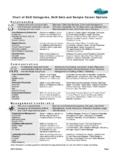
2 Sanitation tasks fall into three categories for Scheduling purposes: Master Schedule - This could include both cleaning that typically occurs before or after production and also longer-term tasks. Monthly jobs might include cleaning overhead pipes, walls, ceilings, and light fixtures; while teardown of equipment used every day(such as fryers) would be performed on a weekly basis. Depending on the type of operation, cleaning certain production areas every day with detail cleaning on a monthly basis may be reasonable. These tasks are oriented to the equipment or area of the facility.
3 Shift Sheets - These list tasks assigned to specific staff. Task check sheets outline what tasks an employee is expected to accomplish during a shift instead of focusing on a single piece of equipment or area. Typically, shift sheets include checking temperatures, self inspections, trap checks, small Sanitation tasks and supervisor inspections of Sanitation tasks performed by others. Housekeeping Tasks - Not associated with production areas, such as office cleaning, depending on the operation, restroom, lunchroom and groundskeeper tasks may be included.
4 Aside from documented assignments, production tasks ( Sanitation as part of the normal production) incorporate, for example, those legitimate as needed items. Wiping up a spill on a production surface or work area is not specifically scheduled, but staff with GMP training would automatically do this. During self-auditing, should production surfaces not achieve desired standard, look to operator training rather than Sanitation Scheduling as the root cause. Supervisor oversight and accountability, however, would be considered a shift sheet task.
5 Step by Step: As each task is identified, specific instructions are developed. This is the task s Standard Sanitation Operating Procedure (SSOP), which must unambiguously list, step by step, how to perform the task, how long it takes to complete the task, the skill level required and what tools and supplies are needed. A library of SSOP s can be created for similar equipment and areas inside the same facility or for use among different sites of the same companies. Starting from receiving, and working through the entire process, document each area and piece of equipment to be cleaned.
6 Go through the steps and document how to properly clean and sanitize each. Chemical suppliers can help with this step. As part of your SSOP, set the frequency of each task. List the training level required, for example, will a confined space entry permit or forklift operation be required? Identify and document training requirements. Scheduling a specific task without ensuring proper and on going documented staff training is insufficient. Training units must relate to specific jobs. Use a digital camera to take pictures of equipment and work areas, track critical control points, for training, and the staff s operational reference.
7 Training: There are three aspects of training. Identifying the training required to perform a given task, indicating the level of training as part of the SSOP. Tracking every employee s training and certifications; larger companies may call upon Human Resources to handle this function. Developing training materials, this includes manuals, photos, drawings, and videos showing hands-on demonstration. Check up: Self audits and inspections ensure compliance. Treat self-audits as seriously as government or third-party audits to promote better employee GMP.
8 Depending on facility size, a rotating inspection schedule may be necessary. Track corrective actions; recurring corrective action in the same area or equipment may suggest review of the SSOP, training or Scheduling is needed. Centralized documentation is helpful for multi-location companies. To estimate weekly personnel requirements, determine the frequency a given how long it takes to complete. Group areas and equipment by supervisor or other logical method to identify and manage each department s workload. Stagger tasks performed in greater than weekly intervals to help balance the load.
9 Forecasting can help justify budget requirements. As work is completed, have staff members sign the sheets. This demonstrates a company s commitment to proper documentation. As part of scheduled shift sheets, supervisors should review the work of the staff, which sets up a cycle of oversight, documentation, and corrective action. The key, however, is to have enough detail on the sheets without being overwhelming. Qualified personnel should be able to perform an unfamiliar task without additional training. Reporting is an important tool in identifying opportunities for improvement.
10 Comparing expectations to actual performance is critical to achieving long-term goals. Completion ratios help assess whether an area must be cleaned more frequently and if training requirements are adequate. Tracking corrective action and root cause identifies deficiencies in frequency, manpower allocation, Scheduling , training, SSOPs, employee performance and cleaning materials. To help schedule, manage and document Sanitation , an automated food Sanitation management software package such as KLEANZ may be used. Suwanee, GA-based Nexcor Technologies Inc.