Transcription of Domestic Violence and Sexual Assault Guide
1 TRIBAL ADVOCATES CURRICULUM Domestic Violence and Sexual Assault Guide This project was supported by Grant No. 2009-EF-SG-0046 awarded by the Office on Violence Against Women, Department of Justice, and through Grant Award Number JR 09011535 from the California Emergency Management Agency (CalEMA). Points of view, opinions, findings and conclusions in this publication are those of the author and do not necessarily represent the official position or policies of the Department of Justice or of CalEMA. CalEMA reserves a royal-free, nonexclusive, and irrevocable license to reproduce, publish, and use these materials and to authorize others to do so. Prepared by Lynda Smallenberger, Executive Director, Kene Me-Wu Family Healing Center, Inc. 1 CONTENTS Story: One more day, one more time, what next, change? About this Curriculum Domestic Violence o Power and Control Wheels A B-Duluth Model C-Mending the Sacred Hoop (MSH-TA) o Activity: Taking a closer look (hand out questions) Reasons why Indian women stay and/or decline to report Violence Effects of Domestic Violence on children Violence as it effects the community o Story: Domestic Violence ; The feeling of being trapped Potential Characteristics of the American Indian Victims of Domestic Violence or Sexual Assault Sexual Assault Why Indian women keep silent about Sexual Assault o Activity: The Spider Web What is a Tribal Advocate?
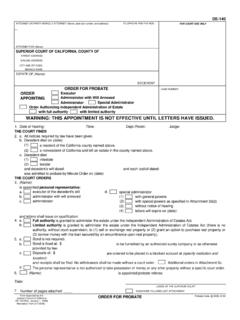
2 O Handout Domestic Violence : Assessing the forms of abuse o Flow Chart for handling Domestic Violence calls If the victim wants to leave and has children Confidentiality 2 Memorandum of Understanding or Operational Agreements o Sample of Operational Agreement Domestic Violence Protection Orders o Filing of petition for Temporary Restraining Order (TRO) Time line What is Full Faith and Credit? Safe at Home California A Public Law 280 State Tribal Codes Roles of o Law Enforcement o District Attorney o Victim Witness o Probation o Parole A battered woman Closing activity 3 One more day, one more time, what next, change? Our day started without talking about last night when some friends came by for dinner and to watch a movie. When they arrive, my girlfriend and I left to pick up a pizza she had ordered. We got there and they were behind in getting out orders so it took a longer than usual to pick up.
3 When we got back home I got the look and the question where have you been ? I tried to explain but he just said never mind. I felt that fear overcome me, I knew I would not have a relaxing evening but one with wonder about what would be the outcome in the hours after our friends left. I struggled to be comfortable the rest of the evening with my girlfriend. But, without speaking, she knew that things were not right. I was glad our children had spent the night with my family. Our friends left before midnight. When I turned to close the door he gave me that stare. I feared and wondered what would come next. As I moved towards the kitchen he stood up from the couch and grabbed my hair, yanking my head back, telling me never to talk to him or act like that in front of his friends again. I felt his hand grabbing my arm to turn me around.
4 When I faced him he hit on the side of my head with a closed fist; he knew not to hit me where it would show. My ears were ringing and I thought my head would explode. I would not fight back since he was bigger and I felt it would not get me anywhere. I know some Indian women fight back but my parents raised me in a Violence free home. It is not just who to call, but how would I do it? There is no phone service out on this part of the reservation and he has the cell phone. Our tribe has no Domestic Violence services. I tried to leave before and access a county shelter but left the next day because I felt like I did not belong, there were too many rules and there was no listening without judgment. If I could contact the Native advocate from another county it would take too long for her to get here. I am ashamed and fear for myself, my family, feeling isolated and alone on my reservation.
5 I do not want to put my children, family or friends in harm s way. There may be retaliation from his family members. I could wait for him to fall asleep but he knows all my relations and he has control over all our money. Generations of my family are here, where would I go? He is related to the Tribal police. Why would they help if I went to them? Local law enforcement wouldn t believe me since I had been in trouble with them before. He wasn t always like this. I think it got worse when he lost his job at the neighboring casino. He never hit me in front of anyone. He is liked and admired by all tribal members. He admits he doesn t know why he is violent. But he has told me his grandfather and father struggled with Violence too. When I lay in bed last night I felt I had some options to consider. I remembered attending a native women s health day put on by Indian Health Services, on another rancheria.
6 What I will never forget is a tribal elder who sat there with her elderly mother and told the tribal advocate after the presentation about Domestic Violence Where were you twenty years ago? She then paused and then said It matters only that you are here now, and changes for our people can happen . 4 About this Curriculum This curriculum was created as part of the effort to end Violence against women in California Tribal communities. Within Tribal communities Indian people have values, traditional stories and life-ways that promote harmony and a sense of belonging. Traditions are to care for one another; bonds that nurture traditional values for mutual support. Pre-reservation lifestyles of California Indians often required cooperation, trust and respect between individuals in the communities. Additionally, we hope persons in tribal communities will utilize this information to begin or continue a dialogue about Domestic Violence issues.
7 It will also require the participant to critically reflect upon the systems that exist in their own communities and conceptualize what change would be like if implemented. California Tribal communities have a long history of creating positive social changes. Understanding that ending Domestic Violence and Sexual Assault in tribal communities will require time and meaningful effort. The essential element of this curriculum for ending Violence against native women involves a community effort where any individual can lead given the tools and information. Intergenerational commitment to making a positive difference consists of community support, taking action and promoting social change as needed. This information will be helpful in addressing Violence against women in your community by providing information about what Domestic Violence is and how Violence affects victims and communities.
8 It is our hope you will access facts and information that will be shared with others to take action. Tribal communities were America s first victims to live through Violence and abuse. Today they can reclaim freedom from fear of Domestic Violence and create healthy families while working together to end Violence for future generations. Training Objectives: Utilizing the expertise of Tribal advocates these materials seek to accomplish these primary goals; 1. To help community members understand their roles in creating safe environments for Indian women and their children. 2. To provide strategies that can be helpful in offering support to victims of Domestic Violence and/or Sexual Assault . 3. To increase awareness of resources available to tribal community members when faced with Domestic Violence and/or Sexual Assault situations. 4.
9 To understand one person can make a difference and with persistence tribal communities can make the social changes needed. 5 Domestic Violence : WHAT IS IT? The following definitions are not related to any particular tribe, but may be what you can expect from the laws of your tribe or the state. If your tribe has a tribal court ask the clerk of the court in your community what the legal definition of Domestic Violence is for your tribe. Domestic Violence is an escalating pattern of abuse where one partner in an intimate relationship controls the other through physical force, intimidation or the threat of Violence . Domestic Violence includes many forms which may be physical, emotional, mental or spiritual. Domestic Violence is a major social problem. Most victims of Domestic Violence are women but cam be defined to cover a range of verbal and physical abusive behaviors between family or household members that can cause harm or fear of harm to an individual.
10 Domestic Violence is known by a series of varied names including wife abuse, spousal abuse, intimate partner Violence , and Violence against women or battering. Domestic Violence is a social problem with consequences reaching beyond the individuals involved in a particular situation. Because Domestic Violence touches the whole tribal community, it is important the community members learn more about Domestic Violence . The following section provides basic information about definitions of Domestic Violence and some commonly asked questions. Learning both behavioral and legal definitions will give you a better understanding of Domestic Violence . The behavioral definition of Domestic Violence is often more comprehensive that the legal definitions. Domestic Violence is also a crime and it is helpful to know the legal definition . For the purpose of this curriculum, the behavioral definition is utilized and the legal definition is provided for reference purposes.