Transcription of ATTC - LAW ENFORCEMENT FIREARMS INSTRUCTOR
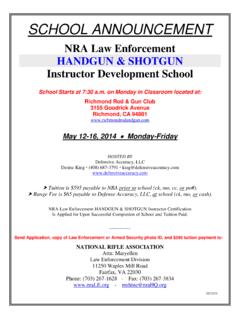
1 ATTC - LAW ENFORCEMENT FIREARMS INSTRUCTOR 40 hr course - Handgun/Shotgun - Tuition $450 The Law ENFORCEMENT Basic Handgun/Shotgun INSTRUCTOR course is designed to teachInstructor candidates the proper methods of instructing students in Law Enforcementapplications of handgun and shotgun employment. This course also discusses legalissues, use of force or department policies. This course is designed to greatly increasethe candidates' shooting and teaching ability. Topics to be covered include proper stance, grip, sight alignment, sight picture, safetyconcerns, multiple types of reloads, shooting position, one arm shooting, one armreloads, use of cover, 3 types of handgun malfunctions, shotgun malfunctions, andmuch more.
2 The candidates will correct problems of students that will be provided for a"real" training setting. Included in the course will be instruction on how to teach a lowlight/night fire : Handgun magazines or speed loaders for Duty Handgun rounds of Handgun Ammunition Shotgun rounds Birdshot Ammunition for Shotgun rounds Buckshot Ammunition for Shotgun rounds Slug Ammunition for Shotgun 9. Police flashlight10. Hat 11. Note taking material12. Eye & ear protection13. Elbow & knee pads (optional)14. Rain GearAt the end of this course, the INSTRUCTOR Candidates will be able to effectively presentmaterial to shooters and will be able to coach the individual shooter to a higherstandard.
3 Instructors will be able to identify errors not seen before and will be able tocorrect those errors quickly and effectively. Techniques will be explained in a depth notexperienced before and all techniques will be linked into a coherent system of COVERED: FIREARMS safety as it pertains to Law ENFORCEMENT applicationsand employment. Including the basics of firing, stance, grip, sight alignment, triggerpress, speed reloading, tactical reloading and stoppage drills, rapid multiple shots onsingle targets, rapid engagement of multiple targets, and engagement of targets fromthe ready position. The draw from duty equipment, the concealed draw, the propertactical response to single or multiple opponent situations.
4 Contact distanceemployment of the handgun, moving to the rear and laterally while drawing andshooting, rapid assumption of various shooting positions such as kneeling and pronewhich will allow the shooter to gain more accuracy and protect themselves from beinginjured, use of cover, and pivots and turns. A low light session will be included. Lectures cover: types and modifications, and ammunition selection as it pertains to the handgun, selection, and CURRICULUMA pproximately 8 contact hours will be spent in the classroom. Subjects will include, butnot be limited to: INSTRUCTOR Overview INSTRUCTOR Responsibilities INSTRUCTOR to Student Ratio Instructional Techniques Adult Learning Principles FIREARMS Nomenclature and Recognition FIREARMS Maintenance Ammunition Selection Teaching practical handgun marksmanship Teaching practical handgun handling Teaching street and range safety Developing and conducting practical range training Teaching the tactical use of cover/concealment Developing and conducting adverse light training The theory of shooting at moving targets.
5 RANGE CURRICULUMA pproximately 32 contact hours will be spent on the range. Subjects will include, but notbe limited to: Grip and draw to the ready and shooting positions. Down and scan procedures. Two-handed handgun reloading and malfunction techniques. Point shooting and stance directed fire. The tactical use of cover and concealment. Moving to, and shooting from, cover/concealment. Challenging procedures and verbalization. Close-quarter shooting. Moving backward and laterally. One-handed tactical handling and shooting techniques. Adverse light tactical handling and shooting techniques.
6 Flashlight techniques. "Unusual" shooting positions (Seated, Crouch, Prone, Gun Canted, etc.) Problem-solving and decision-making exercises. Failure to stop / drug & body armor drills. Tactical engagement of multiple threats and multiple threat levels. Engagement of threats while moving. Engagement of moving threats. Tactical handling and shooting techniques employing off-duty concealedequipment. Concealed draw from hip, cross-draw, ankle and shoulder holsters, fanny packs, etc. A variety of drills and exercises specifically designed to practice all of theelements of tactics, handling, speed and accuracy that have been presented during theweek.
7 Student INSTRUCTOR presentations and demonstrations. Student INSTRUCTOR -controlled tactical range exercises.