Transcription of Maximum Medical Improvement - OhioBWC
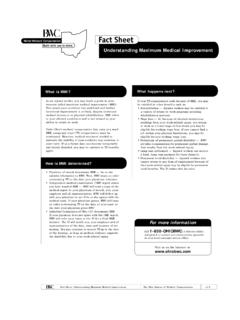
1 What is MMI?An injured worker may reach a point in his or her recovery called Maximum Medical Improvement (MMI). MMI occurs when a condition has stabilized and further functional Improvement is unlikely, despite continued Medical treat-ment or physical Ohio s workers compensation law, once the injured worker has reached MMI, the BWC or the Ohio Industrial Commission (IC) may terminate temporary total (TT) com-pensation. BWC will terminate TT compensation when the treating physician determines the injured worker has reached MMI and no conflict or dispute exists. However, Medical treatment needed to maintain the stability of the injured worker s condition may continue in his or her claim.
2 If, at a future date, the injured worker becomes temporarily and totally disabled, he or she may be entitled to TT com-pensation is MMI determined?When the treating physician determines an injured worker has reached MMI, the treating physician submits informa-tion to BWC. Unless there is a conflict or dispute, BWC issues an order terminating TT compensation effective on the date indicated by the treating physician, or the date of the last exam, if no specific effective date is given. BWC pays TT through the day before the MMI effective date. When an independent Medical examination (IME) report states the injured worker has reached MMI, BWC sends a copy of the Medical report to the treating physician, injured worker, employer and all representatives.
3 BWC will follow up with the treating physician to determine if he or she agrees with the findings of the Medical exam. If the treating physician agrees, BWC issues an order termi-nating TT compensation effective on the date of the exam or the date the treating physician gives his or her agree-ment. BWC pays TT through the day before the MMI effec-tive the treating physician does not agree with the find-ings of the Medical exam, BWC will refer the claim to the IC for a final decision regarding MMI and termination of TT compensation. The IC will notify the injured worker, employer and all representatives of the date, time, and location of the hearing.
4 BWC may continue to pay TT com-pensation up to and including the date of the hearing, as long as Medical evidence supports the disability is due to the injured worker s work-related happens next?If BWC or the IC terminates payment of TT compensation because the injured worker has reached MMI, he or she may be entitled to other benefits such as:o Rehabilitation The injured worker may be entitled to a variety of return-to-work programs, including rehabilitation services;o Wage loss If the injured worker returns to work at a lower wage or with fewer hours because of physi-cal restrictions resulting from his or her work-related injury, he or she may be eligible for working wage loss.
5 If the injured worker cannot find a job within his or her physical limitations resulting from his or her work-related injury, he or she may be eligible for non-working wage loss;o Percentage of permanent partial disability BWC provides compensation for an injured worker s resid-ual impairment that results from the work-related injury;o Lump sum settlement The injured worker may be able to receive a lump sum payment to settle his or her claim(s);o Permanent total disability If the injured worker cannot permanently return to any form of employ-ment because of his or her work-related injury, he or she may be eligible for permanent total benefits.
6 The IC makes this decision. Fact sheet updated August 2018 Maximum Medical Improvement