Transcription of Hearing Protection - University of Texas at Austin
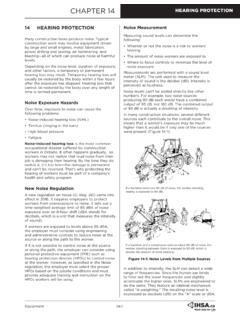
1 Hearing Protection Hearing Protection is required when noise levels are at or exceed 85 decibels on an A scale (dBA). The best way to reduce noise is to design it out. This means eliminating the excessive noise either through acoustical enclosures and barriers, installing sound absorbing material, Installing vibration mounts and providing proper lubrication are some examples. When engineering controls cannot be employed, personal protective equipment (PPE) will be used, ear plugs or ear muffs. How much the Hearing protector reduces the noise is contingent on the noise reduction rating (NRR). NRR Explanation NRR stands for noise reduction rating. It is defined as the estimated amount that the Hearing protector will reduce noise , in dBA. The NRR is printed on the packaging for both ear muffs and ear plugs. It does not reduce the noise by the number printed. It is less than half of the actually NRR factor. There are advantages and disadvantages to both kinds of Hearing Protection .
2 How to properly wear ear plugs. 1. With clean hands, roll the plug in between thumb and first two fingers. 2. Reach over head and pull top of your ear open to open ear canal. 3. While holding the ear open, quickly push the rolled end of the plug into your ear as far as possible. Keeping finger on plug for 60 seconds, to allow it to fully expand. Ear plugs when inserted properly and allowed to full expand typically offer greater Hearing Protection . Ear plugs should not be worn if you have an ear infection. Before you put on your earmuffs, it is important to inspect them for cracks, tears or other signs of wear. Never wear damaged Hearing Protection . Many ear muffs can t be worn with safety glasses. If you must wear safety glasses make sure your ear muffs are compatible or wear ear plugs. This handout is an annual supplement to the Hearing Conservation Program training that is required initially and every three years. This training is available on line through TXClass.
3 512-471-4647 HEALTHPOINT OCCUPATIONAL HEALTH 512-471-3511 ENVIRONMENTAL HEALTH AND SAFETY