Transcription of Breaking Through - Home | Center for an Urban Future (CUF)
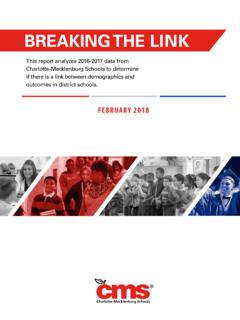
1 BREAKINGTHROUGHH arnessing the Economic Potentialof Women MARCH 2016 Breaking Through is a publication of the Center for an Urban Future . Researched and written by Judy Messina with Audrey Gray, Phil Lentz and Jonathan Bowles. Edited by Phil Lentz and Jonathan Bowles. Additional research support from Jonah Bleckner, Melanie Breault, Matt Falber, Natalia Khosla and Saigeetha Narasimhan. Design by Amy Parker and Ahmad study was made possible Through Capital One s Future Edge operating support for the Center for an Urban Fu ture has been provided by the Bernard F. and Alva B. Gimbel Foundation, the Lucius N. Littauer Foundation and the M&T Charitable ONE S Future EDGE initiative is a $150 million, five-year effort to help more American workers and entrepreneurs succeed in the 21st century economy.
2 Through Future Edge, Capital One works with hundreds of leading community and nonprofit organizations in NYC and beyond, including microfinance and micro-lending organizations empowering women entrepreneurs such as Grameen America, Accion, and the Business Outreach Center Network. Learn more at or join the conversation on Twitter at FOR AN Urban Future (CUF) is an independent, nonprofit think tank that generates innovative policies to create jobs, reduce inequality and help lower income New Yorkers climb into the middle class. For 20 years, CUF has published accessible, data-driven reports on ways to grow and diversify the economy and expand opportunity that are anchored in rigorous research, not preconceived notions about outcome.
3 Our work has been a powerful catalyst for policy change in New York City and serves as an invaluable resource for government officials, community groups, nonprofit practitioners and business leaders as they advocate for and implement policies to address some of New York s biggest challenges and FOR AN Urban Future BOARD OF DIRECTORSG ifford Miller (Chair)John H. AlschulerMargaret AnaduJonathan BowlesMichael ConnorRussell DubnerBlake FooteLisa GomezJalak JobanputraKyle KimballDavid LebensteinEric S. LeeMonisha NarianiMax NeukirchenAndrew ReicherJohn SiegalStephen SigmundThomas VecchioneRobert ZimmermanCover: Empire State Building by Susan Sermoneta (en321/flickr)
4 Used under CC BY-NC-SA / Cube pattern by Amy Parker overlaid on topCONTENTSINTRODUCTION 3 GROWING THE ECONOMY WITH WOMEN ENTREPRENEURS 14 Developing women s potential as entrepreneurs is not about fairness or equal pay or even equal opportunity, but rather about creating jobs and wealth and driving economic growth in New York CityNEW YORK S NEW LANDSCAPE FOR WOMEN 18 ENTREPRENEURS The number of women entrepreneurs is on the rise in nearly every sector of the city s economy, from food and design to real estate and constructionDISRUPTING THE TECH SECTOR 24 While tech startups are still dominated by men, women are increasingly making an impact, both in traditional female businesses such as fashion tech and beauty tech as well as other areas like biotech and fintechUNDER NEW MANAGEMENT 27 Women-owned businesses are increasing at a rapid pace in immigrant, minority and low income communitiesOBSTACLES TO GROWTH 30 Women entrepreneurs face a host of challenges that keep many from scaling up their businesses and prevent others from taking the plunge in their first placeNOTHING VENTURED.
5 NOTHING GAINED 37 Women entrepreneurs in the tech sector have long struggled to raise money from venture capital firms and angel investors, but they also face other challengesRECOMMENDATIONS 42 22 Achievable Ideas for Supporting Women EntrepreneursAPPENDIX: OTHER CITIESATLANTA 47 DALLAS 50 WASHINTON, 53 SAN FRANCISCO 57 ENDNOTES 60As technology disrupts entire industries in New York City, another disruption is taking place right alongside a flood of women entrepreneurs in virtually every industry in the city.
6 Women founders of all ages, races and ethnicities are creating jobs, bolstering the city s economy, strength-ening families and neighborhoods, and providing new and creative solutions to the problems of modern life. Fueled by advances in technology, lowered barriers to entry and recession era lay-offs, women throughout the city from stay-at-home moms to fashion designers and finance pros are starting and growing new businesses at a remarkable clip. In the decade from 2002 to 2012, the most recent year for which rigorous data is available, the number of women-owned businesses grew by a whopping 65 percent or 45 new businesses every day, adding more than 56,000 jobs and $3 billion in payroll to the city s economy.
7 As of 2012, there were 413,899 women-owned firms in New York City, compared to 305,198 five years earlier. Today, women-owned businesses make up more than 40 percent of private companies in the city, up from 33 percent five years ago and 32 percent a decade ago. Two-thirds of the recent growth in women-owned businesses took place in the five years be-tween 2007 and 2012, and the growth from 2002 to 2012 outpaced the 33 percent increase in businesses in the city overall as well as the 44 percent growth in the number of women-owned businesses statewide. Male-owned firms in the city grew just 8 percent between 2007 and 2012.
8 Women entrepreneurs are increasing their presence in nearly every sector of the city s econo-my, with the number of women-owned businesses growing by at least 20 percent over the past five years in construction, manufacturing, health care, education, real estate, transportation and ware-housing, information, retail and wholesale trade. There is also evidence that women are starting a greater share of the tech companies in New York than in Silicon Valley and Boston, the nation s other leading tech hubs. In the third quarter of 2015, percent of New York City companies receiving venture capital had a woman founder, compared to percent in Boston and per-cent in San while women-owned businesses are already making a significant contribution to the city s economy, there is significant potential to increase the number of women entrepreneurs and to help more women-owned businesses grow to the next level.
9 Women make up percent of New York City s population, according to the 2010 Census. This is a higher percentage than in all but one of the nation s 10 largest cities, including Los Angeles, Chicago and Houston. Yet, women-run firms account for only 40 percent of privately owned businesses in the city, only 21 percent of firms with paid employees, just percent of all private sector employees and only 13 percent of annual private business revenues. Moreover, the number of women-run firms in New York is growing at a slower rate than many other large cities. To be sure, New York is making progress on a number of fronts to create a more supportive environment for women entrepreneurs and women who aspire to be entrepreneurs.
10 Most notably, Mayor Bill de Blasio last year launched a promising new initiative called Women Entrepreneurs New York City (WE NYC) in an effort to expand the economic potential of women entrepreneurs across the five boroughs with a specific focus on the needs of women in underserved communities. But even more could and should be done in the months and years ahead to unlock the full potential of women entrepreneurs in New York THROUGHThis study the latest in a long line of Center for an Urban Future reports focusing on opportunities to grow and diversify New York City s economy pro-vides a comprehensive examination of the economic importance of women entrepreneurs in New York and the role that women-owned businesses have played in the city s recent growth.