Transcription of Material Safety Data Sheet Dimethyl Sulfate - trade-chem.com
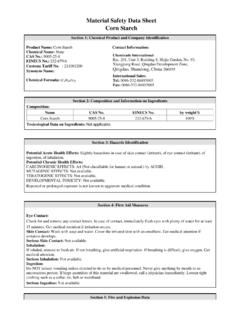
1 Section 1: Chemical Product and Company Identification Product Name: Dimethyl Sulfate Company Information: Chemical Name: Dimethyl Sulfate Customs Tariff No: 29209090 Synonym Name: Methyl Sulfate ; DMS; Dimethyl monosulfate, Dimethyl Sulphate Chemical Formula: C2H6O4S Section 2: Composition and Information on Ingredients Composition: Name CAS No. EINECS No. by weight Dimethyl Sulfate 77-78-1 201-058-1 min Section 5: Fire and Explosion Data General Information: As in any fire, wear a self-contained breathing apparatus in pressure-demand, MSHA/NIOSH (approved or equivalent), and full protective gear.
2 During a fire, irritating and highly toxic gases may be generated by Section 3: Hazards Identification EMERGENCY OVERVIEW Appearance: clear to slightly hazy liquid. Flash Point: 83 deg C. Danger! Causes eye and skin burns. Causes digestive and respiratory tract burns. May be fatal if inhaled. Harmful if swallowed. May cause allergic skin reaction. Combustible liquid and vapor. May cause lung damage. May cause liver and kidney damage. Moisture sensitive. May cause cancer in humans. Target Organs: Kidneys, liver, lungs, reproductive system, and skin.
3 Potential Health Effects Eye: Causes eye burns. May cause irreversible eye injury. Skin: Causes skin burns. May cause skin sensitization, an allergic reaction, which becomes evident upon re-exposure to this Material . Ingestion: Harmful if swallowed. Causes gastrointestinal tract burns. Effects may be delayed 2 to 4 hours. Inhalation: May be fatal if inhaled. Effects may be delayed. Causes severe irritation of upper respiratory tract with coughing, burns, breathing difficulty, and possible coma.
4 May cause lung damage. Inhalation may be fatal as a result of spasm, inflammation, edema of the larynx and bronchi, chemical pneumonitis and pulmonary edema. Chronic: May cause liver and kidney damage. May cause cancer in humans. May cause reproductive and fetal effects. Section 4: First Aid Measures Eyes: Immediately flush eyes with plenty of water for at least 15 minutes, occasionally lifting the upper and lower eyelids. Get medical aid immediately. Skin: Get medical aid immediately. Immediately flush skin with plenty of water for at least 15 minutes while removing contaminated clothing and shoes.
5 Wash clothing before reuse. Destroy contaminated shoes. Ingestion: Do not induce vomiting. If victim is conscious and alert, give 2-4 cupfuls of milk or water. Never give anything by mouth to an unconscious person. Get medical aid immediately. Inhalation: Get medical aid immediately. Remove from exposure and move to fresh air immediately. If not breathing, give artificial respiration. If breathing is difficult, give oxygen. Do NOT use mouth-to-mouth resuscitation. Notes to Physician: Treat symptomatically and supportively.
6 Chemtrade International Rm. 201, Unit 3, Building 8, Shijia Garden, No. 93, Xiangjiang Road, Qingdao Development Zone, Qingdao, Shandong, China 266555 Tel: 0086-532-86893005 Fax: 0086-532-86893005 Material Safety Data Sheet Dimethyl Sulfate thermal decomposition or combustion. Use water spray to keep fire-exposed containers cool. Containers may explode in the heat of a fire. Combustible liquid. Vapors may be heavier than air. They can spread along the ground and collect in low or confined areas.
7 Contact with metals may evolve flammable hydrogen gas. Extinguishing Media: In case of fire, use water, dry chemical, chemical foam, or alcohol-resistant foam. For small fires, use dry chemical, carbon dioxide, sand, earth, water spray or regular foam. Cool containers with flooding quantities of water until well after fire is out. Flash Point: 83 deg C ( deg F) Auto ignition Temperature: 495 deg C ( deg F) Explosion Limits, Upper: NFPA Rating: (estimated) Health: 3; Flammability: 2; Instability: 0 Section 6: Accidental Release Measures General Information: Use proper personal protective equipment as indicated in Section 8.
8 Spills/Leaks: Absorb spill with inert Material ( vermiculite, sand or earth), then place in suitable container. Clean up spills immediately, observing precautions in the Protective Equipment section. Scoop up with a no sparking tool, and then place into a suitable container for disposal. Provide ventilation. Section 7: Handling and Storage Handling: Wash thoroughly after handling. Wash hands before eating. Remove contaminated clothing and wash before reuse. Use only in a well-ventilated area.
9 Do not get in eyes, on skin, or on clothing. Empty containers retain product residue, (liquid and/or vapor), and can be dangerous. Do not ingest or inhale. Do not pressurize, cut, weld, braze, solder, drill, grind, or expose empty containers to heat, sparks or open flames. Storage: Keep away from sources of ignition. Store in a cool, dry place. Store in a tightly closed container. Corrosives area. Do not store in metal containers. Section 8: Exposure Controls/Personal Protection Engineering Controls: Facilities storing or utilizing this Material should be equipped with an eyewash facility and a Safety shower.
10 Use adequate general or local exhaust ventilation to keep airborne concentrations below the permissible exposure limits. Exposure Limits Chemical Name ACGIH NIOSH OSHA - Final PELs Dimethyl Sulfate ppm TWA; Skin - potential significant contribution to overall exposure by the cutaneous route ppm TWA; mg/m3 TWA 7 ppm IDLH 1 ppm TWA; 5 mg/m3 TWA OSHA Vacated PELs: Dimethyl Sulfate : ppm TWA; mg/m3 TWA Personal Protective Equipment Eyes: Wear chemical splash goggles and face shield.