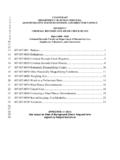
Transcription of OREGON PUBLIC HEALTH DIVISION REPORTING FOR …
1 Local HEALTH department informationFor a list of local HEALTH department phone numbers go to 8577 (Rev. 01/2018) OREGON PUBLIC HEALTH DIVISION REPORTING FORTB: Still infectiousETEC: Not just for travelersInfection Control: The basicsIMMEDIATELYA nthrax (Bacillus anthracis)Bacillus cereus biovar anthracisBotulism (Clostridium botulinum)Brucellosis (Brucella)Cholera (Vibrio cholerae O1, O139, or toxigenic)Diphtheria (Corynebacterium diphtheriae)Eastern equine encephalitisGlanders (Burkholderia mallei)Hemorrhagic fever caused by viruses of the filovirus ( , Ebola, Marburg) or arenavirus ( , Lassa, Machupo) familiesInfluenza (novel)
2 5 Marine intoxication (intoxication caused by marine microorganisms or their byproducts ( , paralytic shellfish poisoning, domoic acid intoxication, ciguatera, scombroid)Measles (rubeola)Melioidosis (Burkholderia pseudomallei)Plague (Yersinia pestis) PoliomyelitisQ fever (Coxiella burnetii)Rabies (human)RubellaSARS (Severe Acute Respiratory Syndrome or SARS-coronavirus)Smallpox (variola) Tularemia (Francisella tularensis)Typhus, louse-borne (Rickettsia prowazekii)Yellow fever Outbreaks and uncommon illnesses (any known or suspected common-source outbreak; any uncommon illness of potential PUBLIC HEALTH significance)By law,1 OREGON clinicians must report diagnoses of the specified infections, diseases and conditions listed on this poster.)
3 Both lab-confirmed and clinically suspect cases are reportable. The parallel system of lab REPORTING does not obviate the clinician s obligation to report. Some conditions ( , uncommon illness of PUBLIC HEALTH significance, animal bites, hemolytic uremic syndrome (HUS), pesticide poisoning, disease outbreaks) are rarely, if ever, identified by labs. We depend on clinicians to should be made to the patient s local HEALTH department 2 of residence and include at least the patient s name, home address, phone number, date of birth, sex, diagnosis and date of symptom onset.
4 Most reports should be made within one working day of the diagnosis, but there are several important exceptions please refer to the list on this REPORTING enables appropriate PUBLIC HEALTH follow-up for your patients, helps identify outbreaks, provides a better understanding of morbidity patterns, and may even save lives. Remember that HIPAA does not prohibit you from REPORTING protected HEALTH information to PUBLIC HEALTH authorities for the purpose of preventing or controlling diseases, including PUBLIC HEALTH surveillance and PENALTIES FOR VIOLATIONS OF OREGON REPORTING LAWA civil penalty may be imposed against a person or entity for a violation of any provision in OAR Chapter 333, DIVISION 18 or These regulations include the requirements to report the diseases listed on this poster, along with related data.
5 And to cooperate with local and state PUBLIC HEALTH authorities in their investigation and control of reportable diseases. Civil penalties shall be imposed as follows: First violation $100, second violation $200, third or subsequent violation $500; Each day out of compliance will be considered a new HEALTH DIVISIONC enter for PUBLIC HEALTH Practice971- 673 -1111 ( phone)971- 673 -110 0 (f a x) reportables are ONE LOCAL HEALTH AUTHORITY WORKING DAYA mebic infections 6 (central nervous system only)Anaplasmosis (Anaplasma)Animal bites (of humans)Arthropod vector-borne disease ( ,California encephalitis, Colorado tick fever, dengue, Heartland virus infection, Kyasanur Forest disease, St.)
6 Louis encephalitis, Western equine encephalitis, etc.)Babesiosis (Babesia)Campylobacteriosis (Campylobacter)Chancroid (Haemophilus ducreyi)Chlamydiosis (Chlamydia trachomatis; lymphogranuloma venereum)Coccidioidomycosis (Coccidioides)Creutzfeldt-Jakob disease (CJD) and other transmissible spongiform encephalopathies Cryptococcosis (Cryptococcus)Cryptosporidiosis (Cryptosporidium)Cyclosporosis (Cyclospora cayetanensis)Ehrlichiosis (Ehrlichia)Enterobacteriaceae family isolates that are resistant to any carbapenem antibiotic by current CLSI breakpoints 7 Escherichia coli (enterotoxigenic, Shiga-toxigenic, including E.
7 Coli O157 and other serogroups)Giardiasis (Giardia)Gonococcal infections (Neisseria gonorrhoeae)Grimontia spp. infectionHantavirusHemolytic uremic syndrome (HUS)Hepatitis AHepatitis B Hepatitis C WITHIN 24 HOURS (including weekends and holidays) Haemophilus influenzae Neisseria meningitidis(any isolation or identification from a normally sterile specimen type) Pesticide poisoningFOOTNOTES In addition to REPORTING updates, please be aware of new OAR 333-019-0061, requiring HEALTH care professionals to observe standard precautions as described in Centers for Disease Control and Prevention s Guideline for Isolation Precautions.
8 Preventing Transmission of Infectious Agents in Healthcare Settings (2007). ; see 45 CFR (b)(1)(i).4. Influenza A virus that cannot be subtyped by commercially distributed For example, infection by Acanthamoeba, Balamuthia, or Naegleria CLSI. Performance Standards for Antimicrobial Susceptibility Testing; Twenty-Fifth Informational Supplement. CLSI document M100-S25. Wayne, PA: Clinical and Laboratory Standards Institute; January Lead poisoning means a confirmed blood lead level of at least 5 Infection at any site with M.
9 Tuberculosis or M. bovis is reportable. Only non-respiratory infections with other mycobacteria are D (delta)Hepatitis EHIV infection (does not apply to anonymous testing) and AIDSI nfluenza (laboratory-confirmed) death of a person <18 years of ageLead poisoning 8 Legionellosis (Legionella)Leptospirosis (Leptospira)Listeriosis (Listeria monocytogenes)Lyme disease (Borrelia burgdorferi)Malaria (Plasmodium)MumpsNon-tuberculous mycobacterial infection (non-respiratory)9 Pertussis (Bordetella pertussis)Psittacosis (Chlamydia psittaci)Relapsing fever (Borrelia)
10 Rocky Mountain spotted fever and other Rickettsia (except louse-borne typhus, which is immediately reportable)Salmonellosis (Salmonella, including typhoid)Shigellosis (Shigella)Syphilis (Treponema pallidum)Taenia infection (including cysticercosis and tapeworm infections)Tet anus (Clostridium tetani)Trichinosis (Trichinella)Tuberculosis (Mycobacterium tuberculosis and M. bovis) 9 Vibriosis (other than cholera)West NileYersiniosis (other than plague, which is immediately reportable)ZikaSafe Injection Practices