Transcription of Amplify - Department of Education and Training
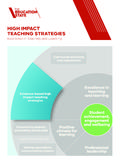
1 AmplifyEmpowering students through voice, agency and leadershipCurriculum planning and assessmentEvidence-based high impact teaching strategiesEvaluating impact on learningParents and carers as partnersGlobal citizenshipNetworks with schools, services and agenciesBuildingcommunitiesBuilding practiceexcellenceExcellence in teaching and learningProfessionalleadershipEmpowering students and building school prideInstructional and shared leadershipBuilding leadership teamsPositive climate for learningStudent achievement, engagement and wellbeingHealth and wellbeingIntellectual engagement and self awarenessSetting expectations and promoting inclusion State of Victoria ( Department of Education and Training ) 2019 Amplify is provided under a Creative Commons Attribution International licence. You are free to re-use the work under that licence, on the condition that you credit the State of Victoria ( Department of Education and Training ), indicate if changes were made and comply with the other licence terms, see: Creative Commons Attribution InternationalThe licence does not apply to: any images, photographs, trademarks or branding, including the Victorian Government logo and the DET logo; and content supplied by third queries may be directed to 978-0-7594-0839-5 Acknowledgements The Department of Education and Training (the Department ) acknowledges and pays respects to Elders and all Victorian Aboriginal communities.
2 We honour and respect Traditional Owners, past and present, and value the rich culture and history of the First Peoples of this The Department welcomes questions, comments and feedback on Amplify . Your engagement and contribution will contribute to the ongoing development and improvement of this resource. To contact the Department with regard to Amplify , contact: empowering students through voice, agency and leadership | What is Amplify ?6 Why empower students?7 Our vision for learning7 empowering students for the future7A compelling case to amplify8 empowering students - Victorian context10 Framework for Improving Student Outcomes11 The Essential Elements11 The Continua of Practice11 The Victorian Teaching and Learning Model12 Practice Principles for Excellence in Teaching and Learning13 High Impact Teaching Strategies (HITS)13 Pedagogical Model13 Structures, processes and practices that empower students 14 The role of school leaders14 Establishing preconditions that empower students and teachers14 Precondition 1: a shared vision (FISO Dimension: Vision, values and culture)15 Precondition 2: a safe learning environment (FISO Dimension: Instructional and shared leadership)15 Establishing systems and structures16 The role of teachers20 Student voice22 Student agency23 Student leadership24 Amplify Toolkit25 Case Study.
3 Mornington Special Developmental School27 Case Study: St Albans Secondary College28 Case Study: Canterbury Primary School29 Bibliography and professional reading30 Contents6 What is Amplify ?Student voice, agency and leadership represent different aspects of student empowerment (Figure 1). Each is important, inter-related and mutually reinforcing. Students are empowered when they are supported to develop their knowledge, skills and dispositions in these three areas, and when schools have a deliberate, planned and coherent approach to embedding voice, agency and leadership as part of a positive climate for learning. We know that within schools and between schools there is a broad range of structures, processes and practices that contribute to empowering students. It is inspiring and effective practices that we seek to Amplify , from one student to another, from one teacher to another, from one classroom to another, from one school to another, and from one community to another, to achieve our aspiration that all students have the skills, knowledge, dispositions, and will to shape their learning for empoweredAmplify is a practice guide for school leaders and teachers.
4 It explains how to create the conditions, employ the practices and develop the behaviours, attitudes and learning environments that are conducive to student voice, agency and leadership. Whatever their current starting points, school leaders and teachers can draw on this resource to facilitate rich conversations, collaborate and take actions to empower presents an evidence base and practical school based examples to help school communities explore and enhance their understanding of student voice, agency and leadership as the key elements which empower people who find their own voice in supportive school environments are more likely to develop a confident voice, a capacity to act in the world, and a willingness to lead others. By empowering students we enhance student engagement and enrich their participation in the classroom, school and community. We help students to own their learning and development, and create a positive climate for learning.
5 Amplifying student voice, student agency and student leadership contributes to improved student health, wellbeing and learning outcomes. As a powerful practice guide, Amplify : begins with a reflection on the structures, processes and practices that Amplify student empowerment builds from a mutual understanding about the school s starting point for this work supports school leaders, teachers and students to collaborate and plan how they will boost student voice, agency and leadership in classrooms and across all levels of schooling. Figure 1: Voice, agency and leadership empower students67 Amplify : empowering students through voice, agency and leadership | All students are empowered to learn and achieve, experiencing high quality teaching practice and the best conditions for learning which equip them with the knowledge, skills and dispositions for lifelong learning and shaping the world around s vision for learning ( Department of Education and Training , 2018)Why empower students?
6 Our vision for learning Victoria s vision for learning recognises the fundamental importance of empowering students and the contribution that student voice, agency and leadership make to improved student outcomes, health and wellbeing. Amplify draws on this vision and provides a starting point for dedicated attention to student voice, agency and vision outlines our aspiration for all students to achieve and grow as learners, and to generate their own course for lifelong learning. Students will be empowered to take ownership of their learning, to make purposeful contributions to their learning environments, and to tackle issues arising in the world around do need to be reinvented as a key part of learning eco-systems; webs of civil society institutions powerful enough to enable humanity to address the problems which both threaten it and offer spectacular opportunities. Schools in diverse settings and conditions are already innovating their foci and their methods to help their learners not just pass tests, or even get a job but to thrive.
7 (Valerie Hannon, 2017) empowering students for the future We know our world is changing rapidly. We see change in contemporary communications and transportation, in new ways we access and create information, and in emerging enterprises that place consistent emphasis on new capabilities like critical and creative thinking and problem solving. We also know climate change, new technologies, and a new geopolitical landscape, make our future hard to predict and open to great possibility. Navigating such rapid change requires resilience, adaptability and with the Victorian Curriculum F-10, we recognise the need for learning for life and the need for students to develop the Capabilities Critical and Creative Thinking, Ethical, Intercultural, Personal and Social. These cross-disciplinary capabilities empower students to become independent learners and problem solvers. It is these skills that are developed, practised and demonstrated when students have the opportunity to exercise voice, agency and leadership in designing, developing and assessing their own for the unknown, far from an unapproachable paradox, can be an alluring and inspiring agenda.
8 Rather than counselling despair, educating for the unknown favours a vision of learning aggressive in its effort to foster curiosity, enlightenment, empowerment and responsibility in a complex and dynamic world. It favours a broad and visionary reach for meaningful learning. (David Perkins, 2014) 8 Students with a strong sense of process, creating a positive cycle of successWork harderHave greater focusHave more interestAre less likely to give upAre better at planningAre more likely to choose challenging tasksSet higher goalsHave improved concentration when facing difficultiesFigure 2: Generating a positive cycle of learning (Johnston, 2004)A compelling case to amplifyThere are compelling reasons to Amplify student voice, agency and leadership. When students have a strong sense of agency, starting with more commitment and a strengthened focus on their learning, a positive cycle of learning is generated (Figure 2).
9 Students who are empowered to take ownership of their learning understand and contribute to the development of learning intentions, are invested in the assessment processes and monitor their own learning and improvement. As students become invested in their own learning, they gain a better understanding of what good learning is and the purpose of it. This enables them to evaluate their own work, and to more purposefully discuss progress and achievement with teachers, each of which has a significant effect size on achievement (Hattie, 2009). In addition, empowering students to become partners in school decision making is recognition that students are knowledgeable experts in their lives. It acknowledges they can contribute to improving their schools and : empowering students through voice, agency and leadership | Students have a right to be heard. In student-focused schools, student participation goes beyond students having a voice only through their representation in an SRC or similar body.
10 When students meaningfully participate in decision making about their learning, they are more likely to remain involved in Education and to achieve better results. (VicSRC, 2017)There is strong evidence that students become more engaged in learning when they have opportunities to: exercise agency in their own learning contribute to the communities in which they learn improve the learning program for themselves and their peers. Research findings indicate that student voice, agency and leadership have a positive impact on self-worth, engagement, purpose and academic motivation (Quaglia, 2016), which contribute to improved student learning outcomes (Hattie, 2009).Figure 3: Likely impact of student voice (Quaglia Institute for School Voice and Aspirations, 2016)X more likely109876543210 Self-worthEngagementPurposeAcademic MotivationAgreeDid not agreeAgreeDid not agreeAgreeDid not agreeAgreeDid not agreeLikelihood that student voice, agency and leadership will lead students - Victorian ContextStudent empowerment through voice, agency and leadership contributes to the Education State objective to build a world class Education system which brings equity and excellence to the learning experience of every student.