Example: marketing
in Public Health Practice - Centers for Disease Control ...
• A copy of Heymann, DL, ed. Control of Communicable Diseases Manual, 18th edition, 2004, for reference. Available from the American Public Health Association (202) 777-2742. Objectives Students who successfully complete this course should be able to correctly: • Describe key features and applications of descriptive and analytic epidemiology.
Tags:
Information
Domain:
Source:
Link to this page:
Documents from same domain

Non-Contact Temperature Measurement Devices ...
stacks.cdc.govThe average normal body temperature is 98.6°F (37°C). Fever is a measured body temperature above normal. Fever is often a sign that the body is fighting a disease that could be infectious. For different infectious diseases, fever is considered to be significant if the temperature is above a specific measurement.

Steps to Getting a Good Sputum Sample
stacks.cdc.govStretching will also help (see below). 3. If the samples you provide are good, you are done for the day, but you will need to come back to repeat these steps the following day (day 2) as directed by the ... Centers for Disease Control and Prevention. Title: Steps to …

Swaziland Recent Patterns in Population-Based HIV ...
stacks.cdc.govBackground: The 2011 Swaziland HIV Incidence Measurement Survey (SHIMS) was conducted as part of a national study to evaluate the scale up of key HIV prevention programs. Methods: From a randomly selected sample of all Swazi households, all women and men aged 18-49 were
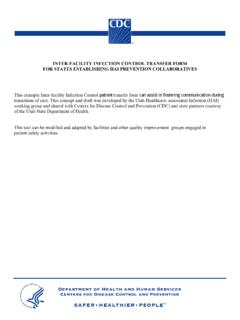
Inter-facility Infection Control Transfer Form
stacks.cdc.govINTER-FACILITY INFECTION CONTROL TRANSFER FORM FOR STATES ESTABLISHING HAI PREVENTION COLLABORATIVES. This example Inter-facility Infection Control SDWLHQW FDQ DVVLVW LQ IRVWHULQJ transfer form FRPPXQLFDWLRQ GXULQJ

A Simple and Accurate Method for Calculating Viscosity of ...
stacks.cdc.govThe Bureau of Mines has developed a method of cal- culating the viscosity of a mixture of gases that is both simple and accurate. Simplicity is measured by the amount of information needed to perform a calculation. Accuracy is measured by the root-mean-square (RMS) deviation of calculated results from experimental results.

Damping Properties of Selected Steels and Cast Irons
stacks.cdc.govferrite in cast irons is also associated with good damping. SDC data are presented for selected carbon and alloy steels and cast irons. 'Research physicist. 2p hysical science technician. 3Metallurgist. Rolla R esearch Center, Bureau of H.ines, Rolla, MO.

GOING VIRAL: CDC’s Zombie Apocalypse
stacks.cdc.govCDC’s Zombie Apocalypse Maggie Silver, MPH, CHES Health Communication Specialist, CDC TransComm 2012 Monday, October 1, 2012 Office of the Director Office of Public Health Preparedness and Response . A CASE STUDY Zombie Preparedness:

VACCINE INFORMATION STATEMENT Influenza Vaccine
stacks.cdc.govThe person giving you the vaccine can give you more information. 4. Risks of a vaccine reaction. With a vaccine, like any medicine, there is a chance of side effects. These are usually mild and go away on their . own. Problems that could happen after any vaccine: • Severe allergic reactions from a vaccine are very rare,

Interpretation of Hepatitis B Serologic Test Results - CDC Stacks
stacks.cdc.govInterpretation of Hepatitis B Serologic Test Results Hepatitis B serologic testing involves measurement of several hepatitis B virus (HBV)-specifi c antigens and antibodies. Different serologic “markers” or combinations of markers are used to identify different phases of HBV infection and to determine whether a patient has acute or chronic HBV
Related documents
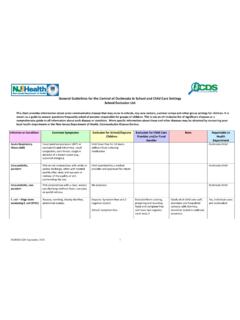
General Guidelines for the Control of Outbreaks in School ...
www.nj.govThis chart provides information about some communicable disease that may occur in schools, day care centers, summer camps and other group settings for children. It is meant as a guide to answer questions frequently asked of persons responsible for groups of children. This is not an all–inclusive list of significant diseases or a
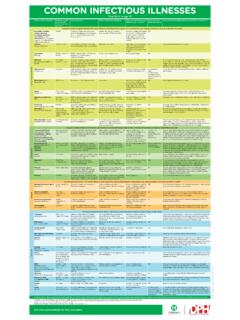
Communicable Disease Chart
www.decal.ga.govdisease is highest 6 months to 2 years after infection) Airborne inhalation of droplets from nose and mouth of diseased person (children usually contract TB from close contact with a diseased adult) Usually only a few days to a week after effective drug therapy. Children’ younger than 10 years are rarely contagious For active disease, once
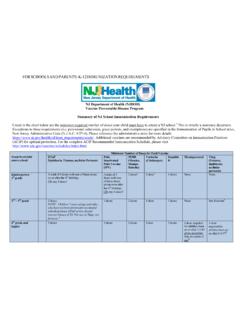
FOR SCHOOLS AND PARENTS: K-12 IMMUNIZATION …
nj.govchild care facility during a vaccine preventable disease outbreak or threatened outbreak as determined by the Commissioner, Department of Health or his or her designee. In addition, anybody having control of a school may, on account of the prevalence of any communicable disease, or to prevent the spread of communicable disease, prohibit the

32 HEALTH AND HYGIENE
nios.ac.insurroundings and prevents breeding of disease causing organisms. Used sanitary napkins need to be wrapped and put in the garbage bins. Fig. 32.2: Balanced diet chart for an adult/day Low quantity (Fat, sugar) Low quantity (Pulses) Moderate quantity Moderate quantity Highest quantity 1¾ 2½ cup ½ ¾ cup 4 6 tbs
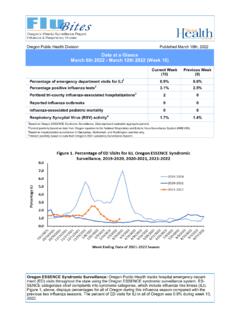
Data at a Glance December 12th, 2021 December 18th, 2021 ...
www.oregon.govSevere Disease • FluSurv-NET: 1.4 per 100,000 cumulative hospitalization rate ... (ALERT IIS). A chart is included this week showing the decline to date, by age, in influenza immunization totals across last season to this sea-son. The decline is stronger among children than adults. For adults, the decline in immunizations coincid-
Communicable Disease Prevention
www.worksafenb.caCommunicable disease prevention A communicable disease is an illness caused by an infectious agent or its toxic product that can be transmitted in a workplace from one person to another. Examples of communicable diseases that may circulate in a workplace include COVID-19, norovirus and seasonal influenza. Communicable Disease Prevention Plan

Influenza Surveillance Report
www.health.ny.govPediatric influenza-associated deaths reported (including NYC) Weekly Influenza Surveillance Report Page 6 Local health departments report pediatric influenza-associated deaths to NYSDOH. Flu-associated deaths in children younger than 18 years old are nationally notifiable.