Transcription of Sepsis Fact Sheet - NIGMS Home
1 Sepsis Sepsis September 2019 Page 1 Sepsis is a serious medical condition. It's caused by an overwhelming immune response to infection. The body releases immune chemicals into the blood to combat the infection. Those chemicals trigger widespread inflammation, which leads to blood clots and leaky blood vessels. As a result, blood flow is impaired, and that deprives organs of nutrients and oxygen and leads to organ damage. In severe cases, one or more organs fail. In the worst cases, blood pressure drops, the heart weakens, and the patient spirals toward septic shock. Once this happens, multiple organs lungs, kidneys, liver may quickly fail, and the patient can die. Sepsis is a major challenge in hospitals, where it s one of the leading causes of death.
2 It's also a main reason why people are readmitted to the hospital. Sepsis occurs unpredictably and can progress rapidly. What is Sepsis ? What causes Sepsis ? Many types of microbes can cause Sepsis , including bacteria, fungi, and viruses. However, bacteria are the most common cases of Sepsis often result from a body-wide infection that spreads through the bloodstream. In some cases, bloodstream infection cannot be detected, and doctors use other information such as body temperature and mental status to diagnose Sepsis . Sepsis often results from infections to the lungs, stomach, kidneys, or bladder. It s possible for Sepsis to begin with a small cut that gets infected or an infection that develops after surgery. Sometimes, Sepsis can occur in people who didn t know that they had an infection.
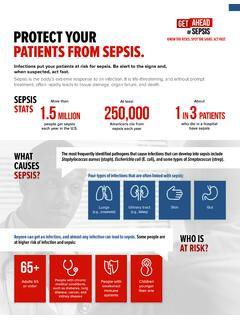
3 Who gets Sepsis ? Anyone can get Sepsis . The people at highest risk are infants, children, older adults, and people who have serious injuries or medical problems such as diabetes, AIDS, cancer, or liver disease. Colorized scanning electron micrograph of bacteria. Credit: Tina Carvalho, University of Hawaii at Manoa. How many people get Sepsis ? Each year, at least million adults in America develop Sepsis and nearly 270,000 die as a The number of Sepsis cases per year has been on the rise in the United This is likely due to several factors: There is increased awareness and tracking of Sepsis . People with chronic diseases are living longer, and the average age in the United States isincreasing. Sepsis is more common and more dangerous in older adults and in those with chronicdiseases.
4 Some infections can no longer be cured with antibiotic drugs. Such antibiotic-resistant infectionscan lead to Sepsis . Medical advances have made organ transplant operations more common . People are at higher risk for Sepsis ifthey have had an organ transplant or have undergone any other procedure that requires the use of medicationsto suppress the immune September 2019 Page 2 Common symptoms of Sepsis are: fever, chills, rapid breathing and heart rate, rash, confusion, and disorientation. Many of these symptoms are also common in other conditions, making Sepsis difficult to diagnose, especially in its early stages. What are the symptoms of Sepsis ? Credit: iStock. How is Sepsis diagnosed? Doctors will start by checking for the symptoms mentioned above.
5 They may also test the person s blood for an abnormal number of white blood cells or the presence of bacteria or other infectious agents. Doctors may also use a chest X-ray or a CT scan to locate an infection. How is Sepsis treated? Doctors typically treat people with Sepsis in hospital intensive care units. Doctors try to stop the infection, protect the vital organs, and prevent a drop in blood pressure. This almost always includes the use of antibiotic medications and fluids. More seriously affected patients might need a breathing tube, kidney dialysis, or surgery to remove an infection. Despite years of research, scientists have not yet developed a medicine that specifically targets the aggressive immune response seen with Sepsis .
6 More information about the symptoms, diagnosis, and treatment of Sepsis is available from the Centers for Disease Control and Prevention (CDC) . Credit: iStock. Are there any long-term effects of Sepsis ? Many people who survive severe Sepsis recover completely, and their lives return to normal. But some people, especially those with pre-existing chronic diseases, may have permanent organ damage. For example, in someone who already has impaired kidneys, Sepsis can lead to kidney failure that requires lifelong dialysis. There is also some evidence that severe Sepsis disrupts a person s immune system, making him or her more at risk for future infections. Studies have shown that people who have experienced Sepsis have a higher risk of various medical conditions and death, even several years after the episode.
7 More information about the long-term effects of Sepsis is available from the CDC and the Journal of the American Medical Association s Patient Page . What is the economic cost of Sepsis ? Sepsis treatment is expensive. It often involves a prolonged stay in the intensive care unit and complex therapies with high costs. The Agency for Healthcare Research and Quality lists Sepsis as the most expensive condition treated in hospitals, costing nearly $24 billion in People with Sepsis are two to three times more likely to be readmitted to the hospital than people with many other conditions, including heart failure, pneumonia, and chronic obstructive pulmonary Readmissions due to Sepsis are also more expensive than readmissions due to any of these other conditions.
8 Sepsis September 2019 Page 3 Content updated September 2019 What research is being done on Sepsis ? The National Institutes of Health supports many studies focused on Sepsis (see the NIH RePORTER database), some of which are clinical trials . Som e of these studies evaluat e the effectiveness of potentia l treatm ents. Others seek molecular clues in patients blood t hat could d iagnos e Sepsis early, allowing doctors to treat the condition before it is too late. Still others examine Sepsis in specific p opulations, such as premature babies; people with known risk factors, such as diabet es, can cer, or kidney or liver disease; or long-term Sepsis survivors. Articles, videos, images, and more about injury and illness, including Sepsis , can be found on the NIGMS Science Education does not provide specific medical advice, but rather provides users with information to help them better understand health and disease.
9 Please consult with a qualified health care professional for answers to personal medical questions. NIGMS is a part of the National Institutes of Health that supports basic research to increase our understanding of biological processes and lay the foundation for advances in disease diagnosis, treatment, and prevention. For more information on the Institute's research and training programs, see Learn More NIGMS Resources Biomedical Beat Blog Posts on Sepsis Other Resources Sepsis (MedlinePlus, NIH) Sepsis Webpage (CDC) for Disease Control and Prevention [Internet]. Atlanta: Department of Health and Human Services. Sepsis : data 2016 Aug 23 [cited 2019 Sep 10]. Available from: Central (PMC) [Internet]. Bethesda: National Center for Biotechnology Information, National Library of Medi-cine.
10 Hajje J, Blaine N, Salavaci J, Jacoby D. The centrality of Sepsis : a review on incidence, mortality, and cost of care. Healthcare (Basel). 2018 July 30 [cited 2019 Sep 10]; 6(3):90. Available from: CM, Moore BJ. National inpatient hospital costs: the most expensive conditions by payer, 2013. HCUP statistical brief #204 [Internet]. Rockville: Agency for Healthcare Research and Quality; 2016 May [cited 2019 Sep 10]. Available from: FB, Talisa VB, Balakumar V, Chang C-CH, Fine M, Yende S. Proportion and cost of unplanned 30-day readmissions after Sepsis compared with other medical conditions. JAMA [Internet]. 2017 Jan 22 [cited 2019 Sep 10]; 317(5):530-31. Available from.