Transcription of 1. BACKGROUND and PURPOSE
1 INSTRUCTIONS: DD Form 1380, Tactical Combat Casualty Care (TCCC) Card [Formerly: Field Medical Card] Page 1 of 2 1. BACKGROUND and PURPOSE a. Pre-Hospital or Pre-Medical Treatment Facility (pre-MTF) documentation of medical interventions by first responders at the point of injury (POI) is critical to ensuring continuity of care and providing meaningful analyses of medical interventions, techniques, tactics, and procedures rendered at the POI. b. In a deployed, combat, or training setting, all personnel have the potential to be casualties and all personnel have the potential to be first responders.
2 C. In accordance with Joint Publication 4-02, Health Service Support, dated 26 July 2012: First responder care capability is also known as tactical combat casualty care. Tactical combat casualty care [or TCCC] occurs during a combat mission and is the military counterpart to pre-hospital trauma life support. Pre-hospital trauma care in the military is most commonly provided by enlisted personnel and includes self-aid and buddy aid and combat life Tactical combat casualty care focuses on the most likely threats, injuries, and conditions encountered in combat and on a strictly limited range of interventions directed at the most serious of these threats and d.
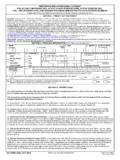
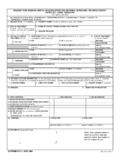
3 DD Form 1380 promotes Department of Defense goals of capturing documentation of pre-MTF medical interventions at the POI using a MIST format (Mechanisms of injury; Injuries; Signs & Symptoms; and Treatments). It is designed for use by all first responders, including non-medical personnel. 2. POLICY a. Commanders will ensure that all first responders carry and use DD Form 1380 to document pre-MTF care at the POI. Such care relates to both battle and non-battle injuries. b. Once completed, DD Form 1380 must be visibly attached to the patient. Upon arrival at a Role 2 or Role 3 MTF, DD Form 1380 will be included with the paper medical record, then scanned and entered into both the patient s electronic health record and the trauma system s trauma registry.
4 Role 2 and Role 3 MTF commanders must establish a clear process to ensure entry of the medical information recorded on DD Form 1380 into the both the electronic health record and the trauma registry. c. DD Form 1380 will be a component of the individual/improved first aid kit (IFAK), joint first aid kit (JFAK), and other first aid kits utilized. Corpsmen, combat medics, and tactical evacuation personnel should carry multiple blank versions of the form. d. First responders will complete all entries as fully as possible on the DD Form 1380 unless under extreme conditions whereby the casualty and/or provider s safety may be at additional risk.
5 E. Detailed instructions for preparing DD Form 1380 are provided in Table 1 and Table 2. f. All abbreviations authorized for use in DoD health records or DoD trauma registries may also be used on DD Form 1380. g. All entries on the DD Form 1380 will be made using a non-smearing pen or marker. h. All entries on the DD Form 1380 should be printed clearly, including the first responder s name. Table 1: Instructions for completing DD Form 1380 (Front of Card) Item Instructions Battle Roster # Write first letter of casualty s first name, then first letter of casualty s last name, then write the last four numbers of casualty s Social Security number.
6 For example, John Doe 123-12-1234 is Battle Roster # JD1234 . Evacuation (EVAC) Mark an X on the casualty s evacuation priority/precedence (Urgent; Priority; or Routine). Name Write casualty s name (Last, First). Last 4 Write last four numbers of casualty s Social Security number. Gender Mark an X on the casualty s gender (Male (M) or Female (F)). Date Write date of injury in DD-MMM-YY format. For example, 29-JUN-13 . Time Write 24 hour time of injury, and indicate whether local (L) or zulu (Z) time. For example, 1300Z . Service Write casualty s branch of service (USA, USAF, USCG, USN, USMC).
7 For civilians, write US CIV . For personnel, write NON US or a standard abbreviation for casualty s nationality. Unit Write casualty s unit name. Allergies Write casualty s known drug allergies. If no drug allergies, write NKDA (no known drug allergies). Mechanism of Injury Mark an X on the mechanism or cause of injury (artillery, blunt, burn, fall, grenade, gunshot wound (GSW), improvised explosive device (IED), landmine, INSTRUCTIONS: DD Form 1380, Tactical Combat Casualty Care (TCCC) Card [Formerly: Field Medical Card] Page 2 of 2 Item Instructions motor vehicle crash/collision (MVC), rocket-propelled grenade (RPG), other (specify)).
8 Mark all that apply. Injury Mark an X at the site of the injury(ies) on the body picture. For burn injuries, circle the burn percentage(s) on the figure. If multiple mechanisms of injury and multiple injuries, draw a line between the mechanism of injury and the anatomical site of the injury. TQ: R Arm (tourniquet, right arm) If a tourniquet is applied to the right arm, write type of tourniquet used and the time of tourniquet application. TQ: L Arm (tourniquet, left arm) If a tourniquet is applied to the left arm, write type of tourniquet used and the time of tourniquet application.
9 TQ: R Leg (tourniquet, right leg) If a tourniquet is applied to the right leg, write type of tourniquet used and the time of tourniquet application. TQ: L Leg (tourniquet, left leg) If a tourniquet is applied to the left leg, write type of tourniquet used and the time of tourniquet application. Time, Pulse (rate & location), Blood Pressure, Respiratory Rate, Pulse Ox % O2 Sat, AVPU, Pain Scale (0-10) Record vital signs (pulse rate and location, blood pressure, respiratory rate, oxygen saturation), level of consciousness (AVPU: Alert, responds to Verbal stimulus, responds to Pain stimulus, Unresponsive), and level of pain (on numeric rating scale of 0 to 10, with 0 being no pain and 10 being the worst pain) with time.
10 Table 2: Instructions for completing DD Form 1380 (Back of Card) Item Instructions Battle Roster # Write first letter of casualty s first name, then first letter of casualty s last name, and then write the last four numbers of casualty s Social Security number. For example, John Doe 123-12-1234 is Battle Roster # JD1234 . Evacuation (EVAC) Mark an X on the casualty s evacuation priority/precedence (Urgent; Priority; or Routine). C Mark an X for all Circulation hemorrhage control interventions. For tourniquets (TQ), mark category (Extremity, Junctional and/or Truncal) and write name of TQ(s) used.