Transcription of 2SLM CITH LearnLibGuide 08.qxp:Document 4 - …
1 Teach all the books in the Cat in the Hat s Learning Library series! IS A CAMEL A MAMMAL? All About Mammals978-0-679-87302-0 GLB: 978-0-679-97302-7 FINE FEATHERED FRIENDS: All About Birds978-0-679-88362-3OH SAY CAN YOU SAY DI-NO-SAUR? All About Dinosaurs978-0-679-89114-7 GLB: 978-0-679-99114-4ON BEYOND BUGS! All About In sects978-0-679-87303-7 GLB: 978-0-679-97303-4 WISH FOR A FISH: All About Sea Creatures978-0-679-89116-1 THERE S NO PLACE LIKE SPACE!All About Our Solar System978-0-679-89115-4 GLB: 978-0-679-99115-1OH SAY CAN YOU SEED?
2 All About Flowering Plants 978-0-375-81095-4OH, THE THINGS YOU CAN DO THAT ARE GOOD FOR YOU! All About Staying Healthy978-0-375-81098-5 GLB: 978-0-375-91098-2A GREAT DAY FOR PUPAll About Wild Babies978-0-375-81096-1 THERE S A MAP ON MY LAP! All About Maps978-0-375-81099-2 GLB: 978-0-375-91099-9IF I RAN THE RAIN FORESTAll About Tropical Rain Forests978-0-375-81097-8 GLB: 978-0-375-91097-5 INSIDE YOUR OUTSIDE! All About the Human Body978-0-375-81100-5OH SAY CAN YOU SAY WHAT S THE WEATHER TODAY? All About Weather978-0-375-82276-6 GLB: 978-0-375-92276-3OH THE PETS YOU CAN GET!
3 All About Our Animal Friends978-0-375-82278-0 CLAM-I-AM! All About the Beach978-0-375-82280-3 GLB: 978-0-375-92280-0I CAN NAME 50 TREES TODAY! All About Trees978-0-375-82277-3 GLB: 978-0-375-92277-0A WHALE OF A TALE!All About Dolphins, Porpoises, and Whales978-0-375-82279-7 GLB: 978-0-375-92279-4MY, OH MY A BUTTERFLY!All About Butterflies978-0-375-82882-9 GLB: 978-0-375-92882-6 ONE CENT, TWO CENTS, OLD CENT, NEW CENTAll About Money978-0-375-82881-2 GLB: 978-0-375-92881-9 MILES AND MILES OF REPTILES: All About Reptiles978-0-375-82884-3 GLB: 978-0-375-92884-0 Teaching ideas provided by Kristi Weikel, classroom teacher; Denise Barbazette, classroom teacher; and Susan Ade Potenza, who teaches science and language arts at St.
4 Martin s Episcopal School in Atlanta , CLASSROOM COPIES OF BOOKS FROM YOUR LOCAL BOOKSTORE OR House Children s Books School and Library Marketing 1745 Broadway New York, NY 10019 BN0914 4/09 Our Natural WorldOur HealthInside Your OutsideALLABOUT THEHUMANBODYABOUT THE BOOKThe Cat in the Hat takes Dick and Sally for a tripthrough the Inside Your Outside Machine. They learnabout their insides from their toes to their brains theworkings of the brain and their skeletons. They studytheir senses and muscles, eyes, and intestines.
5 Whenthe ride is done, the most important thing they learnis that something is going on inside them all the :Students will be able to draw and labelthe systems of the :large sheets of butcher paper, crayon,markers, pencils. pictures of the body systems DIRECTIONS:1) After reading the book, review the different body ) As a group, label the major parts of the ) Break the class into four groups and assign one child in each groupto lay down on their piece of butcher paper while the other groupmembers trace that ) Each group will draw in a different body system on the traced bodyon the butcher ) Have students label the picture and all major ) Display the four labeled body systems around the CAT IN THE HAT S LEARNING LIBRARY logos and word mark are trademarks of Dr.
6 Seuss Enterprises, THE CAT IN THE HAT S LEARNING LIBRARY logos Dr. Seuss Enterprises, 1998. All Rights Reserved. Dr. Seuss properties TM & 2009 Dr. Seuss Enterprises, All Rights ReservedOh Say Can You Say What s theWeather Today? ALLABOUTWEATHERABOUT THE BOOKThe Cat in the Hat, with the help of Thing One and Thing Two, takes Dick and Sallyaround the world to check out all kinds ofweather. They learn about meteorologists,weather balloons, and thermometers. They study the water cycle. They learn about rain,sleet, snow, and clouds.
7 They go from the NorthPole to a tropical jungle and back home :Students will be able to observehow water turns to steam and then back towater in the form of rain. They will be able to illustrate the water :books about the weather cycle, electric teapot, largemetal pan lid, paper, crayonsDIRECTIONS:1) Fill an electric teapot with water and ) The teacher will hold the lid over the steam that comes from ) Point out to students that as the steam rises and hits the lid itwill condense and form water drops. These drops of water willthen fall like ) Using other books and resources about the water cycle, have studentswrite a description of the process and make their own : MakingRainI Can Name 50 Trees Today!
8 ALLABOUTTREESABOUT THE BOOKW hile stopping to admire some of theworld s most amazing trees, the Cat and Co. teach beginning readers how to identifydifferent species from the shape of theircrowns, leaves, lobes, seeds, bark, and will learn about many trees common to North :Students will create their owntree logbooks to record information theydiscover about local trees in their :notebook, measuring tape, tape, colorpencils or crayons, encyclopedia, the InternetDIRECTIONS:1) Have students set up notebooks as tree logbooks.
9 They can decorate the front of the ) Send them on a tree hunt around their neighborhood. Foreach new tree they find, have them create an entry withthese components (see sample log in story on p. 37):a. Draw a picture of the tree. b. Describe the shape of the Measure the width of the trunk. d. Collect a sample of its leaves and tape in logbook. e. Describe the List any other interesting facts about that ) Ask students to name the tree if known, otherwise researchits name using the information collected, encyclopedias, orthe ) Have students share and compare their :My OwnTree LogNEW!
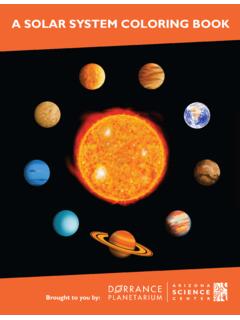
10 There s No Place Like Space!ALLABOUTOURSOLARSYSTEMABOUT THE BOOKB last off for educational fun! Beginningreaders and budding astronomers arelaunched via Seussian sorcery on awild trip to visit the eight planets in oursolar system, along with the Cat in theHat, Thing One, Thing Two, Dick, and :Students will be able toobserve the moon s shape and draw whatthey see, keeping a daily log. Studentswill be able to compare their results withthe newspaper s diagrams of the :moon-watch log sheet, current newspaperDIRECTIONS:1) Have students moon watch each night for a two-weekperiod, keeping a journal of their thoughts, questions, andcomments.