Transcription of 3-Piece Tinplate Aerosol Cans
1 3-Piece Tinplate Aerosol CansFactors in Container Selection and The Manufacturing ProcessSouthern Aerosol Technical AssociationAerosol 101 Three Piece Steel CansMarch 23, 2011 Kevin Richards BWAY CorporationOverview Factors and Test Methods - Container Selection Regulatory / USDOT Requirements Commercial Standards / CSPA Materials and the Can Manufacturing ProcessCan Size and Style Aerosol Can Sizes Sales Code Designation Expresses can diameter (at doubleseam) X can height(doubleseam to doubleseam) Three digit number First digit = whole number of inches Second two digits = 16th s of an inch Example: 211 x 604 Can Diameter = 2-11/16 inches Can Height = 6-4/16 inchesCan Size and StyleFormula/Container Selection Solvent or water-based formula Typically Solvent-based: plain (unlined) cans Water-based.
2 Plain or lined cansFormula/Container Selection pH is a critical factor in corrosivity and whenconsidering whether to employ a can lining pH > recommended, > even better pH 7-9, consider lined cans Linings often unnecessary and incompatible with morealkaline formulas pH > 9 or 10, consider plain cans Consider adding corrosion inhibitors to combatliquid and/or vapor phase corrosionFormula/Container Testing To avoid product and container degradation,a variety of test methods are available toevaluate formula/container compatibility Electrochemical Testing Testpacks / Can StabilityElectrochemical Testing Several accelerated corrosion test methods arecommonly used, often in combination Crevice cell, driven can cell, cyclic polarization,electrochemical impedance spectroscopy Can predict the mode and severity of corrosion thatis anticipated with a given formula These are screening tools, not a replacement fortestpacks Quick indication of stability, reduce developmenttime and expense wasted on failed testpacksTestpacks / Can Stability Static storage of filled cans cans stored at various controlledtemperatures Opened and evaluated at specific intervals Best measure of product/container stability,but time consumingRegulatory USDOT is the regulatory body for aerosols Primary Purpose - Safe shipment of filledcans Code of Federal Regulations (CFR) CFR 49, 100 to 185 Regulatory Aerosol - USDOT Classification Three main groups, based on internal pressure offilled can at 130 F Non-spec (2N)
3 2P 2Q Customer/Filler must determine which can specis needed based on actual pressure @ 130 FRegulatory Overview: Non-Spec, 2P, & 2QN o n - S p e c ( 2 N )D O T 2 PD O T 2 QI n t e r n a l P r e s s u r e - M A X1 4 0 p s i g .1 6 0 p s i g .1 8 0 p s i g .B u c k l e S t r e n g t h - M I N1 4 0 p s i g .1 6 0 p s i g .1 8 0 p s i g .B u r s t S t r e n g t h - M I N2 1 0 p s i g .2 4 0 p s i g .2 7 0 p s i g .W a l l T h i c k n e s s - M I NN / A. 0 0 7 . 0 0 8 R e q d C a n M a r k i n gN / AY E SY E SP r e s s u r e T e s t i n g( U S D O T )N / A1 / 2 5 , 0 0 01 / 2 5 , 0 0 0 Commercial Standards CSPA Standards Covers the most common can sizes Information for both straight-sided and necked-in cans Dimensions typically given a letter designation, K-dimension Commercial Standards3-Piece Can Manufacturing Incoming Material Coil Cutting Coating Lithography End Manufacturing Can AssemblyIncoming Material Electrolytic Tin Plate (ETP) Steel onto which a very thin layer of tin iselectrolytically deposited Base Box Unit of surface area = 31,360 in2 Basis Weight / Baseweight Expression of metal thickness as weight/SA(pounds per Base Box)Incoming Material Basis Weight (BW)
4 Plate Thickness expressed in Pounds/Base Box Calculation: (inches) Basis Weight Range for Aerosol Body Plate 65# to 85# Basis Weight Range for Aerosol End Plate 100# to 135#Incoming Material Temper: Measure of plate hardness Contributes to can strength Higher temper allows for use of lower basisweight, but offers reduced ductility Temper Values: Single Reduced: T1 to T5 Double Reduced: DR8 - DR9 Common tempers used in Aerosol components: Bodyplate: DR8 Domes/Tops: T2-T4 Bottoms: T5 Incoming Material Tin Coating Refers to the amount of tin distributed onboth sides of the plate lb/BB typical for Aerosol cans (20 ETP) Differential Plate: lbs/BB lb/BB on one side lb/BB on the otherCoil Line Coil Cutting Typical Coil is 18,000 to 25,000 lbs Ordered by width, cut to specific sheet lengthCoating Interior Coatings Common interior coating systems Epoxy Epoxy Phenolic VinylCoating Exterior Coatings Size Coat, if necessary White Coat VarnishLithography Offset Lithography Multiple color presses.
5 Allows for the application of twoor more colors in one pass Half-tones allow the appearance of shading and gradationof different colors for photo-quality decoration Protective varnish applied over the decorated plate Both conventional (temperature/heat cure) and UV-curedinks and varnishes are used in decorating aerosols4-Color Process LithographyEnd Manufacture Aerosol dome (top) manufacture Sheets are either fed directly or sheared intostrips and fed into a punch press Blank and Draw - Blanks are punched fromthe strip, this initial draw forms a cup End Manufacture Aerosol dome (top) manufacture Cup is transferred through multi-stageconversion press Cup is trimmed and critical dimensions areformed, including the one-inch curl Cut-edge is curled Compound is applied, this compound serves as agasket in the doubleseam to ensure hermetic sealEnd ManufactureEnd Manufacture Aerosol Bottom Manufacture Begins with sheared strips or sheets being fedinto a punch press Blank is punched and the bottom is formed Cut-edge is curled End compound is appliedCan Assembly Slitter/Bodymaker Sheets of body plate are cut into individual bodyblanks.
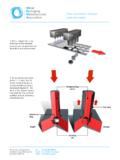
6 Size is dependent upon the diameter andheight of the can Body blanks are transferred to bodymaker. Theblank is flexed into a cylinder with a slightoverlap for weldingCan Assembly Welder The overlapped portion of the cylinder is passedbetween two copper electrodes. Electricalcurrent and pressure are applied to weld the twosurfaces Assembly Sideseam Stripe Application (optional) A liquid or powder coating is applied to theuncoated metal adjacent to the weld. Thecylinder is transported through a series of ovensto cure the stripe material May be applied to interior and/or exterior ofcylinderCan Assembly Necking (where applicable) The diameter of the cylinder at the top andbottom are reduced Provides cosmetic appeal/shape Flanging Each end of the cylinder is flanged, this will laterbecome the body hook of finished doubleseamCan AssemblyCan AssemblyCan Assembly Top and Bottom Doubleseam One end is seamed on first, then the can isinverted and the other end is applied Takes place in two operations The body hook and cover hook are first formed withthe end curl and cylinder flange Pressure is applied around the seam to tighten andsmoothCan AssemblyCross-Section of DoubleseamCan Assembly Tester cans are fed through an in-line rotary air tester The can is sealed in the pocket and internalpressure is applied (90 - 120 psig)
7 If a minimum volume of air displacement isdetected, the can is rejected Packaging (palletizer)Thank youQuestions?Contact Kevin Richards