Transcription of 5th Math Grade Level Overview - Georgia Standards
1 These materials are for nonprofit educational purposes only. Any other use may constitute copyright infringement. Georgia Standards of Excellence Grade Level Curriculum Overview GSE Fifth Grade Mathematics Georgia Department of Education Richard Woods, State School Superintendent July 2017 Page 2 of 74 All Rights Reserved TABLE OF CONTENTS Curriculum Map .. 3 Unpacking the Standards .. 4 Standards For Mathematical Practice .. 4 Content Standards .. 5 Mindset and Mathematics ..49 Vertical Understanding of the Mathematics Learning Trajectory.
2 50 Research of Interest to Teachers .. 51 GloSS and IKAN .. 51 Fluency .. 51 Arc of Lesson/ math Instructional Framework .. 52 Unpacking a Task .. 53 Routines and Rituals Teaching math in Context and Through Problems .. 54 Use of Manipulatives .. 55 Use of Strategies and Effective Questioning .. 56 Number Lines .. 56 math Maintenance Activities .. 57 o Number Corner/Calendar Time .. 59 o Number Talks .. 60 o Estimation/Estimation 180 .. 62 Mathematize the World through Daily Routines .. 65 Workstations and Learning Centers.
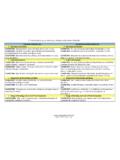
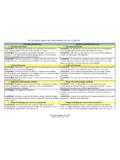
3 65 Games .. 65 Journaling .. 66 General Questions for Teacher Use .. 67 Questions for Teacher Reflection .. 68 Depth of Knowledge .. 69 Depth and Rigor Statement .. 70 Additional Resources 3-5 Problem Solving Rubric (creation of Richmond County Schools) .. 71 Literature Resources .. 72 Technology Links .. 72 Resources Consulted .. 73 Georgia Department of Education Richard Woods, State School Superintendent July 2017 Page 3 of 74 All Rights Reserved GSE Fifth Grade Curriculum Map Unit 1 Unit 2 Unit 3 Unit 4 Unit 5 Unit 6 Unit 7 Unit 8 Order of Operations and Whole Numbers Adding and Subtracting with Decimals Multiplying and Dividing with Decimals Adding, Subtracting.
4 Multiplying and Dividing Fractions 2D Figures Volume and Measurement Geometry and the Coordinate Plane Show What We Know ALL These units were written to build upon concepts from prior units, so later units contain tasks that depend upon the concepts addressed in earlier units. All units will include the Mathematical Practices and indicate skills to maintain. However, the progression of the units is at the discretion of districts.
5 NOTE: Mathematical Standards are interwoven and should be addressed throughout the year in as many different units and tasks as possible in order to stress the natural connections that exist among mathematical topics. Grades 3-5 Key: G= Geometry, MD=Measurement and Data, NBT= Number and Operations in Base Ten, NF = Number and Operations, Fractions, OA = Operations and Algebraic Thinking. Georgia Department of Education Richard Woods, State School Superintendent July 2017 Page 4 of 74 All Rights Reserved Standards FOR MATHEMATICAL PRACTICE Mathematical Practices are listed with each Grade s mathematical content Standards to reflect the need to connect the mathematical practices to mathematical content in instruction.
6 The Standards for Mathematical Practice describe varieties of expertise that mathematics educators at all levels should seek to develop in their students. These practices rest on important processes and proficiencies with longstanding importance in mathematics education. The first of these are the NCTM process Standards of problem solving, reasoning and proof, communication, representation, and connections. The second are the strands of mathematical proficiency specified in the National Research Council s report Adding It Up.
7 Adaptive reasoning, strategic competence, conceptual understanding (comprehension of mathematical concepts, operations and relations), procedural fluency (skill in carrying out procedures flexibly, accurately, efficiently and appropriately), and productive disposition (habitual inclination to see mathematics as sensible, useful, and worthwhile, coupled with a belief in diligence and one s own efficacy). Students are expected to: 1. Make sense of problems and persevere in solving them. Students solve problems by applying their understanding of operations with whole numbers, decimals, and fractions including mixed numbers.
8 They solve problems related to volume and measurement conversions. Students seek the meaning of a problem and look for efficient ways to represent and solve it. They may check their thinking by asking themselves, What is the most efficient way to solve the problem? , Does this make sense? , and Can I solve the problem in a different way? 2. Reason abstractly and quantitatively. Fifth graders should recognize that a number represents a specific quantity. They connect quantities to written symbols and create a logical representation of the problem at hand, considering both the appropriate units involved and the meaning of quantities.
9 They extend this understanding from whole numbers to their work with fractions and decimals. Students write simple expressions that record calculations with numbers and represent or round numbers using place value concepts. 3. Construct viable arguments and critique the reasoning of others. In fifth Grade , students may construct arguments using concrete referents, such as objects, pictures, and drawings. They explain calculations based upon models and properties of operations and rules that generate patterns.
10 They demonstrate and explain the relationship between volume and multiplication. They refine their mathematical communication skills as they participate in mathematical discussions involving questions like How did you get that? and Why is that true? They explain their thinking to others and respond to others thinking. 4. Model with mathematics. Students experiment with representing problem situations in multiple ways including numbers, words (mathematical language), drawing pictures, using objects, making a chart, list, or graph, creating equations, etc.