Transcription of A Conversation with - Arbordale Publishing
1 A Conversation with katharine HallAuthor of Polar Bears and Penguins, Clouds, Trees, and Amphibians and Reptiles How have you decided what topics to write about in the series? I started with Polar Bears and Penguins because so many kids and even adults! think that these animals inhabit the same area. So I really wanted to pull them apart and say, no, this is where polar bears are and this is where penguins are, and they are completely different regions. So comparing/contrasting two groups that are frequently confused is a fun topic and probably my favorite approach. But there are also things that are around us all the time that we don t necessarily think about or examine.
2 Those make great topics because they involve exploring something familiar and learning new you have a certain approach to research?My biggest problem has always been a tendency to over-research, so the first step is always to set the boundaries. What is it I m focusing on? How narrow or broad is my focus? Am I comparing two different things or examining the differences that exist within one category? Then from there I can start digging into the details. Have you found interesting facts that you just couldn t fit in the books?Oh, tons! For Trees I really wanted to introduce clonal trees. Did you know that when you see a stand of aspen trees, they are all the same tree? A single root system can have multiple stems.
3 Different stems can bloom and grow and die, but the root system/overall colony structure keeps living. The Quaking Aspen colony in Utah is at least 80,000 years old and maybe as much as a million years old! That s pretty that you have written four books in the Compare and Contrast series, do you begin each new book with the same perspective?Basically yes. I want kids to think critically about the world around them, whether that means thinking deeply about something they are already familiar with or learning something new about a topic that was unfamiliar or confusing. As an avid reader, what were some of your favorite books as a child?How long of a list do you want? I could go on forever, but I ll try to limit myself here.
4 When I was little-little, I loved the Baby Blue Cat books and anything/everything by Jan Brett. Then by elementary school, I basically read everything and anything I could get my hands on. In terms of non-fiction, I have always enjoyed biographies. My mom stocked our bookshelves with biographies of famous women in history, famous inventors, scientists, and mathematicians books that introduced me to important people and moments in history and helped expand my understanding of the world. For fiction, the Harry Potter series by JK Rowling and the Song of the Lioness series by Tamora Pierce were and still are near and dear to my there certain authors that inspire your writing today?
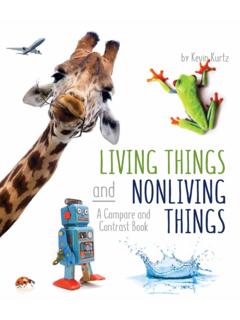
5 Jennifer Keats Curtis is one of my favorite children s non-fiction writers, although her books tend to be written for a slightly older group than my Compare and Contrast books. I absolutely love her latest book, Lucky Litter and cannot get over how cute those wolf pups are! I also really enjoy Kein Kurtz work, so I am thrilled to see Kevin jumping in on Arbordale s Compare and Contrast series with a book of his own. What advices do you have for young writers?The single most important thing in writing is to read. Well, and to write, of course, but it all starts with reading. Read books in the genre you want to write in and read books in completely different genres or about completely different topics. Read books by authors you love and admire, and read books by authors you have never heard of and have nothing in common with .
6 Read books that make you so upset you want to chuck them at the wall and books that make you want to curl up with a blanket and never put them down (oddly enough, these often tend to be the same books). And while you re reading and broadening your horizons, start to write. Write all the time. Keep notebooks around or type out ideas on your phone when you get a spare minute. Play with your writing and do unexpected things. There is no right way to write. You can plan out everything before you write a single word or just start writing and see where it goes. You can start at the beginning, or jump around, or even start with your ending and work backwards. Find out what works for you and stick with do you have coming up next?
7 There s another compare and contrast book in the works! This one looks at mammals as an animal class what are the traits that all mammals have in common? And how do those traits appear differently in mammals that live on land versus mammals that live in the water? I really love this one because I was able to sneak in a few family photos. My puppy makes an appearance (he is now much larger than he was when we took that picture) and, since humans are mammals too, I found the cutest kids in the world to photograph: my nephew and several cousins (alright, maybe I m slightly biased in my estimation of the cutest kids in the world, but I m an aunt. It s allowed). To continue this Conversation or learn more about Arbordale Publishing contact us:Email: (843) 971-6722