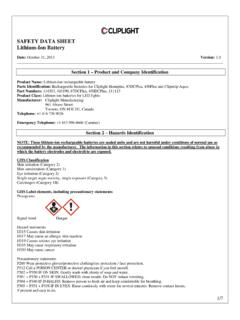
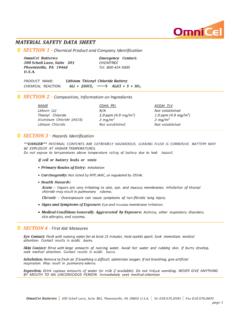
Transcription of AG-5.4-AUG09, Guidelines for Handling Lithium …
1 Technical DataGuidelines for Handling Lithium BatteriesCatalog Numbers 1747-BA, 1754-BAT, 1755-BAT, 1756-BA1, 1756-BA2, 1756-BATA, 1756-BATM, 1757-PLXBAT, 1763-BA, 1769-BA, 1770-XO, 1770-XR, 1770-XY, 1770-XYB, 1770-XYC, 1770-XZTopicPageSafety Considerations3 Storing Lithium Batteries4 Transporting Lithium Batteries5 Installing and Replacing Lithium Batteries5 Disposing of Lithium Batteries5 Hazards to Personnel72 Guidelines for Handling Lithium batteries Publication - August 2009 Important User InformationSolid state equipment has operational characteristics differing from those of electromechanical equipment. Safety Guidelines for the Application, Installation and Maintenance of Solid State Controls (Publication available from your local Rockwell Automation sales office or online at ) describes some important differences between solid state equipment and hard-wired electromechanical devices. Because of this difference, and also because of the wide variety of uses for solid state equipment, all persons responsible for applying this equipment must satisfy themselves that each intended application of this equipment is no event will Rockwell Automation, Inc.
2 Be responsible or liable for indirect or consequential damages resulting from the use or application of this examples and diagrams in this manual are included solely for illustrative purposes. Because of the many variables and requirements associated with any particular installation, Rockwell Automation, Inc. cannot assume responsibility or liability for actual use based on the examples and patent liability is assumed by Rockwell Automation, Inc. with respect to use of information, circuits, equipment, or software described in this of the contents of this manual, in whole or in part, without written permission of Rockwell Automation, Inc., is this manual, when necessary, we use notes to make you aware of safety information about practices or circumstances that can cause an explosion in a hazardous environment, which may lead to personal injury or death, property damage, or economic information that is critical for successful application and understanding of the information about practices or circumstances that can lead to personal injury or death, property damage, or economic loss.
3 Attentions help you identify a hazard, avoid a hazard and recognize the may be on or inside the equipment, for example, drive or motor, to alert people that dangerous voltage may be may be on or inside the equipment, for example, drive or motor, to alert people that surfaces may reach dangerous HAZARDBURN HAZARDG uidelines for Handling Lithium batteries 3 Publication - August 2009 Lithium batteries are primary (not rechargeable) cells that give extended memory support for Rockwell Automation ConsiderationsUse the battery for its intended application only. Do not: recharge. open, puncture, or crush. incinerate or expose to high temperatures. solder leads. short positive or negative terminals together. ship or dispose except according to the procedures in this document and all applicable local caution when installing and replacing Lithium batteries in equipment in hazardous locations. ATTENTIONF ailure to follow the Guidelines in this document may result in damaged equipment and personal not substitute any other battery than that which is recommended for a specific product.
4 Substituting another battery could result in an unsafe condition and causes the processors to be non-compliant with hazardous location standards and Hazard - batteries must be installed or replaced only in an area known to be D'EXPLOSION - Afin d'eviter tout risque d'explosion, s'assurer que l'emplacement est designe non dengereux avant de changer la Guidelines for Handling Lithium batteries Publication - August 2009 Storing Lithium batteries Regularly monitor the temperature and humidity of the storage area. Store in the original containers, away from flammable materials. Use a first-in/first-out system for Handling stored batteries . Keep track of storage time. Reference storage time to the date of manufacture. Do not store batteries longer than 10 years. Do not store used batteries longer than 3 months before disposal. Ventilate and protect the storage area against Temperatures for Lithium BatteriesBatteryStorage Temperature1747-BAStore in a cool, dry environment with C ( F) temperatures and humidity.
5 1754-BATS tore in C ( F) temperatures. 1756-BA11756-BA21769-BA Store in C ( F) temperatures. Refer to the following recommendations for each battery. 1756-BA1: store at 39 C (102 F) 1756-BA2: store at 29 C (84 F) 1769-BA: store at 39 C (102 F) To avoid leakage or other hazards, do not store batteries above 60 C (140 F) for more than 30 not store in temperatures above 30 C (86 F) or relative humidity above 30%.1763-BAStore in a cool, dry environment with C ( F) temperatures and humidity. 1770 seriesDo not store in temperatures above 100 C (212 F). Guidelines for Handling Lithium batteries 5 Publication - August 2009 Transporting Lithium BatteriesThe transportation of Lithium batteries must be in accordance with all relevant national and international regulations. For more information regarding the transportation restrictions and Guidelines for a replacement battery, refer to the applicable Lithium battery Material Safety Data Sheet (MSDS) at Installing and Replacing Lithium BatteriesFor some products, only specific personnel may remove or replace the batteries .
6 Refer to the documentation that shipped with the product for detailed installation instructions. If installing or replacing a battery in a hazardous location, refer to Safety Considerations on page of Lithium BatteriesATTENTION Do not incinerate or dispose of Lithium batteries in general waste collection. They may explode or rupture violently. Collect batteries for disposal carefully to prevent short circuiting, compacting, or destroying the battery case. Review and comply with all relevant local, state, and country regulations dealing with the disposal of these materials. You are legally responsible for hazards created while your battery is being product contains a sealed Lithium battery that may need to be replaced during the life of the the end of its life, the battery contained in this product should be collected separately from any unsorted municipal collection and recycling of batteries helps protect the environment and contributes to the conservation of natural resources as valuable materials are Guidelines for Handling Lithium batteries Publication - August inspect all batteries for damage to the battery casing or leakage of electrolyte.
7 If a battery is damaged and/or leaking, see Disposing of Damaged or Leaking batteries on page the battery has leads and is clean and undamaged, use side cutters to remove the leads as close to the body of the battery as to applicable regulations for more detailed information regarding the packing, shipping, and transporting of Lithium of Damaged or Leaking BatteriesYou must wear protective clothing (protective eyewear, clothes, safety shield, and self-contained breathing apparatus).Do not: pick up ruptured batteries with bare hands, as Lithium can cause skin burns. Use tongs, scoops, or a shovel to place the batteries in a mineral-oil-filled container. breathe fumes. Ventilate the area to disperse fumes before entering the toxic or corrosive material comes into contact with your eyes or skin, flush with water and consult a physician. For more information regarding actions to take in this situation, refer to the applicable Lithium battery Material Safety Data Sheet (MSDS) at ATTENTIONDo not damage the battery case when removing for Handling Lithium batteries 7 Publication - August 2009 Hazards to PersonnelPotential hazards to personnel include: burns from overheated cells.
8 Injury from explosion or violent rupture of overheated cells. injury from fire caused by combustion of Lithium . exposure to toxic or corrosive liquids or gases from the battery or its decomposition more information regarding personnel hazards and first aid, refer to the applicable Lithium battery Material Safety Data Sheet (MSDS) at ResourcesYou can view or download publications at To order paper copies of technical documentation, contact your local Rockwell Automation distributor or sales Automation SupportRockwell Automation provides technical information on the Web to assist you in using its products. At , you can find technical manuals, a knowledge base of FAQs, technical and application notes, sample code and links to software service packs, and a MySupport feature that you can customize to make the best use of these an additional level of technical phone support for installation, configuration, and troubleshooting, we offer TechConnect support programs.
9 For more information, contact your local distributor or Rockwell Automation representative, or visit AssistanceIf you experience a problem within the first 24 hours of installation, please review the information that's contained in this manual. You can also contact a special Customer Support number for initial help in getting your product up and Product Satisfaction ReturnRockwell Automation tests all of its products to ensure that they are fully operational when shipped from the manufacturing facility. However, if your product is not functioning and needs to be returned, follow these FeedbackYour comments will help us serve your documentation needs better. If you have any suggestions on how to improve this document, complete this form, publication RA-DU002, available at , Rockwell Automation, and TechConnect are trademarks of Rockwell Automation, Friday, 8 5 ESTO utside United StatesPlease contact your local Rockwell Automation representative for any technical support StatesContact your distributor.
10 You must provide a Customer Support case number (call the phone number above to obtain one) to your distributor to complete the return United StatesPlease contact your local Rockwell Automation representative for the return - August 2009PN 955118-04 GSupersedes Publication - November 2004 Copyright 2009 Rockwell Automation, Inc. All rights reserved. Printed in the