Transcription of An online distance learning course for engineering ...
1 An online distance learning course for engineering personnel involved in the torque tightening of threaded fasteners. Training on Best Practice Guidance for the Torque tightening of Threaded Fasteners 2016 Bolt Science Limited Torque tightening - Best Practice Guidance Introduction to Threaded Fasteners Bolts, screws and studs what s the difference? Terminology and the size of the bolt or the screw. Different head styles and the across flats/socket size. Background to threads the th read form itself, the pitch of the thread, how a thread size and pitch can be checked. The difference between a fine and coarse thread and the reasons why which type is normally selected.
2 Thread tolerances and why the bolt thread must be slightly smaller than the nut thread. Protrusion of the bolt thread past the nut and the number of threads on the bolt within the joint. Blind holes and getting the bolt length correct. Bolts, nuts and washers The strength of metric bolts and their marking. Styles of nuts - the use of thin, normal and high nuts. Checking that the bolt and nut strengths are appropriate for each other. The use of washers and lock washers. The types of self-locking nuts and their usage. tightening Problems and how to avoid them Problems that can arise from overtightening. Issues arising from thread stripping of the bolt thread.
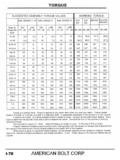
3 Issues arising from thread stripping of the internal (nut) thread. Under tightening and fatigue failure of the bolt. Under tightening and self-loosening of the fastener. Torque tightening What is meant by a tightening torque. Units used to measure torque. tightening torque and the importance of bolt load. Bolt stretch and joint compression due to tightening . Factors affecting how much bolt load you get for a given torque applied. Background to the torque value and how it is arrived at, use of a torque table. Torque tightening and the lubrication condition. The failure of bolted joints occurs across most industries. Some failures are disastrous resulting in a loss of life.
4 The frequent cause of such failures is that the fastener tightening process was inadequate in some way. With hindsight, most accidents are preventable. In the workplace there is an obligation that a person s competence is managed in accordance with applicable legislation and standards taking into account best practice guidance. The purpose of this training course is to provide advice as to what is generally regarded as best practice guidance in regard to the torque tightening of threaded fasteners. This is an outline of the material covered in the training course . A handbook which contains key reference information on best practice guidance, that is presented and explained the course , is available with the course .
5 On achieving the required mark in an end of course test, a completion certificate is available. This training does not make any determination of an individual's capabilities in applying this general knowledge within a specific work environment or under actual working conditions. It remains the sole responsibility of the employer of the individual to determine competency for assigned tasks and work. Types of Torque Wrenches and their Usage The different types of torque wrench in common usage. Use of a torque wrench and tightening to the specified torque value. The setting of a clicker type torque wrench. An overview of hydraulic, pneumatic and impact wrenches and the use of torque multipliers.
6 What should be tightened, the bolt head or the nut? Under and over torqueing and the implications of each. tightening to a target value when a tolerance is given for torque. tightening Joints consisting of Multiple Bolts Why tightening sequences are specified. Common tightening sequences for circular bolting patterns. Common tightening sequences for non-circular bolting patterns. Completion of a check pass. Quality Checks Torque Auditing The use of witness marking. The use of loose nut indicators. Approaches to torque auditing. Residual and break loose torque. The on-torque residual torque auditing method. The static audit torque assessment.
7 Emphasis is given in the training to key points that must be met and action that is needed to be taken to ensure that the assembly is fit for purpose. Safety doesn't happen by accident. Author Unknown The aim of this training course is to provide key knowledge as to what constitutes good practice for assemblies with torque tightened fasteners. The cost of preventing a bolting problem is always substantially less than the cost of repair and other costs. Welcome Welcome to this online distance learning course on bolting and to these course instructions. In this introduction we cover: How to find your way around the course . Details of the screens that you will come across.
8 How to complete the assessments. This training was created by Bolt Science, a company that specialises in solving bolting issues. Nature of the training material The training is: Completely online and can be taken whilst at work on a PC, or if you wish, from home or other location using a laptop, or a tablet device such as an iPad. The training is made up of a number of presentations on various topics which include exercises and quizzes. The pace at which you go through the training is up to you. The LMS ( learning Management System) that the presentations are linked to, will track your progress as you complete the training modules and quizzes.
9 Access to the Training You will have been provided with details that give you access to the training (a user ID which is normally your email address and password) that will be unique to you. These will allow you to log onto the training from wherever you have an Internet connection, at whatever time, on whatever device provides web access. The course is made up of a number of presentations, quizzes and other material. We recommend that you study the course in the order that it is presented on the course content list. Features of the Presentation Introduction to the online Training Specialists in Bolted Joint Technology Quizzes As part of the training material there is a quiz at the end of each section to assess your understanding.
10 You can take the quiz at the time of studying the presentation, or at a later time. You can also take the quiz more than once if you don t achieve the 80% pass score. It allows you to review the questions and informs you of those which you answered incorrectly. The questions are drawn from a question bank so if you have another go at the quiz, the questions may be different. Revise the material first. The questions are such that it is relatively easy to get some correct, but to get 100% you need to study the material provided and read the questions carefully. The questions can be answered from the information provided in the presentation and the notes.