Transcription of APA Headings - Ashford Writing
1 APA Headings This resource highlights updates to APA 6th edition that relate to the use of Headings to separate and classify sections of an academic paper. A heading is a short label or phrase that describes what a particular section of a document is about. Essays and short papers that are often read from beginning to end do not usually need Headings . However, for research papers and other lengthy or complex documents such as reports, proposals, or case studies, Headings can help readers quickly and easily locate specific pieces of information in the document.
2 The use of Headings effectively organizes ideas within the essay, and succinct Headings aid the reader in identifying key points within the Writing (APA, 2009). Be sure to check your Course Guide carefully to determine if Headings are required for a specific assignment. For a more complete discussion of APA heading requirements, please visit and When planning and preparing Headings for an academic essay, APA 6th Ed. (2009) requires authors to consider the following, Levels of heading establish the hierarchy of sections via format or appearance.
3 All topics of equal importance have the same level of heading throughout a manuscript. For example, in a multi experiment paper, the Headings for the Method and Results sections in Experiment 1 should be the same level as the Headings for the Method and Results section in Experiment 2. Avoid having only one subsection heading and subsection within a section, just as you would in an outline. Use at least two subsection Headings within any given section, or use none ( , in an outline, you could divide a section numbered I into a minimum of A and B sections; just an A section would not stand alone (p.))
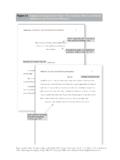
4 62) Levels of Headings Within the heading style recommended by APA are five possible formatting arrangements. The heading structure for all sections of an academic essay follow the top down sequence, as identified in the chart below. Each section of the essay begins with the highest level of heading, with subsections following based on the length and complexity of the paper. Keep in mind the introduction of the paper may or may not have a heading. Also, do not label Headings with numbers or letters. Level Format 1 Centered, Boldface, Uppercase and Lowercase Headings 2 Left aligned, Boldface, Uppercase and Lowercase Heading 3 Indented, boldface, lowercase heading with a period.
5 4 Indented, boldface, italicized, lowercase heading with a period. 5 Indented, italicized, lowercase heading with a period. Sample of Headings Though the sample below provides an example for each level of heading, most papers have no more than three levels of Headings . Asynchronous Communication (Level 1) Application and Examples (Level 2) Improving Asynchronous Communication (Level 2) Recommended techniques and tools. (Level 3) Learning community. (Level 3) Synchronous Delivery Tools (Level 1) Application and Examples (Level 2) Benefits and Limitations (Level 2) Technology.
6 (Level 3) Course management. (Level 4) Content management. (Level 4) Learning objects. (Level 5) Tools. (Level 5) Facilitator and learner interaction. (Level 3) Blended Learning Systems (Level 1) Application and Examples (Level 2) Benefits and Limitations (Level 2) Content delivery models. (Level 3) Learning experience. (Level 3) Discussion (Level 1) Technology (Level 2) Best Practices (Level 2) Student Success (Level 2) Conclusions and Future Prospects (Level 2)