Transcription of APA Sample Paper - waketech.edu
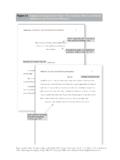
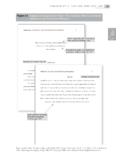
1 Smoking Cessation Strategies Student Name School Name Check with your professor to find out what information is required for the title page. Running head: SMOKING CESSATION STRATEGIES 1 APA Sample Paper Running head is left-aligned. Page number is right-aligned. All text should be 12 point Times New Roman font. The sole purpose of this APA Sample Paper is to demonstrate APA style, 6th ed. This Paper was developed by the Writing Service at Conestoga College (Revised 2009). Any reproduction should acknowledge the source. APA Sample Paper SMOKING CESSATION STRATEGIES 2 Smoking Cessation Strategies As Canadians become more aware of the consequences of smoking and the benefits of quitting, now more than ever before, smokers may feel public and internal pressure to quit smoking.
2 Although Canadians can celebrate that smoking rates have dropped dramatically in Canada in the past three decades (Reutter, 2001, p. 13), the remaining smokers still struggle to quit. In fact, in 2006, a Leger marketing study (as cited in Pfizer Canada Inc., 2007) showed that 90% of Canadian smokers surveyed had already attempted to quit smoking . To aid these remaining individuals and to strive for a healthier country, the healthcare community, in cooperation with the government, has invested time and money into providing smokers with information about smoking cessation strategies. Helpful Strategies Smoking cessation is not a single event but a process that involves a change in [a person s] lifestyle, values, social circles, thinking and feeling patterns, and coping skills (Registered Nurses Association of Ontario, 2007, p.)
3 20). However, two cessation strategies have proven especially helpful for many smokers during this process: group therapy and nicotine replacement therapies. The effectiveness of any smoking cessation strategy will de-pend largely on the individual; however, according to the Canadian Lung Association (2008), most people who quit smoking use a combination of quit methods. Research shows people are more likely to succeed in quitting smoking if they combine several supports. For example, you can join a support group, and also have some gum or patches on hand to overcome cravings. (para. 7) Group Therapy Group therapy helps smokers quit by providing them with a forum where they can listen, vent, share, and learn. Support is essential. According to Laliberte (1998), in 21 out of 39 studies, some form of professional advice or support for smokers boosted their success in Secondary source, web site, paraphrase Textbook, quote Book by corporate author, quote Website by corporate author, block quote (> 40 words) Magazine from database, quote Level 1 heading Level 2 heading Use brackets around inserted words.
4 APA Sample Paper SMOKING CESSATION STRATEGIES 3 quitting by an average of 80 percent (para. 4). Group therapy combines the professional advice from a counselor with support from other smokers who are trying to quit. According to Russ (2005), the facilitator and the group members are equally responsible for making the sessions worthwhile. The facilitator plays an important role in establishing a safe environment and generating group discussion. Tsoh et al. (1997) recommend that the facilitator give attendees information about the quitting process, teach problem solving skills and stress management, and also help group members predict tempting situations and come up with coping strategies. Table 1 shows various coping strategies that can be discussed during group therapy sessions.
5 Table 1 Coping Strategies Discussed in Group Therapy Sessions Note. Adapted from Coping Strategies Used by Adolescents During Smoking Cessation, by L. Jannone and K. A. O Connell, 2007, The Journal of School Nursing, 23(3), ProQuest Nursing & Allied Health Source, p. 177. The counselor plays an important role in this process, yet information sharing between group members is also vital to this process. According to Smoking Cessation Interventions and Strategies (2008), the functions for group therapy are to: [sic] analyse motives for group members behaviour, provide an opportunity for social learning, generate emotional experiences, and impart new information and teach new skills (p. 2). When in a setting, members are asked to analyze the reasons they light a cigarette.
6 This self-awareness Behavioural Strategies Cognitive Strategies Keeping busy Thinking about side effects of smoking Avoiding situations with other smokers Thinking about benefits of quitting Chewing gum, eating, or drinking Being optimistic about quitting Sleeping Thinking about social sanctions from smoking Exercising Focusing thoughts away from smoking Deep breathing Encouraging oneself through self talk Journal from database, paraphrase Journal from database, summary, 6 or more authors Table adapted from journal from database Journal article from database, no author, quote Reference to table in text When there is no author, use quotation marks around article and web page titles and italics for book titles. APA Sample Paper SMOKING CESSATION STRATEGIES 4 helps individuals to anticipate their triggers, prepare strategies in advance, and problem-solve their way through each tempting situation (see Appendix A).
7 These support groups provide opportunities for group members to connect with others who are experiencing the same temptations, challenges, and emotions. In response to an email survey, former smoker R. Thomson (personal communication, January 30, 2008) stated, group members were a lifeline throughout the quiting [sic] process. Other survey respondents reported similar feelings (see Appendix B). When provided with adequate support, smokers find that although quitting smoking may be difficult, it is not impossible (You Can Quit Smoking, , p. 1). Support groups can serve as a powerful tool during the quitting process as smokers tend to quit in groups (Chang, 2008, p. D3). There is little doubt that people are influenced by their peers; indeed, smokers can be encouraged to quit when supported by peers in a group setting.
8 Just as group therapy has proven effective in helping smokers achieve their goals, nicotine replacement therapy has also helped many quit smoking. Nicotine Replacement Therapy Nicotine replacement therapy (NRT) provides individuals who have decided to quit with physical support as they encounter cravings. Mosby s Dictionary (2002) defined NRT as the use of chewing gum and skin patches as a substitute for tobacco smoke sources to satisfy nicotine cravings (p. 1183). Today, NRT products are not only limited to gum and patches, but also include lozenges, inhalers, and nasal sprays. In order to benefit fully from the product, it is important that smokers who are trying to quit follow the directions as given on the product packaging. For example, NRT gum needs to be chewed in a certain way in order for the product to work effectively to control cravings (see Figure 1).
9 Personal communication Brochure, no author/date Newspaper, quote Dictionary, quote Insert [sic] after an original error. Level 2 heading Reference to figure in text Refer to appendixes in the Paper APA Sample Paper SMOKING CESSATION STRATEGIES 5 Figure 1. How to use Nicorette gum. From Nicorette: Real medicine in the form of gum, by GlaxoSmithKline Consumer Healthcare, 2008, Retrieved June 11, 2008, from http://www . While it is clear that companies, such as the producers of Nicorette, advertise and promote the use of NRT products as a successful smoking cessation strategy, it is telling that the Ontario government and organizations such as the Centre for Addiction and Mental Health (CAMH) also promote their use.
10 This is evidenced by the Ontario government removing PST from all NRT products (CAMH, 2007a, para. 1) and by its partnering with the Centre for Addiction and Mental Health in the Smoking Treatment for Ontario Patients (STOP) program to give NRT to 13,000 smokers at no cost (CAMH, 2007b, paras. 1-2). As a result, 1,600 of these participants quit smoking, which pleased the Clinical Director of Addiction Programs, Dr. Peter Selby, who stated, It s clear there s both a demand and a need for nicotine replacement therapy. With the Ontario government s help, we re committed to find the most effective ways to help smokers quit (CAMH, 2007b, paras. 4-5). Corporations, organizations, and the provincial government agree that NRT products are useful in helping Ontarians successfully kick the habit.