Transcription of APPENDIX 4 EUROPEAN STANDARDS AND …
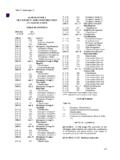
1 APPENDIX 4 EUROPEAN STANDARDS AND MARKINGS FOR respiratory protection ISSUE 8: January 2013 This information is extracted from British STANDARDS with the permission of BSI under licence number PD\1998 1367 INTRODUCTION Harmonised EUROPEAN STANDARDS for Personal Protective Equipment (PPE) have beendeveloped as the preferred means of demonstrating equipment conformity with the basichealth and safety requirements (BHSRs) of the EC Personal Protective EquipmentDirective (89/686/EEC). Only equipment which meets these BHSRs is entitled to carry theCE mark and to be sold for use in the EC. The alternative route to obtaining the CE mark involves the manufacturer producing a'technical file' for the equipment which also demonstrates that it satisfies the BHSRs.
2 Insuch cases, the equipment will carry the CE mark but may not display any Standardnumber. The manufacturer's information will contain the performance specification. For Category III PPE (for use against mortal danger ), the CE mark will be accompaniedby a four-digit code number identifying the responsible Notified Body appointed to ensurethat the manufactured product continues to satisfy the BHSRs. Increasingly, EUROPEAN STANDARDS (prefixed EN EUROPEAN Norm) are being superseded or subsumed by International STANDARDS (prefixed ISO). Where these are adopted in theUK, they will also be issued as British STANDARDS and be prefixed BS. The British versionsof STANDARDS (BS EN, BS ISO or BS EN ISO) may have minor differences from the original versions of the standard, usually in the form of a National Foreword or National Annex, toaccount for legislative or technical variations specific to the UK.
3 If such a UK variationexists, this is flagged up in the attached listings below for the individual STANDARDS . BSversions may also differ slightly in the stated year of issue from the EN or ISO versions;the original EN or ISO issue dates are quoted here. The STANDARDS may contain design, performance and marking requirements for the different types of equipment. This document lists the STANDARDS , and gives a briefexplanation of the markings which they define. ORGANISATION OF THE INFORMATION PPE STANDARDS are separated into broad categories, depending on the type of protection intended, eg head protection , foot protection . Separate documents have been producedfor each category. Within a category, where possible, STANDARDS have been further subdivided according tothe hazard (eg mechanical hazards, heat and flame) or component type (eg filters; facepieces) as appropriate.
4 Both current and recently superseded versions are listed, asequipment marked according to either version may be encountered in the field. Standard number and date are given, with the title (sometimes abridged). If a UK National variation applies to this standard, the nature of this variation is and classifications defined in the Standard for that class of equipment are listedand briefly described. Related STANDARDS , eg specific test methods which will not usually appear in the markingson equipment are listed separately at the end of each document. Pictograms and symbols for each type of equipment are included at the rear of therelevant document. STANDARDS FOR respiratory PROTECTIVE EQUIPMENT Face masks EN 136:1998 - Full face mask CL 1 (light duty, not +ve demand SCBA) CL 2 (general use) CL 3 (special use) EN 136-10:1992- Full face mask (pre-1998 equipment only) A (for use with +ve demand SCBA) F (on visor, resistant to radiant heat) EN 140:1998 - Half or quarter masks size (if more than one available) Filters EN 143:2000 - Filters particles Corrected 2002, 2006, Amended 2006 P - for use against particles + 1, 2 or 3 (efficiency: low, med, high) Additional markings.
5 - whether the filter is for use on a multi-filter device - indication (+ expired hourglass symbol) showing shelf life expiry date in yyyy/mm format R reusable, or NR not reusable (single shift) EN 371:1992 - Filters - AX gas and combined filters Superseded by EN 14387:2004 AX - certain organic compounds with bp <65oC, optionally plus: P - for use against particles + 1, 2 or 3 (efficiency: low, med, high) EN 372:1992 - Filters - SX gas and combined filters Superseded by EN 14387:2004 SX - for use against specific named gases and vapours, optionally plus: P - for use against particles + 1, 2or 3 (efficiency: low, med, high) EN 12083:1998 - Filters with breathing hoses (non-mask mounted filters) Markings as for ENs141, 143, 371 or 372 EN 14387:2004- Filters - gas or gas and combined Corrected 2006, Amended 2008 One or more of: A - organic gases/vapours, bp >65oC B - inorganic gases/vapours (not CO) E - acid gases K - Ammonia and organic derivatives + 1, 2, or 3 (capacity: low, med, high), optionally plus: P - particles + 1, 2, or 3 (efficiency: low, med, high) NO-P3 - nitrogen oxides Hg-P3 - mercury vapour AX - certain organic compounds with bp <65oC, optionally plus: P - for use against particles + 1, 2 or 3 (efficiency: low, med, high) SX - for use against specific named gases and vapours, optionally plus: P - for use against particles + 1, 2 or 3 (efficiency.)
6 Low, med, high) Additional markings: - whether the filter is for use on a multi-filter device - indication (+ expired hourglass symbol) showing shelf life expiry date in yyyy/mm format - number of the standard - manufacturer and model For filters including a particle filtering element: R reusable, or NR not reusable (single shift) NO-P3 filters - For single use only Hg-P3 filters - Maximum use time 50 hours AX filters - For single use only D - suffix indicates dust clogging resistance. Simple filtering devices EN 149:2001 - Filtering facepieces against particles Amended 2009 - Number and year of standard - manufacturer and model FFP - filtering face piece + 1, 2 or 3 (efficiency: low, med, high) D - resistant to dolomite clogging test - indication (+ expired hourglass symbol) showing shelf life expiry date in yyyy/mm format R reusable, or NR not reusable (single shift) EN 405:2001 - Valved filtering half masks for use against gases or gases and particles Amended 2009 Note: See EN 14387:2004 Filters - gas or gas and combined for explanation of filter classifications - Number and year of standard - manufacturer and model FF - filtering facepiece + one or more of.
7 A, B, E, K + 1 or 2 (capacity) AX SX P - for use against particles + 1, 2 or 3 (efficiency- low, med, high) D - resistant to dolomite clogging test - indication (+ expired hourglass symbol) showing shelf life expiry date in yyyy/mm format If particle filters are included: R reusable, or NR not reusable (single shift) EN 1827:1999 - Filtering half masks without inhalation valves Corrected 1999, Amended 2009 Note: See EN 14387:2004 Filters - gas or gas and combined for explanation of filter classifications - Number and year of standard - manufacturer and model - manufacture date and shelf life, or expiry date FM - filtering facepiece + one or more of: A, B, E, K + 1 or 2 (capacity) AX SX P - for use against particles + 1, 2 or 3 (efficiency- low, med, high) D - resistant to dolomite clogging test If particle filters are included: R reusable, or NR not reusable (single shift) Powered/assisted filtering devices EN 146:1991 - Powered particle filtering helmets / hoods Superseded by EN 12941:1998 THP - 'turbo hood', particles + 1, 2 or 3 (efficiency - low, med, high) EN 147:1991 - Power assisted particle filtering full, half or quarter mask Superseded by EN 12942:1998 TMP - 'turbo mask', particles + 1, 2 or 3 (efficiency: low, med, high) EN 12941:1998 - Powered filtering device with helmet / hood Amended 2004, 2009 Note: See EN 14387.
8 2004 Filters - gas or gas and combined for explanation of filter classifications TH - turbo hood 1, 2 or 3 - inward leakage class (10%, 2% or ) + one or more of: A, B, E, K + 1, 2 or 3 (capacity: low, med, high) AX SX P - for use against particles + S or SL - use against solids only or solids and liquids NO (with TH3P only) Hg (with TH3P only) If particle filters are included: R reusable, or NR not reusable (single shift) EN 12942:1998 - Powered filtering device with full, half or quarter mask Amended 2003, 2009 Note: See EN 14387:2004 Filters - gas or gas and combined for explanation of filter classifications TH - turbo hood 1, 2 or 3 - inward leakage class (10%, 2% or ) + one or more of: A, B, E, K + 1, 2 or 3 (capacity: low, med, high) AX SX P - for use against particles + S or SL - use against solids only or solids and liquids NO (with TM3P only) Hg (with TM3P only) If particle filters are included: R reusable, or NR not reusable (single shift) Hose/airline breathing apparatus EN 138:1994 - Fresh air hose with half or full facemask FAH - fresh air hose Class 1 hose, light duty (not unassisted types), or Class 2 hose, heavy duty (not half masks) EN 139:1994 Compressed air line BA full or half mask or mouthpiece Superseded by EN 14593 for demand valve apparatus, and EN 14594 for constant flow EN 269.
9 1994 - Powered fresh air hose with hood FAH - fresh air hose Class 1 - light duty hose, or Class 2 - heavy duty hose - Anti-static - Heat resistance EN 270:1994 - Compressed air line BA with hood (Amended 2000) Superseded by EN 14594 EN 271:1995 - Compressed air line / powered fresh air hose BA with hood for abrasive blasting Superseded by EN 14594 Note: EN 271 contained requirements for powered fresh air hose abrasive blasting helmets. The replacing standard does not contain any requirements for this specific type of equipment there are no known examples on the market. EN 1073-1:1998 - Protective clothing against particulate radioactive contamination - Ventilated suits as for EN 340 (Protective Clothing), plus: pictogram -particulate radioactive contamination (Fig 11 in Clothing document) IL: class x - where x = inward leakage class 1-5.
10 1 is lowest protection , 5 is highest EN 1835:1999 - Light duty compressed air line helmet or hood Superseded by EN 14594 LDH - light duty, hood 1, 2 or 3 - inward leakage class (10%, 2% or respectively) EN 12419:1999 - Light duty compressed airline masks Superseded by EN 14594 LDM - light duty, mask 1, 2, or 3 - inward leakage class (2%, or respectively) EN 14593-1:2005 - Compressed air line BA with demand valve - full mask On the apparatus: - year of manufacture (4 digits) - temperature limitations, or appropriate pictogram - F if flammability requirement met On the supply tube: - Year of manufacture (4 digits) - H - heat resistance - S - anti-static - F higher flame resistance EN 14593-2:2005 - Compressed air line BA with demand valve - half mask On the apparatus: - Year of manufacture (4 digits) - Temperature limitations, or appropriate pictogram - F if flammability requirement met On the supply tube: - Year of manufacture