Transcription of Approaches to Learning (ATL) Skills - IB schools in Mumbai
1 Page 1 Approaches to Learning (ATL) Skills Students are expected to develop and demonstrate Skills , knowledge and understanding of the five Approaches to Learning (ATL) on a continuum across the PYP, MYP and DP. To enhance competency in these areas, teachers design Learning tasks, activities or challenges that nurture students further growth and understanding of the Approaches to Learning . - Pankti Sampat , Special Educator What are the Approaches To Learning (ATL) Skills ? ATL Skills are deliberate strategies, Skills and attitudes that permeate the IB teaching and Learning environment. ATL Skills supports the IB belief that a large influence on a student s education is not only what you learn but also how you learn. What is of paramount importance in the pre-university stage is not what is learned but Learning how to learn.
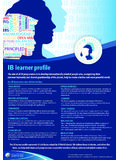
2 What matters is not the absorption and regurgitation either of fact or pre- digested interpretations of facts, but the development of powers of the mind or ways of thinking which can be applied to new situations and new presentations of facts as they arise. Alec Peterson Peterson, A. 1972. The International Baccalaureate: An experiment in International Education. London. George Harrap. Page 2 The Approaches to Learning Skills can be summed up with this ATL wheel: The Approaches to Learning Skills are identified as: Communication Skills - oral, written, digital and creative Collaborative social Skills Organizational, affective and reflective self-management Skills Research Skills demonstrating information and media literacy Critical thinking, creative and innovative synthesis, and knowledge transfer Skills The IB Approaches to teaching Skills are.
3 Based on inquiry focused on conceptual understanding developed in local and global contexts focused on effective teamwork and collaboration differentiated to meet the needs of all learners informed by formative and summative assessment Page 3 Some of the key questions to be answered by students with respect to ATL Skills include the following. What are my present Skills in this area and what evidence do I have of my development? What Skills can I improve? What new Skills can I learn? When specific ATL Skills become an explicit focus for teaching and Learning , students can begin to take responsibility for their own development. Over time, students can identify themselves and their competence in any Learning strategy using terms like the following: Novice/beginning students are introduced to the skill, and can watch others performing it (observation) Learner/developing students copy others who use the skill and use the skill with scaffolding and guidance (emulation) Practitioner/using students employ the skill confidently and effectively (demonstration) Expert/sharing students can show others how to use the skill and accurately assess how effectively the skill is used (self-regulation) In this newsletter we will be focusing on 3 Skills of the ATLs cluster.
4 Communication Skills Social Skills Self-management Skills Page 4 Role of facilitator in developing communication, social and self-management Skills : I. Communication Skills Communication which is easy to understand and process by our brain is considered to be effective. Effective communication is a skill by which information is shared and transferred and in the education system this skill plays a major role as maximum sharing of knowledge can only happen if effective communication takes place among peer groups and between student and teacher. However the language need not always be verbal, it can also be non-verbal or visual. Ways to improve Verbal communication skill: Providing subject specific command terms to the students For a particular unit, provide a list of difficult words with their meaning Encourage students to write letters, blogs, and articles as per the subject requirement Give opportunity for debating in class Give an open ended topic and let them speak for a minute Encourage role play Give opportunities for paraphrasing Ways to improve Non- verbal communication skill.
5 After completion of the topic let students summarize their understanding in the form of flow chart Give opportunities to present information in the form of table and graphs Play games like dumb charades Do stress management activities which will help students to tune their volume and control their body language Page 5 Conduct activities which give students an opportunity to look into each other's eyes and speak confidently or express them without using words but just with gestures. Communication skill is of foremost importance because if a student masters this skill and is able to excel in all the 7C s of communication he/she is also able to achieve other ATL Skills as these 7 C s can be related to other Skills as follows. 1. Completeness: If the communication is complete, that is the other person is able to draw the correct conclusion from then it is considered that the student has also developed organization skill because he/ she is able to organize the thoughts before speaking.
6 2. Conciseness: If the idea is presented in short clear sentences then it is considered to be concise and if the child is able to do that he has learnt self-management Skills to some extent. 3. Consideration: While conveying our own thoughts if we think about its impact on other persons emotion we are actually displaying affective Skills . 4. Clarity: When the ideas are clearly transferred either verbally or nonverbally, it indicates that before transferring brain has given a thought to it therefore thinking Skills have played its role. 5. Courtesy: In nonverbal communication if our body language is showing respect to others then also we do display affective Skills . 6. Concreteness: If the communication is supported with instances basically evidence it indicates that some research has been done before conveying the information which must have developed research Skills .
7 7. Correctness: A correct communication is always the one with examples, evidence and which is easily interpreted that means, critical thinking and transferring Skills are achieved. Page 6 II. Social Skills Collaboration Skills Skills that enable you to work effectively with others to complete a common task Consider, respect, and accept social and/or cultural differences Consider, respect, and accept different points of view and opinions Encourage contributions from others Be sympathetic (express sorrow for someone else's misfortune) Be empathetic (understand and share someone else's feelings) Consider group dynamics Assume a particular role in a team as appropriate Delegate, take, and share responsibility as appropriate Negotiate goals and limitations with teachers, partners, and peers Understand when and how to build consensus Understand when and how to agree to disagree Resolve interpersonal conflicts Make decisions based on fairness and equality Help others achieve success III.
8 Self-Management Skills Self-management is an ATL ( Approaches to Learning ) skill which every IB student should exhibit as they grow in their Learning process. Self-management skill is not limited to meeting deadlines and submitting assignments on time as per the requirement. Page 7 It is the ability to use time, energy, resources etc. in an effective manner. As an educator, we need to use our time and knowledge in a way, which benefits the organization and the students, but at the same time, we should also be balanced. This means there should be a good balance between personal and professional life. Some strategies to improve organization Skills : Make a daily checklist of tasks Place the task on the checklist in a priority order Organize your study place Do not hesitate in taking help from others Discuss activities done in class with the peers Give some time to yourself every day, doing something in which you are interested and which mentally relaxes you It can be further categorized into three strands each with its own significance: Organization Skills : Affective Skills : Page 8 Affective skill means the Skills of gaining or valuing knowledge is affected closely by the emotional state of the learner.
9 Some strategies to improve affective Skills : Overcome distractions Practise empathy Practise mindfulness Overcome impulsiveness and anger Prevent and eliminate bullying Reduce stress and anxiety Analysing and attributing causes for failure Practise managing self-talk Positive thinking Dealing with disappointment and unmet expectations Dealing with change Reflection: Reflection should not be a tedious process. Instead, reflection is a process that helps us develop identity and to understand the meaning of our experiences. For reflecting creatively students should: Track their progress Find pattern in their Learning and performance Take ownership of their growth Analyse their Learning experience Reflection can be done in a number of ways and these different style adopted by the student also helps the teacher to identify the Learning style of the student and this will help them to adopt differentiated Learning styles in class.
10 Page 9 Different styles of reflection: Visual reflection: This can be done by making drawings, flowchart, animation etc. Kinaesthetic Reflection: This can be done by giving opportunity for role play, speeches, and presentations. Auditory Reflection: Can be done by conducting discussions in class, asking questions and letting students to audio record their thoughts. At the end of every class if the student is asked to close eyes and think about what they have learned, write or discuss that, it will not only ensure the student's full engagement in class but also help them to retain the concepts for a longer time. Self-reflection is not only a way of looking back on the Learning but is also an exercise of the brain which increases the memory and makes the subconscious mind more active.