Transcription of Aspen Physical Property Methods - UM
1 Physical Property MethodsAspen Physical Property SystemVersion Number: 2013 Copyright (c) 1981-2013 by Aspen Technology, Inc. All rights Physical Property System and the Aspen leaf are trademarks or registered trademarks of Aspen Technology,Inc., Burlington, other brand and product names are trademarks or registered trademarks of their respective software includes NIST Standard Reference Database 103b: NIST Thermodata Engine Version document is intended as a guide to using AspenTech's software. This documentation contains AspenTechproprietary and confidential information and may not be disclosed, used, or copied without the prior consent ofAspenTech or as set forth in the applicable license agreement. Users are solely responsible for the proper use ofthe software and the application of the results AspenTech has tested the software and reviewed thedocumentation, the sole warranty for the softwaremay be found in the applicable license agreement between AspenTech and the user.
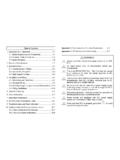
2 ASPENTECH MAKES NOWARRANTY OR REPRESENTATION, EITHER EXPRESSED OR IMPLIED, WITH RESPECT TO THIS DOCUMENTATION,ITS QUALITY, PERFORMANCE, MERCHANTABILITY, OR FITNESS FOR APARTICULAR Technology, Wheeler RoadBurlington, MA 01803-5501 USAP hone: (1) (781) 221-6400 Toll Free: (888) 996-7100 URL: Overview of Aspen Physical Property Property Method ..8 Activity Coefficient Method ..13 Equation-of-State Models ..24 Activity Coefficient Property and Thermal Conductivity Coefficient Methods (Theory)..35 Surface Tension Methods (Theory) ..36 Nonconventional Component Enthalpy for Overview of Aspen Physical Property Property Method Descriptions ..43 Classification of Property Methods and Recommended Use ..43 IDEAL Property Correlations for Specific (NIST Reference Fluid Thermodynamic and Transport PropertiesDatabase) ..51 GERG2008 Property Method.
3 59 Property Methods for Petroleum Mixtures ..63 Liquid Fugacity and K-Value Model Property ..68 HYSSRK .. Equation-of-State Property Methods .. Models for Property Methods for Petroleum Mixtures ..76 Equation-of-State Property Methods for High-Pressure Hydrocarbon Applications ..77 BWR-LS ..78 BWRS ..822 ContentsRKS-BM ..83 Common Models for Equation-of-State Property Methods for High-PressureHydrocarbon and Predictive Equation-of-State Property ..86PC-SAFT: Copolymer PC-SAFT EOS Property Method ..96 PSRK ..97RK- Aspen ..99SR-POLAR .. 100 Common Models for Flexible and Predictive Equation-of-State 101 Liquid Activity Coefficient Property 102 Equations of 102 Activity Coefficient 108 Common Models for Liquid Activity Coefficient Property 117 Electrolyte Property Methods .. 117 AMINES .. 121 ELECNRTL .. 124 ENRTL-RK .. 125 ENRTL-SR.
4 126 PITZER .. 128B-PITZER .. 132 OLI Property 132 General and Transport Property Model Parameter 134 Solids Handling Property 135 Steam 137 STEAM-TA .. 138 139 IAPWS-95 Property Method .. 1393 Property Calculation Methods and .. 141 Physical Properties in the Aspen Physical Property System .. 142 Major Properties in the Aspen Physical Property 143 Subordinate Properties in the Aspen Physical Property 145 Intermediate Properties in the Aspen Physical Property 147 Example: Methods for calculating liquid mixture 148 Vapor Fugacity Coefficient Methods .. 149 Liquid Fugacity Coefficient Methods .. 150 Solid Fugacity Coefficient 153 Vapor Enthalpy 153 Liquid Enthalpy Methods .. 154 Solid Enthalpy 158 Contents3 Vapor Gibbs Energy Methods .. 158 Liquid Gibbs Energy 159 Solid Gibbs Energy Methods .. 161 Vapor Entropy 162 Liquid Entropy 163 Solid Entropy Methods .
5 164 Molar Volume 165 Viscosity 166 Thermal Conductivity Methods .. 167 Diffusion Coefficient 168 Surface Tension Methods .. 169 Routes And 169 Concept of 172 Tracing a 173 Modifying and Creating Property 175 Modifying Existing Property 175 Creating New Property Methods .. 178 Modifying and Creating 180 Example 1: Use a second data set of NRTL 181 Example 2: Using your own model for the liquid 1814 Electrolyte 183 Apparent Component and True Component Approaches .. 185 Choosing the True or Apparent Approach .. 186 Reconstitution of Apparent Component Mole Fractions .. 189 Aqueous Electrolyte Chemical 190 Electrolyte Thermodynamic 192 Pitzer Equation .. 192 Electrolyte NRTL Equation .. 193 Zemaitis Equation (Bromley-Pitzer Model) .. 193 Electrolyte Data 1945 Free-Water and Rigorous Three-Phase and Dirty-Water Immiscibility 198 Specifying Free-Water or Dirty-Water Calculations.
6 199 Rigorous Three-Phase Calculations .. 2026 Petroleum Components Characterization Methods ..203 AspenTech Extensions to Characterization Methods for Petroleum 206 Comparison of Extended Molecular Weight 207 Comparison of Extended Critical Temperature Methods .. 207 Comparison of Extended Critical Pressure Methods .. 208 Comparison of Extended Critical Volume 209 Comparison of Extended Acentric Factor 209 User Models for Characterization of Petroleum 210 Property Methods for Characterization of Petroleum 210 Property Method Aspen : Aspen Tech and API 211 Property Method API-METH: API Procedures .. 212 Property Method COAL-LIQ: for Coal 2124 ContentsProperty Method LK: 213 Property Method API-TWU: AspenTech, API, and Twu .. 213 Property Method EXT-TWU: Twu and AspenTech Extensions .. 213 Property Method EXT-API: API, Twu, and AspenTech Extensions.
7 214 Property Method EXT-CAV: Cavett, API, and AspenTech 214 Water Solubility in Petroleum 215 Estimation of NRTL and UNIQUAC Binary Parameters for Water and 215 Estimation of ATOMNO and NOATOM for Petroleum 216 Estimation of Flash 216 Petroleum Method 2167 Property Parameter Estimation ..219 Parameters Estimated by the Aspen Physical Property System .. 219 Description of Estimation 221 Index ..2431 Overview of Aspen Physical Property Methods51 Overview of Aspen PhysicalProperty MethodsAll unit operation models need Property calculations to generate results. Themost often requested properties are fugacities for thermodynamic equilibrium(flash calculation). Enthalpy calculations are also oftenrequested. Fugacitiesand enthalpies are often sufficient information to calculate a mass and heatbalance. However, other thermodynamic properties (and, ifrequested,transport properties) are calculated for all process impact of Property calculation on the calculation result is great.
8 This isdue to the quality and the choice of the equilibrium and Property calculation and the bases of Property calculation are explained inthis chapter. The understanding of these bases is importantto choose theappropriate Property calculation. Property Method Descriptions gives morehelp on this subject. The quality of the Property calculation is determined bythe model equations themselves and by the usage. For optimalusage, youmay need details on Property calculation. These are given inPhysicalCalculation Methods and Routes and Physical Property sections cover more specific topics: Electrolyte Calculation, Free-Waterand Rigorous Three-Phase Calculations, Petroleum ComponentsCharacterization Methods , and Property Parameter chapter contains three sections: Thermodynamic Property Methods Transport Property Methods Nonconventional component enthalpy calculationThe thermodynamic Property Methods section discusses the two Methods ofcalculating vapor-liquid equilibrium (VLE): the equation-of-state method andthe activity coefficient method.
9 Each method contains the following: Fundamental concepts of phase equilibria and the equationsused Application to vapor-liquid equilibria and other types of equilibria, such asliquid-liquid Calculations of other thermodynamic propertiesThe last part of this section gives an overview of the currentequation of stateand activity coefficient the table labeled Symbol Definitions in the section NonconventionalComponent Enthalpy Calculation for definitions of the symbols used Overview of Aspen Physical Property MethodsThermodynamic PropertyMethodsThe key thermodynamic Property calculation performed in a calculation isphase equilibrium. The basic relationship for every componentiin the vaporand liquid phases of a system at equilibrium is:fiv= fil(1)Where:fiv=Fugacity of componentiin the vapor phasefil=Fugacity of componentiin the liquid phaseApplied thermodynamics provides two Methods for representing the fugacitiesfrom the phase equilibrium relationship in terms of measurable statevariables, the equation-of-state method and the activity coefficient the equation of state method:fiv= ivyip(2)fil= ilxip(3)With:(4)Where: =v or lV=Total volumeni=Mole number of componentiEquations 2 and 3 are identical with the only difference being the phase towhich the variables apply.
10 The fugacity coefficient i is obtained from theequation of state, represented bypin equation 4. See equation 45 for anexample of an equation of the activity coefficient method:fiv= ivyip(5)fil=xi ifi*,l(6)Where ivis calculated according to equation 4, i=Liquid activity coefficient of componentifi*,l=Liquid fugacity of pure componentiat mixturetemperatureEquation 5 is identical to equation 2. Again, the fugacity coefficient iscalculated from an equation of state. Equation 6 is totally Overview of Aspen Physical Property Methods7 Each Property method in the Aspen Physical Property System is based oneither the equation-of-state method or the activity coefficient method forphase equilibrium calculations. The phase equilibrium method determines howother thermodynamic properties, such as enthalpies and molar volumes, an equation-of-state method, all properties can be derived from theequation of state, for both phases.