Transcription of BASIC AIRCRAFT STRUCTURES - Blue Tuna
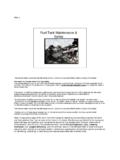
1 Slide 1 BASIC AIRCRAFT STRUCTURES The BASIC AIRCRAFT structure serves multiple purposes. Such as AIRCRAFT aerodynamics; which indicates how smooth the AIRCRAFT flies thru the air (The Skelton of the AIRCRAFT greatly affects these aerodynamics and consist of frames and stringers.) The shape of the fuselage controls this aspect of the aircrafts aerodynamics. The shape of the Frames control the shape of the fuselage. Stringers keeps the Frames spaced correctly and gives strength to the Skeleton. The Skelton is covered with aluminum or composite type materials made up of panels riveted to frames, stringers, and some removable panels to allow maintenance technicians to work efficiently on the AIRCRAFT .
2 The purpose of the this covering is to allow pressurization, aerodynamics and to provide protection for the occupants. The Wing box is attached to the fuselage. Aft section structure is attached to a Horizontal stabilizer and Rudders Slide 2 OBJECTIVES By the end of this lesson you will be able to: State the Components names and Location of AIRCRAFT STRUCTURES Recall the location and function of the components, related to AIRCRAFT Doors, and Nose Cone State the purpose of flight controls By the end of this lesson you will be able to.
3 State the Components names and Location of AIRCRAFT STRUCTURES Recall the location and function of the components, related to AIRCRAFT Doors, and Nose Cone State the purpose of flight controls. Slide 3 structure TERMINOLOGY Access panel Are removable panels for inspection or Maintenance Forward Is the direction the AIRCRAFT flies Fuselage is the main body of the AIRCRAFT , airframe without the wings and the tail Wngs and Under structure of the AIRCRAFT (belly are usually fuel tanks) Frame is a Loop-shaped fuselage member which gives it its cross-sectional shape and strength Aft - the direction of the rear of the AIRCRAFT Aerodynamics -is the study of how the moving body ( AIRCRAFT )
4 Interacts with air flowing around it, flies Auxiliary spar - an extra beam in the root in the wing for extra strength Center-line of AIRCRAFT the line connecting geometric middle points of cross sections of the AIRCRAFT structure Center wing box Is the central part of the wing which is located inside, right under (Low Wing) or right above the fuselage (High Wing) Empennage - Is the rear section of the body of the airplane with stabilizers Fail safe - principle of maintaining adequate performance when some degree of damage or degradation has happened Rib - part of the wing structure which provides the wing-section s shape and supports the skin and Stringers Stringer - a stiffening member which supports a section of the load carrying skin.
5 To prevent buckling under compression or shear loads Sweep angle - the angle between quart chord line of the wing and cenetr line of fuselage, swept-back has a positive sweep angle Tailplane - the vertical or horizontal planes at the back of the fuselage Station line -measuring line or plane giving frame position -Usually from the tip of the nose measuring Aft in inches to each frame Slide 4 Outboard leading edgeFLAPS Listed are the BASIC flight control surfaces. larger AIRCRAFT flight control systems may include fly by wire systems.
6 The flight control surfaces listed here are the basics of a small AIRCRAFT . AILERONS (ROLL) The control wheel (yoke) is connected by means of push-pull tubes and hydraulics to the wings' ailerons. By turning left or right, the pilot can change the position of the ailerons. When the control wheel is turned to the right, the right aileron goes up and the left aileron goes down, rolling the airplane to the right. Turned to the left, the right aileron goes down and the left aileron goes up, rolling the airplane to the left.
7 ELEVATORS (PITCH) The control column is connected by means of push-pull tubes and hydraulics to the tail section's elevators. By moving the yoke, the pilot can change the position of the elevators. Pushing the control column forward, the elevators move down, pitching the tail of the airplane up and the nose down, rolling the airplane down. Pulling the control column back makes the elevators move up, pitching the tail of the airplane down an the nose up, rolling the airplane upwards. RUDDER (YAW) Foot pedals are connected by means of push-pull tubes and hydraulics to the rudder of the tail section.
8 The rudder is the vertical part of the tail that can move from side to side. Pushing on the left rudder pedal moves the rudder to the left, causing the nose of the airplane to move to the left. Pushing on the right rudder pedal moves the rudder to the right, causing the nose of the airplane to move to the right. Outboard leading edges make the wing provide more lift at slower speeds with the Flaps it makes the wing take on a gull wing look by curving it more on the bottom of the wing. Lift is produced by air flowing over the curved upper wing surface at a velocity higher than airflow on the lower surface.
9 Increased airflow causes an increase in velocity and a subsequent drop in air pressure. There are four variables involved in the production of lift; wing area, wing curve (chamber), angle of attack, and airflow. Airflow is achieved by maintaining forward movement. The larger the wing area the thicker the wing require lesser air flow or lower forward velocity Slide 5 FUSELAGE main framesmain frames The FUSELAGE is composed of the following: main frames, usually pressurized bulkheads and engine attach points secondary frames care th4e frames between Main frames, Outer skins, stiffened by stringers, riveted to the structure , made of extrusions of variable thickness and sections.
10 In some areas this assmebly also includes mechanically-milled panels, frames in the openings in the fuselage, and the progective elements Alodine, Primer, and Paint. Most AIRCRAFT have crash skids underneath the fuselage to protect the fuel tanks in the event of a belly landing with the landing gear retracted. There are Thick protective shields that defend against the possible blow-out of parts from the engine fans at multiple engine mount locations The fuselage structure is of fully metallic monocoque construction and includes: the cockpit, the passenger cabin, the center wing tanks, The aft baggage compartments, and aft service compartments.