Transcription of Be Red Cross Read y
1 Listen to local weather forecasts andstay aware of upcoming temperaturechanges. The heat index is the temperature thebody feels when the effects of heat andhumidity are combined. Exposure todirect sunlight can increase the heatindex by as much as 15 F. Discuss heat safety precautions withmembers of your household. Have aplan for wherever you spend time home, work and school and preparefor the possibility of power outages. Check the contents of your emergencypreparedness kit in case a power outageoccurs. Know those in your neighborhood whoare elderly, young, sick or are more likely to become victimsof excessive heat and may need help.
2 If you do not have air conditioning,choose places you could go to for relieffrom the heat during the warmest partof the day (schools, libraries, theaters,malls). Be aware that people living in urbanareas may be at greater risk from theeffects of a prolonged heat wave thanare people living in rural areas. Get trained in first aid to learn how totreat heat-related emergencies. Ensure that your animals needs forwater and shade are met. Listen to a NOAA Weather Radio forcritical updates from the NationalWeather Service (NWS). Never leave children or pets alone inenclosed vehicles. Stay hydrated by drinking plenty offluids even if you do not feel drinks with caffeine or alcohol.
3 Eat small meals and eat more often. Avoid extreme temperature changes. Wear loose-fitting, lightweight, light-colored clothing. Avoid dark colorsbecause they absorb the sun s rays. Slow down, stay indoors and avoidstrenuous exercise during the hottestpart of the day. Postpone outdoor games and activities. Use a buddy system when working inexcessive heat. Take frequent breaks if you must workoutdoors. Check on family, friends and neighborswho do not have air conditioning, whospend much of their time alone or whoare more likely to be affected by theheat. Check on your animals frequently toensure that they are not suffering fromthe Your Family Know You re Safe If your community experiences a disaster, register on the American Red Cross Safe and WellWeb site available through let your family and friends know about yourwelfare.
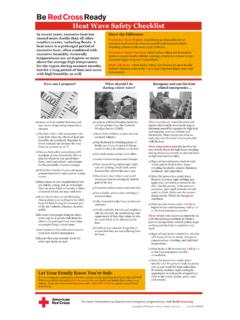
4 If you don t have Internet access, call 1-866-GET-INFOto register yourself and your Red Cross ReadyHeat Wave Safety ChecklistHow can I prepare?What should I do during a heat wave?Recognize and care for heat-related emergencies ..In recent years, excessive heat hascaused more deaths than all otherweather events, including floods. Aheat wave is a prolonged period ofexcessive heat, often combined withexcessive humidity. Generallytemperatures are 10 degrees or moreabove the average high temperaturefor the region during summer months,last for a long period of time and occurwith high humidity as more information on disaster and emergency preparedness, visit cramps are muscular pains andspasms that usually occur in the legs orabdomen caused by exposure to high heatand humidity and loss of fluids andelectrolytes.
5 Heat cramps are often an early sign that the body is having troublewith the exhaustiontypically involves theloss of body fluids through heavy sweatingduring strenuous exercise or physical laborin high heat and humidity. Signs of heat exhaustion include cool,moist, pale or flushed skin; heavysweating; headache; nausea; dizziness;weakness; and exhaustion. Move the person to a cooler or loosen tight clothing andapply cool, wet cloths or towels to theskin. Fan the person. If the person isconscious, give small amounts of coolwater to drink. Make sure the persondrinks slowly. Watch for changes incondition. If the person refuses water, vomits orbegins to lose consciousness, call 9-1-1or the local emergency stroke(also known as sunstroke) isa life-threatening condition in which aperson s temperature control system stopsworking and the body is unable to coolitself.
6 Signs of heat stroke include hot, red skinwhich may be dry or moist; changes inconsciousness; vomiting; and high bodytemperature. Heat stroke is life-threatening. Call 9-1-1or the local emergency numberimmediately. Move the person to a cooler cool the person s body by givingcare as you would for heat exhaustion. If needed, continue rapid cooling byapplying ice or cold packs wrapped in acloth to the wrists, ankles, groin, neckand armpits. Know the DifferenceExcessive Heat Watch Conditions are favorable for anexcessive heat event to meet or exceed local Excessive HeatWarning criteria in the next 24 to 72 Heat Warning Heat Index values are forecast tomeet or exceed locally defined warning criteria for at least 2 days(daytime highs=105-110 Fahrenheit).
7 Heat Advisory Heat Index values are forecast to meet locallydefined advisory criteria for 1 to 2 days (daytime highs=100-105 Fahrenheit). Copyright 2009 by the American National Red Cross |Stock No. 658529 Heat Wave :Layout 1 5/29/09 1:29 PM Page 1