Transcription of Behavioral Objectives - MS Nurses Foundation
1 - 1 - Behavioral Objectives 2009 Behavioral Objectives Each continuing educational activity submitted to the Mississippi Nurses Foundation for approval, must include learner Objectives written in Behavioral terms defining specific learning outcomes the participant is expected to accomplish at the completion of the learning activity. These Objectives provide a means of self-evaluation throughout the learning process. Well written Objectives also provide a mechanism for a measurable and observable evaluation of learning. The Taxonomy of Educational Objectives , (Bloom 1956, and Krathwoh, 1964) is a valuable resource in identifying and defining instructional Objectives . The taxonomy provides a classification of educational Objectives and is useful in curriculum development, teaching and testing, and consists of general and specific categories that include all types of outcomes.
2 Preparing Instructional Objectives , (Mager, 1962) is an excellent resource book describing HOW TO specify learning Objectives and communicate the learning Objectives to the learner. GUIDELINES FOR WRITING Behavioral OBJECTIVE 1. Begin the objective with a measurable verb, such as define, classify, calculate, design, discuss, etc. 2. State the objective in terms of learner performance, not instructor performance. The emphasis is on what the participant will be able to do or know, not what the instructor does. 3. State the objective as a learning product, not a learning process. CORRECT: explains assigned reading material .. INCORRECT: gains knowledge of .. 4. State the objective to include only one outcome, not several. 5. Write a separate statement for each objective; revise and refine for clarity and understanding.
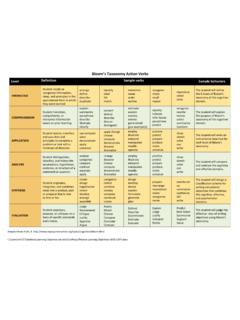
3 6. State each objective to the extent that it communicates an instructional intent to its reader. Examples on next page. The following verbs have been found to be effective in formulating educational Objectives . - 2 - Behavioral Objectives 2009 1. Those that communicate knowledge. ( cognitive Domain) Information cite identify quote relate tell count indicate read repeat trace define list recite select write describe name recognize state draw point record tabulate Comprehension associate describe explain locate translate classify differentiate express predict compare discuss extrapolate report compute distinguish interpolate restate contrast estimate interpret review Application apply
4 Employ locate relate sketch calculate examine operate report solve complete illustrate order restate translate demonstrate interpolate practice review use dramatize interpret predict schedule utilize Analysis analyze debate distinguish inventory appraise detect experiment question contract diagram infer separate criticize differentiate inspect summarize Synthesis arrange construct formulate organize produce assemble create generalize plan propose collect design integrate prepare specify compose detect manage prescribe Evaluation appraise determine judge recommend test assess estimate measure revise choose evaluate rank score critique grade rate select 2.
5 Those that impart skills. (Psychomotor Domain) diagnose integrate measure percuss empathize internalize palpate project hold massage pass visualize 3. Those that convey attitudes. (Affective Domain) acquire exemplify realize reflect These verbs are better avoided: are often used but are open to many interpretations appreciate have faith in know learn understand believe