Transcription of Block Schedule Teaching Strategies - Russell …
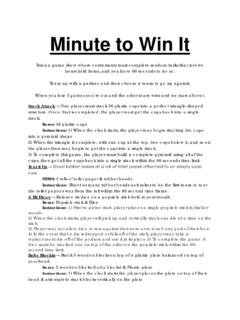
1 BlockScheduleTeachingStrategiesAToolboxo fEffectiveTeachingIdeasByDianeTrimSpecia lReport Block Scheduling Teaching Strategies : a Toolbox of Effective Teaching Ideas 1 BBBBLOCK LOCK LOCK LOCK SSSSCHEDULE CHEDULE CHEDULE CHEDULE TTTTEACHING EACHING EACHING EACHING IIIINTERVIEW WITH NTERVIEW WITH NTERVIEW WITH NTERVIEW WITH RRRROBERT OBERT OBERT OBERT LLLLYNN YNN YNN YNN Canady s Three-step Lesson Canady s Ideas for Synthesis: the Six AAAA TTTTOOLBOX OF OOLBOX OF OOLBOX OF OOLBOX OF EEEEFFECTIVE FFECTIVE FFECTIVE FFECTIVE TTTTEAEAEAEACHING CHING CHING CHING Lesson Plan Part One: The Explanation Phase and Teaching Techniques.
2 11 The 12 Pipe cleaner 13 Phun with 14 Vote with your Feet .. 15 Opinion 16 Lesson Plan Part Two: The Application Phase and Teaching Techniques ..17 Socratic Seminar .. 18 20 Sheet cake maps .. 21 Whiteboard Races .. 22 Think-Pair-Share .. 23 Concentric Circles .. 24 Lesson Plan Part Three: The Synthesis Phase and Teaching Haiku .. 26 Name that 27 Bring It to Class .. 28 Advertisements .. 29 WWWWORKS ORKS ORKS ORKS TABLE OF CONTENTSTABLE OF CONTENTSTABLE OF CONTENTSTABLE OF CONTENTS Block Scheduling Teaching Strategies : a Toolbox of Effective Teaching Ideas 2 School districts are re-arranging bell schedules to accommodate student learning styles and multiple intelligences as well as state education standards.
3 Block scheduling decreases passing time between classes, decreases time teachers spend beginning and ending classes, and increases time for instruction, cooperative learning, and activities that appeal to students learning styles and multiple intelligences. Teachers sometimes worry about covering all of the information in the curriculum and wonder where the time to include Block Schedule Teaching Strategies will come from. According to Thinking inside the Block Schedule (2000), authors Pam Robbins, Gayle Gregory, and Lynne E. Herndon advocate refining curriculum to meet state and district standards and fit on the new Schedule .
4 On the Block , the focus shifts from the breadth of the curriculum to the depth of student knowledge. With an eye on state and district standards, take a look at your curriculum and choose the units important to student knowledge and success. Pare the units down so you can cover what you teach in depth with your students. Student recall and learning benefit from this approach. The first part of this printable report is an exclusive interview with Block scheduling expert Robert Lynn Canady. Canady shares his current thinking about Block scheduling as well as practical advice for planning lessons and activities. The second part is the toolbox of Teaching ideas.
5 The fifteen Teaching Strategies match up with Canady s lesson plan and are Block SBLOCK SBLOCK SBLOCK Schedule Teaching STRCHEDULE Teaching STRCHEDULE Teaching STRCHEDULE Teaching STRATEGIESATEGIESATEGIESATEGIES Block Scheduling Teaching Strategies : a Toolbox of Effective Teaching Ideas 3 ready to use with little advance planning. The Strategies are fun and appeal to student learning styles and multiple intelligences. They work well for Block scheduling, but can be adapted to traditional schedules as well. Block Scheduling Teaching Strategies : a Toolbox of Effective Teaching Ideas 4 INTERINTERINTERINTERVIEW WITH ROBERT LYNVIEW WITH ROBERT LYNVIEW WITH ROBERT LYNVIEW WITH ROBERT LYNN CANADYN CANADYN CANADYN CANADY Robert Lynn Canady, co-author of Teaching in the Block and other Block scheduling books, is busy consulting with school districts to make sure students have enough time to learn and learn enough to graduate.
6 Canady, 76, wishes that he d not coined the term Block scheduling 23 years ago. Instead, he d call it intensive scheduling. Block scheduling is the model where classes increase in time from 45 minutes to 90 minutes and meet either every day for a semester (4x4 Block ) or every other day all year (alternating or AB Block ). Intensive scheduling is Canady s new model to address the needs of students who lack the skills and support systems to graduate. A lot of these youngsters fail their classes by October and they sit in class until June, Canady said. They become an attendance and discipline problem because they don t have the skills to do well.
7 One of the urban districts where Canady has been consulting has over 30 students who are homeless. At the end of the school day, these kids ask teachers to call a church or shelter so they ll have a place to sleep. Homework isn t a priority for these students when the final bell rings. The ordinary seven-period day just doesn t work for these kids, or for the majority of kids, Canady said. Instead of Block scheduling, Canady now advocates a school day and year with more flexibility. Some of these youngsters aren t ready for english 9, Canady said. We need to build schedules around student data and Schedule around student needs.
8 If the youngsters have a lot of problems, no Block Scheduling Teaching Strategies : a Toolbox of Effective Teaching Ideas 5 support system at home, poor organizational skills, poor reading skills, put them in reading classes first before they fail english 9. Canady said that schools are set up for the upper 50% of kids who achieve well and have normal homes. The current model just isn t working for inner city and urban students. We need to look at the time variable, Canady said. We can t control families or home life. So how do we best use that time factor? Canady recommends teachers work with high-need students all day, every day, for a month.
9 It works out to be the same as an entire credit s worth of time and catches the students up to the rest of the school population. The teachers keep up with the youngsters better, Canady said. They get a relationship with the students first, get all of the work done in class, and make sure the students learn. Canady suggests a series of electives to help these students improve their competencies and graduate from high school. Along with the increased accountability that schools are seeing to make sure that students are learning, we need to increase the level of support we give students. We need to build in tutorials during the day to make sure students succeed, Canady said.
10 For more information about Robert Lynn Canady s work on Block scheduling, check out his website: Block Scheduling Teaching Strategies : a Toolbox of Effective Teaching Ideas 6 CCCCA N A D YA N A D YA N A D YA N A D Y SSSS TTTTH R E EH R E EH R E EH R E E----S T E P S T E P S T E P S T E P LLLLE S S O N E S S O N E S S O N E S S O N PPPPL A NL A NL A NL A N Block Scheduling expert Robert Lynn Canady recommends that teachers on the Block Schedule spend their days coaching instead of lecturing. Canady co-edited the book Teaching in the Block : Strategies for Engaging Active Learners, in which he advocates teachers shift from talking all day to students to planning for students to work all day.