Transcription of Bloom’s Taxonomy Action Verbs - Texas A&M University at ...
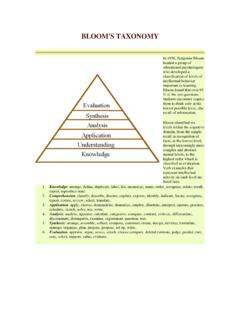
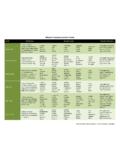
1 bloom s Taxonomy Action Verbs Definitions Knowledge Comprehension ApplicationAnalysisSynthesis EvaluationBloom s Definition Remember previously learned information. Demonstrate an understanding of the facts. Apply knowledge to actual situations. Break down objects or ideas into simpler parts and find evidence to support generalizations. Compile component ideas into a new whole or propose alternative solutions. Make and defend judgments based on internal evidence or external criteria. Verbs Arrange Define Describe Duplicate Identify Label List Match Memorize Name Order Outline Recognize Relate Recall Repeat Reproduce Select State Classify Convert Defend Describe Discuss Distinguish Estimate Explain Express Extend Generalized Give example(s)
2 Identify Indicate Infer Locate Paraphrase Predict Recognize Rewrite Review Select Summarize Translate Apply Change Choose Compute Demonstrate Discover Dramatize Employ Illustrate Interpret Manipulate Modify Operate Practice Predict Prepare Produce Relate Schedule Show Sketch Solve Use Write Analyze Appraise Breakdown Calculate Categorize Compare Contrast Criticize Diagram Differentiate Discriminate Distinguish Examine Experiment Identify Illustrate Infer Model Outline Point out Question Relate Select Separate Subdivide Test Arrange Assemble Categorize Collect Combine Comply Compose Construct Create Design Develop Devise Explain Formulate Generate Plan Prepare Rearrange Reconstruct Relate Reorganize Revise Rewrite Set up Summarize Synthesize Tell Write Appraise Argue Assess Attach Choose Compare Conclude Contrast Defend Describe Discriminate Estimate Evaluate Explain Judge Justify Interpret Relate Predict Rate Select Summarize Support Value Areas for consideration - course level/hours policy by Texas A&M Center for Teaching Excellence is licensed under a Creative
3 Commons Attribution-Noncommercial-Share Alike International License. Area 5 Mapping Student learning Outcomes (sources A Taxonomy for learning , Teaching, and Assessing, Anderson & Krathwohl, and A Model for learning Objectives, Iowa State University Center for Excellence in learning and Teaching) bloom 'S Taxonomy REVISED (example Verbs for learning outcomes in italics) COGNITIVE PROCESS DIMENSION 1. REMEMBER Recall and retrieval of foundational disciplinary information. 2. UNDERSTAND Make meaning out of information. 3. APPLY Use information in a similar situation. 4. ANALYZE Take apart information and explore component connections.
4 5. EVALUATE Examine critically and judge. 6. CREATE Create something new. KNOWLEDGE DIMENSION A. FACTUAL KNOWLEDGE Foundational information in a discipline. List Summarize Respond Select Check Generate B. CONCEPTUAL KNOWLEDGE Connection of foundational elements to overall structure and function. Recognize Classify Provide Differentiate Determine Assemble C. PROCEDURAL KNOWLEDGE Methods for investigating and acting. Recall Clarify Carry Out Integrate Judge Design D. META-COGNITIVE KNOWLEDGE Reflection on thinking in the discipline. Identify Predict Use Deconstruct Reflect Create