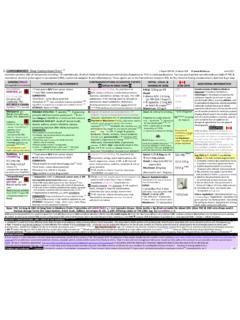
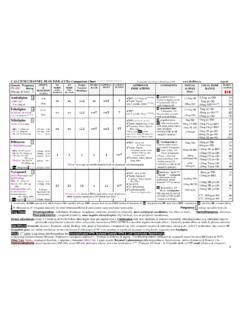
Transcription of Calcium Channel Blockers
1 Calcium Channel BlockersDecember 1997iiCalcium Channel Blockers (CCBs) are used in thetreatment of many cardiovascular conditions. Althoughthey have generally been effective and well tolerated,recent concerns about their safety await the results ofwell designed, long term clinical trials PharmacologyThe Non-dihydropyridine CCBs such as verapamil(Isoptin ) and diltiazem (Cardizem ) cause lessvasodilation and more cardiac depression thandihydropyridine CCBs. They have negative effects at theSA and AV nodes, and cause reductions in heart rate andcontractility. Verapamil has the most pronouncednegative inotropic effect. Both are used in the treatmentof hypertension (HTN), angina, and supraventriculartachycardias and non-obstructive Dihydropyridine CCBs, nifedipine (Adalat ),felodipine (Renedil /Plendil ), amlodipine(Norvasc ), and nicardipine (Cardene ) have morevascular selectivity and fewer cardiac effects.
2 They areindicated in the treatment of HTN and angina. They donot suppress AV conduction or SA node , especially short acting nifedipine, cancause a reflex tachycardia secondary to arterialvasodilation and stimulation of the sympathetic nervoussystem. They also activate the renin-angiotensin agents such as amlodipine and felodipine have amore gradual onset and a longer duration of actionresulting in less severe hypotension and less reflextachycardia. Sustained release dosage forms ofnifedipine, diltiazem, and verapamil have beendeveloped to decrease adverse effects secondary to theirrapid onset and short duration of CCBs with specialized indications includenimodipine (Nimotop ) and flunarizine (Sibelium ).Nimodipine is unique in its ability to cross into the CNSand decrease cerebral vasospasm.
3 Although data islimited, it is used for managing aneurysmal subarachnoidHighlights CCBs are considered second line agents to thiazidediuretics and - Blockers in patients with uncomplicatedHTN, largely due to lack of morbidity & mortality data. CCBs are the most expensive class of antihypertensives. Short acting CCBs ( regular nifedipine) are nolonger recommended in the management of HTN Newer CCBs (felodipine, amlodipine, nicardipine) haveincreased vascular selectivity with less cardiacdepressant effects. While not indicated in the treatmentof CHF, they pose less risk than previous may be beneficial in patients with CHF. Cost per 30 days of long-acting CCBs for hypertension:felodipine ER 5-10mg/od$ 31 - 43nifedipine XL 30-60mg/od$ 41 - 60amlodipine 5-10mg/od$ 53 - 75 Studies raising the possibility of a link between CCBsand an risk of MI & cancer have many caution is warranted, CCBs are considered safeand effective when used as indicated in select patients.
4 Hemorrhage (SAH). Flunarizine, a highly selectivecerebral vasodilator, is indicated for migraineprophylaxis. Hypertension CCBs are useful in the management of HTN and areusually considered second line ,3 Unlike CCBs, - Blockers and thiazide diuretics have the advantage oflong term studies that demonstrate reductions inmorbidity and mortality. The long term effects of CCBson morbidity and mortality await the results of ongoingtrials. CCBs are alternatives for patients who do notrespond adequately or are intolerant to first line may be preferred in patients with atrial fibrillationwith a rapid ventricular rate, vasospastic angina, or otherconditions in which CCBs are effective (Table 1). CCBsare generally neutral in their effect on lipid and glucosetolerance.
5 All four major classes of antihypertensives(diuretics, - Blockers , ACEI, & CCBs) have shownimprovements in quality of life (QOL).4,5 Attempts toshow differences in the QOL between these classes havebeen ,6,7,8 Although ACEIs and CCBs areoften thought to be better tolerated, the recent TOMHS study found the diuretic chlorthalidone and -blockeracebutolol appeared to improve QOL the Short acting CCBs such as nifedipine capsules are notindicated in either the acute reduction or long termmanagement of ,9,10 They have beenassociated with serious adverse events such as MI, strokeand death. Alternative oral antihypertensives forhypertensive urgencies include captopril ( po),clonidine ( po), and labetalol (200-400mgpo).11,12,13 Long acting formulations of nifedipine suchas Adalat XL or newer CCBs such as felodipine ERoffer a more gradual onset of effect and are preferredwhen CCBs are used for ,15 Although CCBs are effective and usually well tolerated,they should be used with caution.
6 Given their uncertainlong term efficacy, safety risks and higher cost (Table 2),other agents such as thiazides, - Blockers , and ACEI smay be preferred. Other Uses CCBs have been useful in the treatment of a variety ofconditions.(Table 1) They are alternative agents in thetreatment of chronic stable angina in patients withoutcontraindications, who do not respond adequately to, ortolerate, nitrates and - Blockers . Dihydropyridine CCBs,especially nifedipine, may be given in combination with - Blockers to prevent reflex tachycardia. Anginasecondary to coronary artery spasm may respondparticularily well to verapamil, diltiazem, or nifedipinewhere these drugs are alternatives to nitrates. CCBs arenot usually indicated in unstable angina, where ASA,nitrates, and - Blockers have definite therapeuticadvantages.
7 CCBs are generally contraindicated after recent MIespecially if accompanied by left ventricular failure andpulmonary edema. Post infarction studies have shownincreased mortality with the use of nifedipine and otherdihydropyridines; verapamil and diltiazem appear to havesimilar detrimental results in patients with left ventriculardysfunction and are of minimal benefit in patientswithout heart failure. CCBs are not routinely used inpatients surviving MI since beta Blockers , ASA, and ACEinhibitors have demonstrated greater clinical Adverse Effects Although generally well tolerated, CCBs side effectprofiles differ according to class and dosage form. Olderdihydropyridines (nifedipine, nicardipine) causesignificant headache, flushing, tachycardia and peripheraledema.
8 Newer long acting dihydropyridines (nifedipineXL, felodipine, amlodipine) have a lower incidence ofthese side effects due in part to a more gradual onset ofaction. Verapamil and diltiazem can cause bradycardia inpatients with pre-existing heart block or those patientsreceiving - Blockers . They are usually contraindicatedin patients with left ventricular dysfunction. Some patients may experience withdrawal reactionssuch as angina, upon discontinuation of therapy. Tominimize this risk, CCBs should be tapered graduallyespecially in high risk patients .17 Grapefruit juice may significantly affect the metabolismof CCBs possibly due to its inhibition of the isoenzymeCYP 3A4. The interaction is greatest with felodipinewhere bioavailability may be 2-3 times greater than whentaken with Several other CCBs show a similarinteraction, but to a lesser extent: nifedipine (~33%),verapamil (~33%), amlodipine (~16%).
9 19 There issignificant individual variation in the extent of the grapefruit effect and avoiding grapefruit juice isrecommended for patients taking these agents. Orangejuice is not associated with this interaction. (Other contraindications, precautions and drug-interactions arelisted in Tables 3 and 4.) Current Issues & Controversies Risk of MI: Concerns have arisen over CCB use inhypertension and a possible increase in the risk ,21,22 Studies to date have had many limitations,been inconclusive, and await better designed clinicaltrials which are currently underway. Short acting CCBs( nifedipine caps) should be avoided in routinehypertensive management. Cancer: One prospective cohort study in the elderlyfound a dose related increase in the risk of cancer inpatients taking The controversy has grown withother investigators suggesting there is no increase Heart Failure (HF): CCBs are generally contraindicatedin HF due to negative inotropic effects as well asundesirable stimulation of the sympathetic nervoussystem and renin-angiotensin One study(PRAISE) found that amlodipine was safe in patientswith severe HF, and of possible benefit in patients withnonischemic dilated Other studies arein progress to evaluate what, if any, role the newer CCBshave in HF.
10 Bleeding: Preliminary evidence indicates a possibleassociation of bleeding with the ,28 At presentthere is not enough information to fully evaluate thiseffect. Health Canada is currently collecting andevaluating data. References available on request The Rx Files: Calcium Channel Blockers Supplementary Tables Table 1 Other Potential Clinical Uses of CCBs29 esophageal disorders {diltiazem may esophageal sphincterpressure (ESP) and is beneficial in conditions such as systemicscleroderma; in contrast, nifedipine ESP}30 migraine prophylaxis panic attack prevention Raynaud s phenomenon perniosis (inflammatory cutaneous lesions secondary to coldenvironment) tardive dyskinesia thyrotoxicosis, symptomatic control Tourette s syndrome fetal tachycardia Table 2 Comparative Cost For 30 Days Treatment WithCommonly Used Antihypertensives hydrochlorothiazide po daily atenolol 50mg po daily acebutolol 200mg po bid lisinopril 10mg po daily enalapril 10mg po daily enalapril 5mg po bid felodipine ER 10mg po daily diltiazem CD 180mg po daily $ $ $ $ $ $ $ $ Table 3 Contraindications and Precautions Contraindications Pregnancy - FDA category C.