Transcription of CALL FOR HELP - michigan.gov
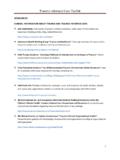
1 FLIP CHART OF EMERGENCY PROCEDURES RETAIL FOOD ESTABLISHMENTS CALL FOR HELP Write in the following phone numbers (below & following pages) for your location. If your areauses the 911 emergency system, write 911 in the appropriate fire, police and rescue spaces. LOCATION ADDRESS_____ LOCATION PHONE_____ ALARM COMPANY_____ LOCATION PAY PHONE_____ GAS COMPANY_____ FIRE DEPARTMENT_____ ELECTRIC COMPANY_____ POLICE DEPARTMENT _____ MANAGER _____ RESCUE/AMBULANCE_____ HOSPITAL_____ HR REPRESENTATIVE _____ MEDICAL CENTER _____ TELEPHONE COMPANY_____ About This Document Food retailers face increased challenges to consistently meet legal requirements during emergency incidents.
2 This basic food security and safety emergency resource was developed by food retailers for food retailers. It has two basic goals: 1. To improve store-level responses to some of the more common emergencies, and 2. To improve coordination between store employees and government emergency responders. Users of these resources must recognize that they indemnify and hold harmless the groups and individuals who assisted with development of these documents from all liability, loss, damage, claims, actions, and expenses based upon or arising out of actions based on this resource.
3 This document is intended to aid decision-making only and use of it is not a substitute for an effective emergency management program that includes preventive measures, emergency response planning, employee training, and periodic exercises to determine store-level emergency preparedness. We strongly encourage food retailers to take time before the next emergency incident occurs to identify which preventive and response actions are most appropriate given their specific situations. A partial list of some additional materials is identified in the back of this resource in the Contacts/Resources tab.
4 The Emergency Action Plans for Retail Food Establishments is a particularly valuable resource - identifying practical guidance for retail grocery and food service establishments to plan and respond to emergencies that create the potential for an imminent health hazard. Acknowledgements: The Retail Food Security Working Group developed this resource under the leadership of the michigan Grocers Association and included representatives from the following: Spartan Stores Meijer Stores Kroger Stores Farmer Jack Stores michigan Association of Local Public Health Administrators michigan Department of Agriculture Printing of a limited number of copies of this resource was made possible by financial support from the michigan Department of Community Health Bureau of Epidemiology under the Centers for Disease Control and Prevention Cooperative Agreement #U90/CCU517018-05-2 State of michigan Security Action Steps - Food RetailersHomelandSecurity
5 ThreatLevelRecommended Action Steps 1(Level: Red) complete recommended actions at lower levels. Monitor television/radio for emergency instructions. Assess the impact of the problem on the business operation. Consider the need to close or change business operations. Consider the need for additional security measures. Consider limiting the number of access points and strictly enforce access control points. Seek additional guidance from industry organizations and government agencies. 2(Level: Orange) complete recommended actions.
6 Review available information regarding the increased threat level. Communicate threat information, along with prevention me asures to employees. Ensure emergency contact listing is current, and remi nd employees of who to contact and when. Evaluate the need to change business operations. Encourage employees to be alert and immediately report any situation that may constitute a threat or suspicious activity. Encourage employees to take notice and report suspicious packages, devices, unattended briefcases, or other unusual materials.
7 Contact public safety agencies for other suggested action steps. Baseline(Levels: Green, Blue and Yellow) When possible, integrate security practices into the daily routine of employees. Remind employees to properly display name badges. Provide routine briefings for all employees regarding security practices. Ensure exterior doors remain secured when not in use. Enforce fire lane requirements. Regularly inspect property for damage or signs of attempted unlawful entry. Routinely inspect CCTV and other security systems for effective operation.
8 Ensure exterior lighting is appropriate. Regularly inspect product packaging for potential tampering. Routinely inspect product returned by customers for evidence of tampering. Conduct building evacuation drills. Understand community eme rgency response plans. Post local public safety emergency contact numbers. Develop an ongoing relationship with law enforcement personnel. While greeting customers, challenge those person(s) in unauthorized areas. Fully investigate reported cases of food borne illness and other potential Imminent Health Hazards.
9 " Take actions and report findings as required. (See food code ) If necessary, report findings to appropriate regulatory agencies. Create an emergency plan and contact list of your key business employees including a means to contact the owner/senior leadership at all times. Have ready - emergency supplies (flashlights, first aid kits, fire extinguishers, tools, etc.). Conduct background checks (including criminal history) on all employment applicants. Understand recall procedures, and ensure timely response.
10 Recover store keys, name tags and alarm codes from those who end their employment. Instruct employees to report threatening calls and correspondence to management. THREAT LEVEL ACTION STEPSMEDICAL EMERGENCY /BLOODBORNEPATHOGENSPOWER FAILURESEVERE WEATHER /TORNADOWATERPROBLEMSBROKEN WATER PIPE -INSIDE STOREWORKPLACEVIOLENCEPRODUCTCONTAMINATI ONROBBERYTHREAT LEVEL ACTION STEPSMEDICAL EMERGENCY /BLOODBORNEPATHOGENSPOWER FAILURESEVERE WEATHER /TORNADOWATERPROBLEMSBROKEN WATER PIPE -INSIDE STOREWORKPLACEVIOLENCEPRODUCTCONTAMINATI ONROBBERYMEDICAL EMERGENCYIn the event of a serious medical emergency (death or hospitalization of employees or customers): 1.