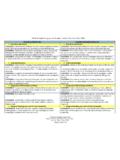
Transcription of CAPABILITY MATRIX FOR PROFESSIONAL STAFF
1 CAPABILITY MATRIX FOR PROFESSIONAL STAFF HANDBOOK 2 INTRODUCTION TO THE CAPABILITY MATRIX This handbook is intended to help you understand the CAPABILITY MATRIX and how it will be used at UoN. The CAPABILITY MATRIX and this handbook are for all PROFESSIONAL STAFF at the University. WHAT IS THE CAPABILITY MATRIX ? The CAPABILITY MATRIX forms part of the overarching Performance Expectations Framework for PROFESSIONAL STAFF and describes the functional capabilities required to perform effectively as a higher education PROFESSIONAL . The continuum describes the progression of skills and knowledge from transactional and operational CAPABILITY through to tactical and strategic CAPABILITY . HOW WAS THE MATRIX DEVELOPED?
2 The CAPABILITY MATRIX was developed through consultation and dialogue across the University and guided by literature, research and practice. It is built on the basis that the evolving and complex nature of PROFESSIONAL work within the higher education sector creates a need for the development of new skills to enable connectedness, innovation and entrepreneurial activity in order to advance UoN s goals. HOW TO READ THE CAPABILITY MATRIX The CAPABILITY MATRIX outlines the broad, but not exhaustive, range of examples of PROFESSIONAL performance expectations and recognises that some roles may be more heavily focused on particular capabilities and/or require differing levels of CAPABILITY . There are five core capabilities with a descriptor for each.
3 Each CAPABILITY has four specific outcomes illustrated by a set of action statements that progress by HEW level. HOW SHOULD THE MATRIX BE USED? The CAPABILITY MATRIX should be used to inform development for PROFESSIONAL STAFF at UoN, and forms part of the overall Performance Review and Development (PRD) process. It is important that managers and supervisors exercise their judgement in applying the CAPABILITY MATRIX as not every action statement will apply to an individual s role. The CAPABILITY MATRIX should be used in conjunction with individual goals driven by Faculty/Divisional Corporate Plans and Position Descriptions as well as the leadership Framework. 3 WHAT ARE PROFESSIONAL CAPABILITIES? PROFESSIONAL Capabilities are a combination of knowledge, skills, behaviours and specialist expertise required to perform at a particular level.
4 The ability of UoN to achieve its strategic goals relies on the CAPABILITY and performance of its STAFF . The CAPABILITY MATRIX describes five PROFESSIONAL capabilities that provide a common language and focus for all PROFESSIONAL STAFF in performing their roles effectively. The MATRIX does not attempt to provide a comprehensive list of every CAPABILITY necessary in the University. Many roles will have specialised skill sets that are unique to that role and these should also be considered alongside the leadership Framework and the Faculty/Divisional Corporate Plans. A headline definition of each of the five PROFESSIONAL Capabilities is provided below and describes in brief the behaviours and characteristics expected of a PROFESSIONAL STAFF member.
5 As a guide, STAFF should aim to align their capabilities within the HEW ranges specified however the overlap in range is designed to encourage STAFF to aspire to performance outcomes outside their expected range. Communicates and engages effectively with internal and external stakeholders for the benefit of the University COMMUNICATION & ENGAGEMENT Applies and improves specialised technical/ PROFESSIONAL knowledge, skills and judgement to achieve outcomes PROFESSIONAL & TECHNICAL EXPERTISE Builds and maintains a wide knowledge and understanding of the business environment and uses methods and techniques to transform data into meaningful and useful information for the University BUSINESS UNDERSTANDING & BUSINESS INTELLIGENCE Considers options, harnesses opportunities and develops, implements and monitors solutions to align with organisational objectives CREATIVE & STRATEGIC THINKING Manages time.
6 Resources and projects effectively and efficiently to achieve successful outcomes ORGANISATIONAL PLANNING & PROJECT MANAGEMENT 4 1. COMMUNICATION & ENGAGEMENT Communicates and engages effectively with internal and external stakeholders for the benefit of the University. Communicates effectively Speaks clearly and respectfully and actively listens to others Prepares standard correspondence using clear, concise and grammatically correct language Treats sensitive information appropriately Clearly presents views and information and checks for understanding Prepares emails, meeting minutes and simple or routine reports Ensures appropriate content in all communications Modifies verbal delivery depending on the audience and the setting Prepares documents and reports based on work-related knowledge Utilises a good understanding of GIPA and privacy obligations when drafting correspondence and reports Clearly presents views to a range of audiences on specific projects and initiatives Prepares written advice and clear recommendations on complex issues for area of responsibility Reviews written work of others and ensures documents contain necessary information and meet audience needs Effectively discusses complex concepts with other expert stakeholders Develop high level reports and planning documents to meet business needs Prepares briefs on highly complex issues.
7 And authoritative technical reports and advice to senior levels of the University and external stakeholders Presents and facilitates Presents information to team members Understands the basic principles of effective presentations Uses graphic and other visual aids such as PowerPoint and handouts to convey information Innovatively creates presentations using a variety of delivery methods Constructs information to promote a particular viewpoint and lead audience to a shared conclusion Gathers and accurately summarises audience views during the presentation Presents in a persuasive and credible manner and holds audience attention Effectively manages consultative processes in a group or forum Anticipates and confidently deals with criticism or dissent and provides effective rebuttals to objections Delivers influential presentations to a senior stakeholder audience holding competing priorities and views Facilitates audience dialogue and gathers and synthesises audience views to provoke further discussion Confidently changes tactics mid-presentation based on perceived audience reception HEW 1-3 HEW 3-5 HEW 5-7 HEW 7-8 HEW 9-10 5 Influences and negotiates Uses skills to reach agreement on own work priorities with colleagues and supervisor Negotiates work completion timelines with stakeholders and supervisor Uses facts, knowledge and experience to support recommendations Influences others of the appropriate course of action based on knowledge and experience Outlines benefits and drawbacks of particular courses of action based on rules, guidelines and facts Plans.
8 Negotiates and implements a course of action to achieve a specific outcome Understands stakeholder issues and develops persuasive evidence based arguments and recommendations to effectively negotiate with stakeholders Negotiates firmly and tactically in sensitive or contentious situations to resolve differences and achieve outcomes Communicates the University s vision and gains support from relevant stakeholders through consultation and negotiation Understands the requirements of contract negotiation and the associated constraints and provides inputs to facilitate the negotiation process Engages with internal and external stakeholders* Liaises with colleagues to understand how they operate and how this affects own tasks Attends and actively participates in meetings Contributes to meeting stakeholder needs Contacts colleagues in other areas to gain their perspective and expertise Contributes to Faculty/Division through active participation in team and Unit meetings Displays a sound understanding of the service offered by their work area and the value add provided to stakeholders Builds trust with stakeholders by regularly providing progress updates Demonstrates an understanding of the interaction of own work area with other areas across the University Gathers knowledge from networks.
9 Assesses activities in other areas and looks for linkages to support own work area Keeps up-to-date with business issues and initiatives and strives to value add to core UoN activities Consults and works with stakeholders to improve their outcomes and plans effectively for their delivery Makes self fully available during critical periods, in Actively seeks to understand the priorities and interests of other areas and individuals in order to leverage projects Leads or actively participates in cross-unit initiatives to share experiences and promote good practice Seeks out value added services to exceed stakeholder expectations Demonstrates an awareness of market trends and seeks to differentiate and improve service to stakeholders accordingly Understands organisational limits and opportunities.
10 And Identifies emerging stakeholders that will have a significant impact on the organisation and forms partnerships for the long term benefit of the organisation Understands the value of strong relationships at peer and senior levels to gain commitment for ideas and cross-organisational initiatives Identifies longer term stakeholder needs and recommends strategic options for service delivery Develops, recommends and implements policy, procedures and standards to 6 order to ensure high quality service aims to remove or reduce obstacles to service delivery Contributes to external engagement initiatives at the Faculty/Divisional level and through membership of PROFESSIONAL associations ensure a quality stakeholder focus at the organisational level Builds confidence in UoN s services to the broader community Uses external commercial and philanthropic networks to position the organisation favourably * Stakeholders are our STAFF and students, international, national and regional communities, our conjoints, alumni, friends and benefactors.