Transcription of CAUSTIC SODA LIQUID (ALL GRADES) - Rowell …
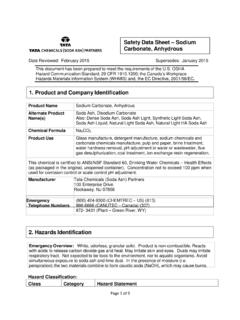
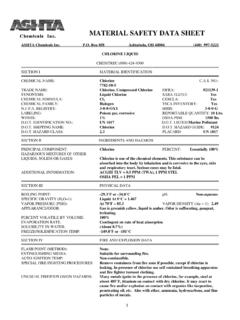
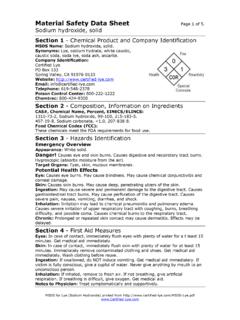
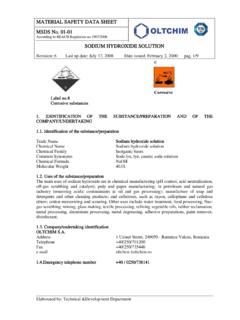
1 SAFETY DATA SHEETM32415 - ANSI - EN_____CAUSTIC soda LIQUID (ALL GRADES) _____1. CHEMICAL PRODUCT AND COMPANY IDENTIFICATION_____Company Identification:Occidental Chemical Corporation5005 LBJ Box 809050 Dallas, TX 75380-90501-800-752-515124 Hour Emergency TelephoneNumber:1-800-733-3665 or 1-972-404-3228 (USA); CHEMTREC (within USA andCanada): 1-800-424-9300; CHEMTREC (outside USA and Canada): +1703-527-3887; CHEMTREC Contract No: CCN16186To Request an or 1-972-404-3245 Customer Service:1-800-752-5151 or 1-972-404-3700 (55) 55959542 (Mexico)Product Identifier: CAUSTIC soda LIQUID (ALL GRADES) Trade Name: CAUSTIC soda Diaphragm grade 10%, 15%, 18%, 20%, 25%, 30%, 35%, 40%,50%, CAUSTIC soda Membrane 6%, 18%, 20%, 25%, 30%, 48%, 50%, 50% CAUSTIC soda Membrane OS, 50% CAUSTIC soda Diaphragm OS, CAUSTIC SodaLow Salt 50%, Membrane Blended, 50% CAUSTIC soda Diaphragm (West Coast),Membrane Cell LiquorSynonyms:Sodium hydroxide solution, LIQUID CAUSTIC , Lye Solution, CAUSTIC , Lye, soda Lye,Secondary CAUSTIC soda LiquidsProduct Use:Metal finishing, Cleaner, Process chemical, Petroleum IndustryUses Advised Against:None date: 12-Mar-2015 SDS No.
2 : M32415 1 of 15 SDS Revision Date: 12-Mar-2015M32415 - ANSI - ENCAUSTIC soda LIQUID (ALL GRADES) _____2. HAZARDS IDENTIFICATION_____OSHA REGULATORY STATUS:This material is considered hazardous by the OSHA Hazard CommunicationStandard (29 CFR ).**EMERGENCY OVERVIEW:Color:Colorless to slightly coloredPhysical stateLiquidAppearance:Clear to opaqueOdor:OdorlessSignal Word:DANGER MAJOR HEALTH HAZARDS: CORROSIVE. CAUSES SERIOUS EYE DAMAGE. CAUSES SEVERE SKIN BURNSAND EYE DAMAGE. CAUSES DAMAGE TO THE RESPIRATORY SYSTEM AND GASTROINTESTINAL OF CONTACT OR INHALATION MAY BE HAZARDS: MAY BE CORROSIVE TO METALS. Mixing with water, acid or incompatible materials maycause splattering and release of heat. Do not store in aluminum container or use aluminum fittings or transfer lines, asflammable hydrogen gas may be HAZARDS: This material has exhibited moderate toxicity to aquatic organisms.
3 Keep out of watersupplies and sewers. This material is alkaline and may raise the pH of surface STATEMENTS: Do not get in eyes, on skin, or on clothing. Wear eye protection, face protection,protective gloves. Do not breathe mist, vapors, or spray. Do not ingest. Do not eat, drink or smoke when using thisproduct. Use only outdoors or in a well-ventilated area. Wash thoroughly after handling- exposure can cause burnswhich are not immediately painful or HAZARD INFORMATION: This material is corrosive. It may cause severe burns and permanentdamage to any tissue with which it comes into contact. Toxicity may be delayed, and may not be readily visible. Totreat contacted tissue, flush with water to dilute. There is no specific antidote. Significant exposures must be referredfor medical attention immediately.
4 **_____GHS CLASSIFICATION:GHS: PHYSICAL HAZARDS:Corrosive to MetalsGHS: CONTACT HAZARD - SKIN:Category 1B - Causes severe skin burns and eye : CONTACT HAZARD - EYE:Category 1 - Causes serious eye damageGHS: TARGET ORGANTOXICITY (SINGLE EXPOSURE):Category 1 - Causes damage to: respiratory system and gastrointestinal system_____Print date: 12-Mar-2015 SDS Revision Date: 12-Mar-2015 2 of 15 SDS No.: M32415M32415 - ANSI - ENCAUSTIC soda LIQUID (ALL GRADES) _____GHS: CARCINOGENICITY:Not classified as a carcinogen per GHS criteria. This product is not classified as acarcinogen by NTP, IARC or : HAZARDOUS TO AQUATICENVIRONMENT - ACUTEHAZARD:Category 3 - Harmful to aquatic lifeUNKNOWN ACUTE TOXICITY:100% of the mixture consists of ingredient(s) of unknown toxicity. There is no acute toxicity data available for SYMBOL:Corrosive, Health hazardsGHS SIGNAL WORD: DANGER GHS HAZARD STATEMENTS:GHS - Physical Hazard Statement(s)May be corrosive to metalsGHS - Health Hazard Statement(s)Causes serious eye damageCauses severe skin burns and eye damageCauses damage to organs (Respiratory System, Gastrointestinal System)GHS - Precautionary Statement(s) - PreventionDo not breathe mist, vapors, or sprayWear protective gloves, protective clothing, eye, and face protectionWash thoroughly after handlingDo not eat, drink or smoke when using this productKeep only in original containerGHS - Precautionary Statement(s) - ResponseIF ON SKIN (or hair): Remove/Take off Immediately all contaminated clothing.
5 Rinse SKIN with water/showerWash contaminated clothing before reuseIF IN EYES: Rinse cautiously with water for several minutes. Remove contact lenses, if present and easy to rinsingImmediately call a POISON CENTER or doctor/physicianIF INHALED: Remove person to fresh air and keep comfortable for breathingImmediately call a POISON CENTER or doctor/physicianIF SWALLOWED: Rinse mouth. Do NOT induce vomitingIF SWALLOWED: Immediately call a POISON CENTER or doctor/physicianIF exposed: Call a POISON CENTER or doctor/physicianSpecific treatment (see First Aid information on product label and/or Section 4 of the SDS)Absorb spillage to prevent material damage_____SDS Revision Date: 12-Mar-2015 Print date: 12-Mar-2015 3 of 15 SDS No.: M32415M32415 - ANSI - ENCAUSTIC soda LIQUID (ALL GRADES) _____GHS - Precautionary Statement(s) - StorageStore locked upStore in corrosive resistant and NON-ALUMINUM container with a resistant inner liner (NOTE: flammable hydrogengas may be generated if aluminum container and/or aluminum fittings are used)GHS - Precautionary Statement(s) - DisposalDispose of contents and container in accordance with applicable local, regional, national, and/or Not Otherwise Classified (HNOC)None KnownSee Section 11: TOXICOLOGICAL INFORMATION_____3.
6 COMPOSITION/INFORMATION ON INGREDIENTS_____Synonyms: Sodium hydroxide solution, LIQUID CAUSTIC , Lye Solution, CAUSTIC , Lye, soda Lye, Secondary CausticSoda LiquidsComponentPercent [%]CAS - - Chloride0 - 357647-14-5 Notes: All hazardous and non-hazardous components of product composition are FIRST AID MEASURES_____INHALATION: If inhalation of mists, vapors, or spray occurs and adverse effects result, remove to uncontaminatedarea. Evaluate ABC's (is Airway constricted, is Breathing occurring, and is blood Circulating) and treatsymptomatically. GET MEDICAL ATTENTION IMMEDIATELY. There is no specific antidote, treat CONTACT: Immediately flush contaminated areas with water. Remove contaminated clothing, jewelry, andshoes immediately. Wash contaminated areas with large amounts of water.
7 GET MEDICAL ATTENTIONIMMEDIATELY. Thoroughly clean and dry contaminated clothing before reuse. Discard contaminated leather CONTACT: Immediately flush contaminated eyes with a directed stream of water for as long as contact lenses, if present and easy to do. Continue rinsing. GET MEDICAL ATTENTION eyes within several seconds is essential to achieve maximum : If swallowed, do not induce vomiting. For definite or probable ingestion, do not administer oral fluids. Ifvomiting occurs spontaneously, keep airway clear. Monitor airway. Volume resuscitation (IV fluids) and circulatorysupport (CPR) may be required. Never give anything by mouth to an unconscious or convulsive person. GETMEDICAL ATTENTION date: 12-Mar-2015 4 of 15 SDS No.: M32415 SDS Revision Date: 12-Mar-2015M32415 - ANSI - ENCAUSTIC soda LIQUID (ALL GRADES) _____Most Important Symptoms/Effects (Acute and Delayed) Corrosive.
8 This material may be corrosive to any tissue itcomes in contact with. It can cause serious burns and extensive tissue destruction resulting in: liquefaction, necrosis,and/or Symptoms/Effects: Listed (Breathing): Respiratory System Effects: Exposure to airborne material may cause irritation, rednessof upper and lower airways, coughing, laryngeospasm, shortness of breath, bronchoconstriction, and possiblepulmonary edema. Severe and permanent scarring may occur. Pulmonary edema may develop several hoursafter a severe acute exposure. Aspiration of this material may cause the same : Skin Corrosion. Exposure to skin may cause redness, itching, irritation, swelling, burns (first, second, orthird degree), liquefaction of skin, and damage to underlying tissues (deep and painful wounds).
9 Eye: Serious Eye Damage. Eye exposures may cause eye lid burns, conjunctivitis, corneal edema, corneal burn,corneal perforation, damage to internal contents of the eye, permanent visual defects, and blindness and/or loss ofthe (Swallowing): Gastrointestinal System Effects: Exposure by ingestion may cause irritation, swelling,and perforation of upper and lower gastrointestinal tissues. Permanent scarring may Symptoms/Effects:- Skin: Repeated and prolonged skin contact may cause a chronic dermatitisInteraction with Other Chemicals Which Enhance Toxicity: None Conditions Aggravated by Exposure: May aggravate preexisting conditions such as: eye disorders thatdecrease tear production or have reduced integrity of the eye; skin disorders that compromise the integrity of the skin;and respiratory conditions including asthma and other breathing of First-Aiders: Protect yourself by avoiding contact with this material .
10 Avoid contact with skin and not breathe vapors or spray mist. Do not ingest. Use personal protective equipment. Refer to Section 8 for specificpersonal protective equipment recommendations. At minimum, treating personnel should utilize PPE sufficient forprevention of bloodborne pathogen to Physician: Medical observation and assessment is recommended for all ingestions, all eye exposures, andsymptomatic inhalation and dermal exposures. For symptomatic ingestion, do not administer oral fluids and considerinvestigation by endoscopy, X-ray, or CT scan. Esophageal perforation, airway compromise, hypotension, and shockare possible. For prolonged exposures and significant exposures, consider delayed injury to exposed tissues. There isno antidote. Treatment is supportive care. Follow normal parameters for airway, breathing, and circulation.