Transcription of CCRP Certification Program - socra.org
1 Candidate Handbook .. Candidate Handbook CCRP Certification Program 1. Certification Program Overview Introduction The CCRP Certification Program is governed by the SOCRA Certification Committee, which operates with complete authority regarding essential decisions related to Certification in order to protect against undue influence that could compromise the integrity of the Certification process. The Certification committee operates for the benefit of the public and outside stakeholders such as government, regulatory agencies, academic research institutions, and industry. The CCRP Certification Examination is offered in various locations throughout the and Canada, as well as some international locations. Examinations are scheduled throughout the year. Please visit the Certification page of the SOCRA website at for the most updated listing of exam sites and dates.
2 History / Background The Certified clinical Research Associate (CCRA) examination was successfully implemented in August of 1995. In January of 2000, the Certification designation changed from Certified clinical Research Associate . (CCRA) to Certified clinical Research Professional (CCRP ). The purpose of this change was to embrace the diversity of the candidate population, recognizing that all may have different job titles, but all are clinical research professionals (CRPs). The Certification continues to reflect a common, strong foundation of knowledge and practice in research regulations and Good clinical Practice (GCP). Purpose The purpose of the Certification Program is to provide an internationally accepted Certification Program for clinical Research Professionals that defines a basic level of knowledge and experience for the conduct of clinical research as governed by the principles of good clinical practice by which certified clinical research professionals will be recognized by the medical research community.
3 Those individuals so approved may use the designation, Certified clinical Research Professional or CCRP . Scope / Standards of Practice The standards upon which this Certification Program is based have been set forth by the Certification committee to promote recognition and continuing excellence in the ethical conduct of clinical trials and to ensure the protection of human research subjects and the general public. The Certified clinical Research Professional Certification Program was created to acknowledge a CRP's knowledge, understanding, and application related to the conduct of clinical investigations involving humans in accordance with the International Council for Harmonisation (ICH) Guideline for Good clinical Practice (E6R2), ICH clinical Safety Data Management: Definitions and Standards for Expedited Reporting (E2A), the United States Code of Federal Regulations (CFR) and the ethical principles that guide clinical research consistent with the principles of the Nuremberg Code, the Belmont Report and the Declaration of Helsinki.
4 Candidates for Certification should possess an understanding of, and demonstrate an application of basic concepts of Good clinical (Research) Practice, including: The Nuremberg Code The Belmont Report The Declaration of Helsinki 2. Candidate Handbook Scope / Standards of Practice, cont'd 21 Code of Federal Regulations - Parts 11, 50, 56, 312, 812. 45 Code of Federal Regulations - Part 46. ICH Harmonised Guideline for Good clinical Practice (E6R2), and ICH clinical Safety Data Management: Definitions and Standards for Expedited Reporting (E2A). FDA Form 482: Notice of Inspection FDA Form 483: Inspectional Observations FDA Form 1572: Statement of the Investigator FDA Form 3454: Certification Financial Interests and Arrangements of clinical Investigators FDA Form 3455: Disclosure Financial Interests and Arrangements of clinical Investigators FDA Form 3500: For Voluntary Reporting of Adverse Events and Product Problems FDA Form 3500A: For Use by User-Facilities, Distributors, and Manufacturers for Mandatory Reporting This credential is not intended for those professionals working exclusively under Good Laboratory Practice (GLP) and/or Good Manufacturing Practice (GMP) regulations.
5 FDA regulations and ICH guidelines constitute the scope of the Certification Program . Additionally, clinical research professionals are expected to adhere to national, state, local and provincial regulations and institutional policies. Definition of a clinical Research Professional CRPs come from a wide variety of backgrounds. CRPs may have backgrounds in nursing, pharmacy, medical technology, business administration, health record management, statistics, science, education, or other areas. CRPs work in various settings, including private practice; cooperative research groups; public and private academic institutions; pharmaceutical, device, and biotechnology companies; clinical Research Organizations (CROs); Site Management Organizations (SMOs); independent research and development organizations; and organizations otherwise involved in the management of clinical trials.
6 A clinical research professional's (CRP) practice is guided by one or more aspects of the principles of Good clinical Practice (GCP). A CRP may function as a: clinical investigator sub-investigator clinical researcher research nurse pharmacist administrator coordinator consultant data manager quality assurance manager regulatory affairs manager educator in clinical trial management 3. Candidate Handbook Definition of a clinical Research Professional The duties of a CRP may include: data collection analysis, or monitoring case management of protocol participants recruitment and enrollment of human subjects protection of subjects and subjects' rights development of informed consent documents preparation of adverse event experience reports construction or monitoring of case report forms maintenance of drug accountability records.
7 Development of grants and budgets preparation of reports educating other healthcare professionals, patients or families about clinical trials protocol development;. Program administration auditing research Program This definition does NOT include professionals working exclusively under Good Laboratory Practice (GLP). and/or Good Manufacturing Practice (GMP) regulations. CCRP Certification Examination Examination Background Information clinical research professionals are guided by a common framework of regulations, guidelines and ethical principles, despite their varied backgrounds and job descriptions. The examination is designed to assess the candidate's ability to apply the basic concepts of Good clinical Research Practice, as specified in the scope and standards of practice.
8 The CCRP Certification is awarded after two criteria are met: 1) successful application and 2) a passing examination score. 4. Candidate Handbook Examination Development The CCRP Certification Examination has been developed by clinical research professionals who have demonstrated expertise in the development, management, and administration of clinical trials. These clinical research subject matter experts (SMEs) have varying backgrounds and job descriptions that reflect the diversity of a clinical research professional's scope of activity The test questions are designed to be straightforward and easily understood. The questions are reviewed for fairness and readability by experts in test question development. The Certification Examination is evaluated and updated at least annually in order to assure that content is up-to-date and reflective of the current regulatory environment in which clinical trials are performed.
9 The Certification Program periodically conducts a Job Task Analysis in order to validate the examination content. A copy of the Job Task Analysis summary report is available by request through the SOCRA. administrative office. Examination Format The CCRP exam includes 145 multiple choice questions; 130 scored and ten (15) unscored questions.*. The data collected on the unscored items is used to evaluate the psychometric soundness of each CCRP . test item.. Each question is weighted equally. The examination also contains case studies that relate to clinical research practice. The case studies are intended to evaluate a candidate's ability to abstract data from medical records. The questions are formulated to be straight-forward and easily understood. The Certification examination is offered in the English language, in two formats: paper and pencil format and computer based testing at PSI testing centers.
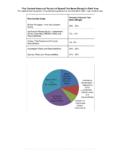
10 Examination Validation The Certification Committee evaluates the results from statistical/psychometric evaluations and updates the exam as needed. Examination Content The CCRP Certification examination is organized into five major content areas. The content outline is derived from the 2012 Job / Task Survey and Analysis. Over 2,000 clinical research professionals participated in the 2012 survey Five Content Areas and Percent of Scored Test Items (Range) in Each Area This table shows the percent of scored test questions that are included in each major content area. Five Content Areas Percent of Scored Test Items (Range). Ethical Principles / Informed Consent / Safety 20% - 25%. Institutional Review Board / Independent Ethics 7% - 11%. Committee (IRB/IEC) Roles and Responsibilities clinical Trial Protocol and Protocol Amendments 4% - 8%.