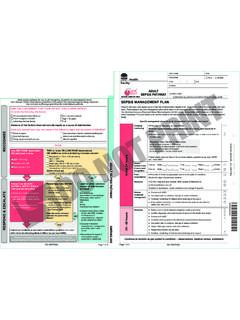
Transcription of CEC Post Fall Assessment and Management Guide For All ...
1 1 CEC post fall Assessment and Management Guide For All Adult Patients A fall is an event which results in a person coming to rest inadvertently on the ground or floor or other lower level: (ACSQHC 2009 Falls Best Practice guidelines ). Please note: if a patient is found on the floor or lower level, it should be assumed that a fall has occurred unless there is reasonable evidence of a sudden onset of paralysis, epileptic seizure, loss of consciousness or overwhelming external force (being applied).
2 A fall event can be serious and cause injury and even death. In hospital a patient fall can be a flag that the patient s underlying medical condition may have deteriorated. The causes of falls are complex, and immediate post fall care will help to reduce the degree of harm to the patient. As patients may have complex health issues, decisions in regards to treatment options following the fall should be discussed with the patient &/or person responsible, family/carer. In the event that a patient has an Advance Care Plan or Directive in place, appropriate symptom Management will remain a priority in the plan of care.
3 post fall Assessment and Management for all adult falls. The post fall Guide aligns with the CEC Between the Flags program. Staff are to follow local Clinical Emergency Response Systems (CERS) and if at any time a staff member and or a family member is concerned about the patient, staff are to call for a Clinical Review. Refer to: Recognition and Management of Patients Who Are Clinically Deteriorating, PD2011_077, 06-Dec-2011. It is assumed that staff will have undertaken DETECT (Detecting Deterioration, Evaluation, Treatment, Escalation and Communicating in Teams) training.
4 Immediate response: When a patient has a fall , staff are required to undertake rapid Assessment and basic life support (if required) and complete observations. Observations & ongoing monitoring: Undertake further observations and monitoring as the patient may develop symptoms later that can indicate serious changes in their condition. Older people who fall in hospital are at risk of intracranial injury due to physiological changes in the brain . This means that patients who fall in hospital (falls and hits head, falls and does not hit head, and unwitnessed falls) are all at risk.
5 Early signs of deterioration are fluctuating behaviours (increased agitation, restlessness or changes in alertness lethargy, flattened) or increasing confusion. Ongoing monitoring is important. Assessment of injury : Do not move the patient until assessed. Examine the cervical spine and immobilise if there is any indication or potential for a spinal injury . If there is any sign of injury , staff are to contact the relevant senior nurse and medical officer for a clinical review. Signs of injury may include: bruising, lacerations, swelling, redness, abrasions, shortening of limbs, restricted limb movement, external rotation of lower limbs, inability to weight bear, pain on applying pressure, and signs of deformity.
6 If there is a suspected head injury the decision to CT scan will depend upon the patients overall medical condition and the location and availability of appropriate services. If CT scan is not available and the patient has no other identified risk factors, clinical judgment can be used to justify continued observations rather than transfer for CT scan. 2 Risk factors indicating potentially significant mild head injury GCS <15 at 2 hours post injury Age >65 years Large scalp haematoma or laceration ** Deterioration in GCS post traumatic seizure Multi-system trauma** Focal neurological deficit Prolonged loss of consciousness (>5 min) Known neurosurgery / neurological deficit ** Clinical suspicion of skull fracture Persistent post traumatic amnesia (AWPTAS <18/18)
7 * Delayed presentation or representation** Vomiting (especially if recurrent) Persistent abnormal alertness / behaviour / cognition* * particularly if persists at 4 hours post time of injury **clinical judgement required Known coagulopathy / bleeding disorder Persistent severe headache* Adapted from: Algorithm 1: Initial Management of Adult Closed Head injury : PD2012_013: Initial Management of Closed Head injury in Adults. Treatment must be discussed with the patient/family/carer and documented in the patient health record.
8 Staff are to follow local health service protocols and further information can be found in the NSW Ministry of Health PD2012_013: Initial Management of Closed Head injury in Adults. The full guideline and associated algorithms provide a comprehensive Guide to the Management of head injury . These resources are available at: Assessment of risk of bleeding: A patient with known coagulopathy and those patients on anticoagulant therapy are at increased risk of bleeding and traumatic brain injury (TBI) if they fall .
9 Investigations should include a check of INR/ATTP. Continued monitoring and observation is important. If the patient presents with abnormal alertness/behaviour/cognition this may indicate subtle brain injury better than GCS and staff are to be aware and report any changes. Family/carers may help establish what is normal. Patients at risk include: Patient receiving anti-coagulant therapy ( warfarin, heparin, enoxaparin (Clexane), dalteparin (Fragmin), rivaoxabam,) Patient receiving anti-platelet therapy ( aspirin, clopidogrel, aspirin/dipyridamole (Assantin)) Patient has haematological disease Patient has renal failure end stage and haemodialysis patients Patient has chronic liver disease Patient is alcohol dependent Assessment for Sepsis: A patient who falls may have sepsis.
10 Sepsis arises when the body s response to infection causes a generalised inflammatory response. The sepsis risk factors and signs and symptoms that can contribute to the fall include: hypotension, tachypnoea, confusion, debilitated condition (frailty and poor mobility, poor balance and muscle strength) and urinary incontinence. It is a medical emergency just like a heart attack or stroke, and can lead to shock, multiple organ failure and death, especially if not recognised early and treated promptly.