Transcription of CHAPTER 2 FINANCIAL MANAGEMENT
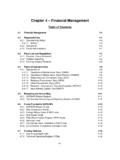
1 2017 TxCDBG Project Implementation Manual Section A CHAPTER 2 FINANCIAL MANAGEMENT 09/01/2017 1 CHAPTER 2 FINANCIAL MANAGEMENT TABLE OF CONTENTS Page Introduction .. 2 Federal Cost Guidelines 2 CFR Part 200 Uniform Guidance .. 2 Accounting Procedures .. 2 Establish Internal Controls .. 2 Conflict of Interest Document Files and Records .. 5 Establish Responsible Persons .. 5 Direct Deposit Authorization .. 6 Release of Funds .. 6 Drawdown Procedures .. 8 Submitting a Request for Payment .. 8 Minimum Drawdown Requests and Disbursement .. 9 Delays, Ineligible Costs, and Denial of Payment .. 9 Accounting Adjustments .. 10 Matching Funds .. 11 Acceptability of Matching Funds .. 11 Reducing the Commitment of Matching Funds.
2 12 Matching Funds Provided by Other Funding Agencies .. 12 Program Income .. 13 Investigation of Fraud Allegations .. 13 2017 TxCDBG Project Implementation Manual Section A CHAPTER 2 FINANCIAL MANAGEMENT 09/01/2017 2 CHAPTER 2 FINANCIAL MANAGEMENT Introduction The Grant Recipient must review the FINANCIAL requirements of the contract and set up a FINANCIAL accounting system consistent with the requirements of the TxCDBG Program. Federal and State Cost Guidelines [Text deleted] The FINANCIAL requirements for local governments receiving TxCDBG Grants are governed by regulations issued by the HUD, the Federal Office of MANAGEMENT and Budget (OMB), and Federal, State, and local policy. [Text deleted] For TxCDBG requirements in effect prior to September 1, 2017, please refer to the 2016 TxCDBG Project Implementation Manual.
3 [Text deleted] Applicable Regulations and Requirements TDA s TxCDBG Program is responsible for monitoring the Grant Recipient s compliance with applicable FINANCIAL MANAGEMENT standards, for processing CDBG Payment Requests for CDBG funds, and for audit review. HUD Guidelines The following is a list of key federal regulations governing FINANCIAL MANAGEMENT . 24 CFR Part 570 Subpart I governs the State CDBG program; Section details program administration requirements; Various sections of 2 CFR 200, including all of Subpart E Cost Principles. Accounting Procedures The Grant Recipient is responsible for ensuring that all TxCDBG expenditures are authorized in the approved budget and do not exceed the total budget amount.
4 Separate accounting records must be maintained for TxCDBG project funds ( , separate from the general municipal/county funds). These records should be developed to be consistent with the Grant Recipient's general accounting system. Grant Recipients must take the following steps to ensure an adequate local accounting system for TxCDBG funds. Establish Internal Controls The Grant Recipient should establish internal controls that provide for responsible MANAGEMENT of TxCDBG funds. The system of internal controls should meet the following criteria: All federal, state, and local conflict of interest provisions apply. The foundation of a good internal control system is segregation of duties. The duties of authorization (signing a check or releasing a wire transfer), custody (having access to the 2017 TxCDBG Project Implementation Manual Section A CHAPTER 2 FINANCIAL MANAGEMENT 09/01/2017 3 blank check stock or the ability to establish a wire transfer), and recordkeeping (ability to record the transaction in the accounting system) should be separated so that one individual cannot complete a transaction from start to finish.
5 No person should have complete control over every phase of a significant transaction. For example, the person who authorizes payments to contractors should not draft and issue the payment check. Best practices also provide that fiscal record keeping for TxCDBG contracts should be maintained separately from the general accounting operations. Where feasible, monthly bank reconciliation and/or direct deposit monthly statements should be made by someone who is not responsible for handling cash or issuing checks. The person issuing checks for grant expenses should not also handle payroll preparation/issuance of paychecks. State law and the charters of home rule cities contain fidelity bond requirements for certain city and county officials.
6 For their own protection, TDA recommends that all Grant Recipients additionally obtain a fidelity bond for each employee or official having access to project assets, accounting records, or checks. The bond (position or blanket type) should be in an amount at least equal to the total project assets that would be available to the project at any time. TDA may require adequate fidelity bond coverage where the Grant Recipient lacks sufficient coverage to protect the Federal Government's interest. If the latter requires an additional premium to be paid on the Grant Recipient's existing policy, this extra cost can be reimbursed out of the General Administration budget category of the TxCDBG contract. Conflicts of Interest Grant Recipients of a TxCDBG contract must avoid, neutralize or mitigate actual or potential conflicts of interest so as to prevent an unfair competitive advantage or the existence of conflicting roles that might impair the performance of the TxCDBG contract or impact the integrity of the procurement process.
7 Every Grant Recipient must maintain written standards of conduct covering conflicts of interest and governing the actions of its employees engaged in the selection, award and administration of contracts (See Sample Code of Conduct in Appendix C). The Grant Recipient may choose to broaden local conflict of interest policies to additional family members and relatives. For the procurement of goods and services, no employee, officer, or agent of the Grant Recipient or subrecipient may participate in the selection, award, or administration of a contract supported by a Federal award if he or she has a real or apparent conflict of interest. Such a conflict of interest would arise when the employee, officer, or agent, any member of his or her immediate family, his or her partner, or an organization which employs or is about to employ any of the parties indicated herein, has a FINANCIAL or other interest in or a tangible personal benefit from a firm considered for a contract.
8 (24 CFR (g), Uniform Grant MANAGEMENT Standards (UGMS) of the Texas Comptroller, 2 CFR (c)(1)). Example: Bay County, Texas and the Village of Seaside Creek sought a contractor to compete for some drainage improvement by sealed competitive bids. The project was funded with CDBG funds. Eric Smith and Associates is the engineering firm which will oversee the project. Jones Constructors, Inc. was the low bidder and has been selected for the award. The principals of both the engineering firm and the construction company are brothers-in-law. Under the procurement regulations, such procurement would be a conflict of interest because they are immediate family members. It would be a conflict of interest of Eric Smith and Associates to oversee a construction contract funded with CDBG money, since Eric Smith s brother-in-law is a principal of Jones Constructors, Inc.
9 2017 TxCDBG Project Implementation Manual Section A CHAPTER 2 FINANCIAL MANAGEMENT 09/01/2017 4 For all other cases other than the procurement of goods and services, non-procurement conflict of interest provisions are applicable to any person or entity including any benefitting business, utility provider, or other third party entity that is receiving assistance, directly or indirectly, under a TxCDBG contract or award, or that is required to complete some or all work under the TxCDBG contract in order to meet a National Program Objective, that might potentially receive benefits from TxCDBG awards. In such instances (non-procurement), the general rule is that no person/entity described above whom: exercise or have exercised any functions or responsibilities with respect to CDBG activities; are in a position to participate in a decision making process; or are in a position to gain inside information with regard to such activities may: obtain a FINANCIAL interest or benefit from a CDBG-assisted activity, or have a FINANCIAL interest in any contract, subcontract, or agreement with respect to a CDBG-assisted activity, or with respect to the proceeds of the CDBG-assisted activity, either for themselves or those with whom they have family or business ties, during their tenure or for one year thereafter.
10 Example: Central City, Texas applied for TxCDBG funds for a first-time sewer project in the West Addition neighborhood. One of the residents included in the project is the mother-in-law of City Council member Bob Thompson. Councilman Thompson does not have a FINANCIAL interest in the project; however there is a conflict of interest due to the CDBG-funded benefit to be provided to his family member. The City must disclose this conflict and request an exception to the prohibition on such conflicts from TDA before proceeding with the project. TDA will evaluate persons in similar roles for benefitting organizations, such as utilities providing service through the project or businesses creating jobs as a result of the project, in determining a conflict of interest.