Transcription of CHCDIV002 Promote Aboriginal and/or Torres Strait Islander ...
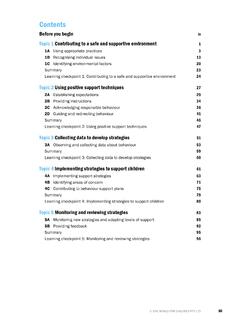
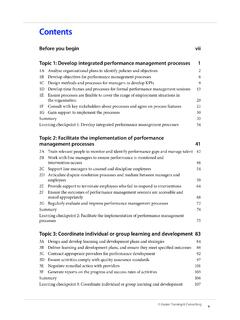
1 ContentsBefore you begin ivTopic 1 Identify cultural safety issues in the workplace 11A Identify the potential impact of cultural factors 31B Identify critical issues that influence relationships and communication 191C Establish key aspects of cultural safety in consultation with Indigenous Australians 261D Evaluate cultural safety in own work 35 Summary 49 Learning checkpoint 1: Identify cultural safety issues in the workplace 50 Topic 2 Model cultural safety in own work 572A Ensure work practices are grounded in awareness 592B Reflect awareness of own and other cultures in work practices 672C Use respectful communication techniques 722D Engage with Aboriginal and/or Torres Strait Islander interpreters and colleagues 77 Summary 83 Learning checkpoint 2.
2 Model cultural safety in own work 84 Topic 3 Develop strategies for improved cultural safety 893A Support the development of effective partnerships 913B Identify and utilise resources to Promote partnerships 973C Devise and document ways to support the delivery of education and care 1053D Integrate strategies that encourage self-determination and community control 113 Summary 116 Learning checkpoint 3: Develop strategies for improved cultural safety 117 Topic 4 Evaluate cultural safety strategies 1194A Agree on outcomes to measure cultural safety strategies 1214B Involve Aboriginal and/or Torres Strait Islander people in evaluations 1234C Evaluate programs and services against desired outcomes 1254D Revise strategies based on evaluation 127 Summary 129 Learning checkpoint 4: Evaluate cultural safety strategies 130 ASPIRE TRAINING & CONSULTING iii ASPIRE TRAINING & CONSULTING 1 Identify cultural safety issues in the workplaceCulture includes language, religion, beliefs, food and other shared characteristics of social or ethnic groups.
3 Cultural awareness and knowledge provides educators with the ability to work effectively with people from different cultural backgrounds, and to meet their needs through understanding, empathy and an appreciation of the barriers they face. This topic focuses on the culture of Aboriginal and/or Torres Strait Islander people. Aboriginal and/or Torres Strait Islander people have distinct and complex cultures. Learning about these cultures, including their history, traditions and beliefs, allows non-Indigenous educators to design and implement service practices to meet Indigenous Australian individuals needs in a culturally sensitive way. It also allows Indigenous Australian and non-Indigenous educators to work effectively together.
4 Photo Ludo Kuipers, 1In this topic you will learn how to:1A Identify the potential impact of cultural factors1B Identify critical issues that influence relationships and communication1C Establish key aspects of cultural safety in consultation with Indigenous Australians1D Evaluate cultural safety in own work2 ASPIRE TRAINING & CONSULTINGCHCDIV002 Promote Aboriginal and/or Torres Strait Islander CULTURAL SAFETYThe following table maps this topic to the National Quality Standard and both national learning frameworks. National Quality StandardQuality Area 1: Educational program and practiceQuality Area 2: Children s health and safetyQuality Area 3: Physical environmentQuality Area 4: Staffing arrangementsQuality Area 5: Relationships with children Quality Area 6: Collaborative partnerships with families and communitiesQuality Area 7.
5 Governance and leadershipEarly Years Learning FrameworkMy Time, Our PlacePrinciples Secure, respectful and reciprocal relationships PartnershipsHigh expectations and equity Respect for diversity Ongoing learning and reflective practicePractice Holistic approachesHolistic approachesResponsiveness to childrenCollaboration with childrenLearning through playLearning through playIntentional teachingIntentionality Learning environmentsEnvironments Cultural competenceCultural competenceContinuity of learning and transitionsContinuity and transitions Assessment for learningEvaluation for wellbeing and learningOutcomes Children have a strong sense of identity Children are connected to and contribute to their world Children have a strong sense of wellbeing Children are
6 Confident and involved learners Children are effective communicators ASPIRE TRAINING & CONSULTING 7 TOPiC 1 IDENTIFY CULTURAL SAFETY ISSUES IN ThE wORKPLACED eaths in custodyDeath in custody is defined as the death of a person in prison custody, or police custody, or detention as a juvenile . here are a few significant facts about deaths in custody and the criminal justice about deaths in custodyThe Royal Commission found that Indigenous Australian people were significantly over-represented in deaths in custody when compared with the non-Indigenous to the Australian human Rights Commission, there were 96 Indigenous deaths in custody between 31 May 1989 and 31 May were 86 total deaths in custody for the 2008 calendar year.
7 Indigenous Australian people remain more than twice as likely to die in custody as their non-Indigenous Australian people remain proportionally over-represented in contact with the criminal justice show that Indigenous Australian juveniles are around 20 times more likely than non-Indigenous juveniles to be historical issuesThe impact of British colonisation on Indigenous Australian people varies. Some people accept that these behaviours were in the past, while others continue to feel its direct impact on their personal identities and the development of their cultures. As an educator, you must respect and empathise with the opinions of the families and children you are caring for.
8 Your main focus should always be the care and development of children. By asking questions and seeking answers, you can gain a better understanding of how these issues affect those in your workplace and the families of children in your care. You must always consider how these events may affect children in their ability to identify with their culture and how they integrate into formalised care. As some of these events are quite recent, many Indigenous Australian families are still trying to deal with the consequences. For example, children in your service may have grandparents and other relatives who were forcibly removed from their families. when you work with Indigenous Australian people you may sometimes notice a level of mistrust or an unwillingness to cooperate.
9 Time, patience and dedication to resolving these issues are needed. ASPIRE TRAINING & CONSULTING 11 TOPiC 1 IDENTIFY CULTURAL SAFETY ISSUES IN ThE wORKPLACEY olnguRefers to Indigenous Australian people in and from Northern Territory (north-east Arnhem Land).AnanguRefers to Indigenous Australian in and from Central diversityEach area has a number of language groups, each with unique ancient cultural heritage that is based around their physical and spiritual connections to their local land and website provides a map of Aboriginal Australia: are some aspects of the diversity found in Aboriginal and/or Torres Strait Islander people s across culturesDiversity featuresXXTraditionsXXCeremoniesXXArtXXS killsXXKnowledge and storiesXXKinship groupsLand rightsThe Aboriginal Land Rights (Northern Territory) Act 1976 represents the first attempt by an Australian government to legally recognise the Indigenous Australian system of land ownership.
10 The Act has provided a mechanism for some Indigenous Australian people in the Northern Territory to maintain or re-establish their cultural 3 June 1992, the high Court of Australia gave Aboriginal land rights legal recognition with its famous Mabo decision. The case centred on the Murray Islands in the eastern part of the Torres Strait Islands between Australia and Papua New Guinea. The Meriam people, led by Eddie Mabo, took the action in the high Court to overturn the doctrine of terra nullius. The court found that under Australian law, Indigenous Australian people have native title rights to their land. The decisions ruled that these rights existed before colonisation and still exist under the common law.