Transcription of Clustering Algorithms Applied in Educational Data …
1 Abstract Fifty years ago there were just a handful of universities across the globe that could provide for specialized Educational courses. Today Universities are generating not only graduates but also massive amounts of data from their systems. So the question that arises is how can a higher Educational institution harness the power of this didactic data for its strategic use? This review paper will serve to answer this question. To build an Information system that can learn from the data is a difficult task but it has been achieved successfully by using various data mining approaches like Clustering , classification, prediction Algorithms etc. However the use of these Algorithms with Educational dataset is quite low. This review paper focuses to consolidate the different types of Clustering Algorithms as Applied in Educational Data Mining context.
2 Index Terms Clustering , Educational data mining (EDM), learning styles, learning management systems (LMS). I. INTRODUCTION According to the international consortium on Educational data mining, EDM is defined as an emerging discipline concerned with developing methods for exploring the unique types of data that come from Educational settings, and using those methods to better understand students and the settings they learn in [1]. EDM focuses on analyzing data generated in an Educational setup by the various intra-connected or disparate systems to develop model for improving learning experience and institutional effectiveness. Data mining also sometimes referred to as knowledge discovery in databases (KDD) is a known field of study in life sciences and commerce but the application of data mining to Educational context is limited [2]. Various methods have been proposed, Applied and tested in data mining field and it s argued by some researchers that these generic methods or Algorithms are not suitable to be Applied to this emerging field of study.
3 It s proposed that Educational data mining methods must be different from the standard data mining methods because of multi-level hierarchy and non-independence in Educational data [1]. Institutions are increasing being held accountable for student success [3] Since EDM emerged as a sub-discipline in DM there have been notable researches in Manuscript received July 2, 2014; revised September 4, 2014. Ashish Dutt, Saeed Aghabozrgi, and Maizatul Akmal Binti Ismailis are with the Faculty of Computer Science and Information Technology, University of Malaya, Malaysia (e-mail: {ashish_dutt, Hamidreza Mahroeianis with University of Otago, New Zealand (e-mail: student retention and attrition rates that have been conducted [4]. [5] Applied predictive modeling technique to enhance student retention efforts. In a similar fashion, there have been various software s like Weka, Rapid have been developed to use a combination of DM Algorithms or a specific algorithm to aid researcher s or stakeholders to find answers to specific problems but the problem with such tools are that they need to be learned so as to use them.))}
4 This means that for a novice computer user especially in the administration department of a college or a university, the usage of such tools is not that easy. Just like commercial e-commerce based websites are using recommender systems that collect user browsing data and recommend similar products there have been efforts to apply the same in the Educational context but they have not been successful as they are highly domain dependent [6]. The objective and purpose of this research paper is to review, different Clustering Algorithms as Applied to EDM context. Numerous studies have been conducted in this context, but with disparate associations. This research paper is to bridge this gap and present a comprehensive review of all types of Clustering methodologies as Applied to EDM till date. This paper is organized as follows. Section II is a background of related works pertaining to Educational Data Mining (EDM); Section III discusses the various Clustering Algorithms /techniques Applied to Educational dataset.
5 Section IV discusses on the application of Clustering Algorithms to learning styles of studentand learning management systems. Section V provides further discussion and finally Section VI shows the conclusion and future works. II. Educational DATA MINING EDM converts raw data coming from Educational systems into useful information that could potentially have a greater impact on Educational research and practice [7]. Traditionally researchers have Applied data mining methods like Clustering , classification, association rule mining, text mining to Educational context as outlined; [8], conducted a survey that provides a comprehensive resource of papers published between 1995 and 2005 on Educational Data Mining (EDM). Reference[9]Has suggested the application of data mining techniques to study on-line courses. [10] Had suggested association rules and Clustering to support collaborative filtering for the development of more sensitive and effective e-learning systems.
6 Reference [11] hasused a case study that uses prediction methods in scientific study to game the interactive learning environment by exploiting the properties of the system rather than learning the system. Clustering Algorithms Applied in Educational Data Mining Ashish Dutt, Saeed Aghabozrgi, Maizatul Akmal Binti Ismail, and Hamidreza Mahroeian International Journal of Information and Electronics Engineering, Vol. 5, No. 2, March 2015112 DOI: Reference [12] has provided tools that can be used to support Educational data mining. [13] Had shown how Educational data mining prediction methods can be used to develop student models. It must be noted that student modeling is an emerging research discipline in Educational data mining [1]. While another group of researchers [14] have devised a toolkit that operates within the course management systems and is able to provide extracted mined information to non-expert users.
7 Data mining techniques have been used to create dynamic learning exercises based on student s progress through a course on English language instruction [15]. While most of the e-learning systems used by Educational institutions are used to post or access course materials, they do not provide the educators the necessary tools that could thoroughly track and evaluate all the activities performed by their learners so as to evaluate the effectiveness of the course and learning process. [16]. III. Clustering TECHNIQUES The theory of looking at didactic amounts of data whether it s in digital or physical form and stored in diverse repositories be it book keeping records or databases of an Educational institution is now termed as Big data [17]. According, to Manyika et al. [18] a data set whose computational size exceeds the processing limit of software can be categorized as big data.
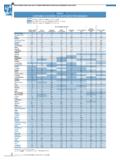
8 Several studies have been conducted in the past that have provided detailed insights into the application of traditional data mining Algorithms like Clustering , prediction, association to tame the sheer voluminous power of big data [9]. Traditional Data Mining Algorithms have been Applied to various kinds of Educational systems as shown in Table I. Broadly, the Educational system can be classified as two types, brick and mortar based traditional classroom's and the digital virtual classroom's better known as known as LMS Systems [19], web-based adaptive hypermedia systems [20] and intelligent tutoring systems (ITS) [21]. The application of various Clustering algorithm has been Applied in many a cases to Educational data set in diverse studies. The following table consolidates the research work done on the application of Clustering Algorithms to Educational dataset.
9 IV. USING CLUSTERINGIN EDM In a learning environment the learning styles of student is a decisive factor. In many cases there has been a mismatch between personal learning styles and the learning demands of different disciplines. Reference [22], has utilized a two-step cluster analysis approach which examined the brain signals centroids that used electroencephalography (EEG) technology to measure the learning style of participants such that they were successfully able to classify it into 4 unique clusters. Students typically annotate texts while reading book by highlighting the context of interest or by underlining it or by writing comments in the side margins. This activity is called annotation. Researchers have [19] Applied statistical Clustering method like K-means Clustering and Hierarchical Clustering to student annotations. And they proved that by using these Clustering methods, the creation of students with similar learning style cluster is improved and is faster.
10 Comprehension reading is a very widely used classroom activity in schools and colleges. This helps in building a lifelong reading habit and learning process. This ability of the student behavioral learning patterns has been computationally mapped by applying the Forgy method for k-means Clustering and combined with Bloom's taxonomy to determine positive and negative cognitive skills set in reference to reading comprehension skills. [20]. Yet in another study, [21] combined Web Based Instruction (WBI) programs with the cognitive learning style of the learner to study their effects on student learning patterns. K-means Clustering algorithm was used to result in cluster of students that shared similar learning patterns that further leads to identification of the related cognitive style for each group. Learning Management System (LMS) have become an integral part of Educational institutions for teaching and learning.