Transcription of CMS Emergency Preparedness Rule Toolkit: Hospitals
1 CMS Emergency Preparedness RULE TOOLKIT: Hospitals P-01948B Updated: 6/2020 1 *Effective 11/29/19 CONTENTS WELCOME .. 3 Wisconsin s Healthcare Emergency Readiness Coalitions (HERCs) .. 4 Overview .. 5 General Information ..5 Using This Risk Assessment and Planning .. 8 Risk Assessment ..8 Continuity of Operations ..8 Cooperation and Collaboration ..8 Tools and Templates: Risk Assessment and Planning .. 10 Emergency Preparedness Planning Checklist .. 10 Facility-Based HVA .. 10 Emergency Preparedness Planning Checklist .. 11 Facility-Based HVA .. 11 Emergency Operations plan Activation .. 11 Essential Services Roles and Responsibilities .. 12 HICS Documents .. 13 Collaboration Contact Grid.
2 14 Policies and Procedures .. 15 Subsistence Needs .. 15 Patient and Staff Tracking .. 15 Evacuation and Sheltering in Place .. 15 Medical Documentation .. 16 Volunteers .. 16 Transfer Arrangements .. 16 1135 Waivers .. 17 Tools and Templates: Policies and Procedures .. 18 Subsistence Needs .. 19 Patient and Staff Tracking .. 20 Evacuation and Sheltering in 21 Medical Documentation .. 22 Health Professions Volunteer Use .. 23 2 *Effective 11/29/19 Sample Transfer Agreement .. 23 Sample Memorandum of Understanding .. 23 1135 Waiver Information .. 23 Communication plan .. 25 Contact Information .. 25 Communications .. 25 Release of Information .. 26 Hospital Information .. 26 Tools and Templates: Communication plan .. 27 External Contact Information .. 28 Staff Contact Information .. 29 Patients Physicians Contact Information.
3 30 Volunteer Contact Information .. 31 Primary and Alternate Means of Communication .. 32 HIPAA Decision Flowchart .. 33 EMResource (formerly WI Trac) .. 34 Training and Testing .. 35 Training Program .. 35 Testing .. 35 Tools and Templates: Training and Testing .. 38 Exercise Design Checklist .. 39 Exercise Evaluation Guide .. 39 After Action Report/Improvement plan Instructions and Template .. 39 Additional Requirements .. 41 Emergency and Standby Power Systems .. 41 Integrated Health Care Systems .. 41 Transplant Hospitals .. 42 Resources .. 43 Definitions .. 44 Acronyms .. 46 Appendices .. 48 Appendix A: Federal Regulation .. 48 Appendix B: Emergency Preparedness Regulations Crosswalk .. 49 3 *Effective 11/29/19 WELCOME Welcome to the Emergency Preparedness Rule Toolkit for Hospitals , assembled by the Wisconsin Department of Health Services Health Care Preparedness Program, out of the Office of Preparedness and Emergency Health Care in the Division of Public Health.
4 In September 2016, the Centers for Medicare & Medicaid Services (CMS) released a new Emergency Preparedness rule for 17 sectors of the health care system. The new rule asks the affected provider types to demonstrate that they are doing risk assessments; writing appropriate plans, policies and procedures; and training and testing their plans with staff and partners in the community. One of the resources CMS suggests providers can seek out to assist them are the regional health Emergency readiness coalitions (HERCs). In Wisconsin, we have seven of these coalitions. The memberships of these coalitions which include Hospitals , Emergency medical services, public health agencies, Emergency management agencies, and a range of other partners plan , train, and exercise together to be ready to support one another in large-scale emergencies.
5 We invite you to reach out to your region s coordinator, if you haven t already, to find out more. A map of the regions and a link to the current contact information for their coordinators can be found on the next page. Each of these toolkits gives facilities that fall under the new rule an overview of the requirements for their provider type, as well as some sample templates that can be used in their planning efforts. In topic areas where there wasn t a tool or template readily available, the toolkit offers planning worksheets that feature a list of example questions to help facilities think through relevant issues that can help them draft their plans and policies. As you may be aware, the Division of Quality Assurance (DQA, another part of the Wisconsin Department of Health Services), is the state survey agency that oversees Wisconsin s certification process on behalf of CMS.
6 While DQA has provided our staff with information and background on the CMS rule, our provider toolkits were produced independently and are intended for advisory purposes only. None of the tools or assistance provided by our office or the regional healthcare coalitions guarantees any outcome during survey visits. Facilities are solely responsible for meeting CMS requirements. We wish you success in your efforts to enhance your readiness to protect your patients, clients, residents, their families, and your staff during Emergency situations, and hope the contents of this toolkit help you on your way! Best Wishes, Dave Rozell David W. Rozell, MPH Health Emergency Preparedness Section Chief Office of Preparedness and Emergency Health Care Wisconsin Department of Health Services 4 *Effective 11/29/19 WISCONSIN S HEALTHCARE Emergency READINESS COALITIONS (HERCS) Below is a map of the regional healthcare Emergency readiness coalitions in Wisconsin.
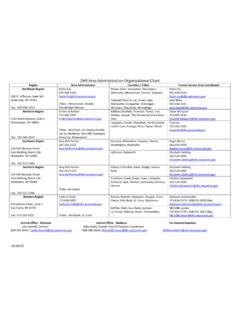
7 Contact information for coalition leaders is provided in the Healthcare Emergency Readiness Coalition Regional Contact document: Questions about the federal regulation for Emergency Preparedness can be directed to your regional HERC coordinator. In addition, the HERC Emergency Preparedness website can provide links to regional websites, answers, and updates on many Emergency Preparedness topics: 5 *Effective 11/29/19 OVERVIEW On September 16, 2016, the Centers for Medicare & Medicaid Services (CMS) published new federal regulations that included updated Emergency Preparedness requirements for providers and suppliers participating in Medicare and Medicaid. For provider-specific text and a link to the full text regulation, see Appendix A. These requirements fall under new conditions of participation/conditions for coverage; if these requirements are not met, providers and suppliers risk citation and consequent loss of Medicare or Medicaid reimbursement.
8 The regulation went into effect on November 15, 2016, and will be included in any surveys conducted following November 15, 2017. NOTE ( ): CMS published an updated Interpretive Guidelines, see Appendix Z, on February 1, 2019. NOTE ( ): CMS released updated regulatory language as a result of a Burden Reduction Rule published in the Federal Register on September 30, 2019 and are effective as of November 29, 2019. Seventeen provider and supplier types receiving Medicare or Medicaid reimbursement are affected by the CMS Emergency Preparedness rule. The provider and supplier types are: Ambulatory surgical centers Clinics and rehabilitation agencies, and public health agencies as providers of outpatient physical therapy and speech-language pathology services Community mental health centers Comprehensive outpatient rehabilitation facilities Critical access Hospitals End-stage renal disease facilities Home health agencies Hospices (inpatient and outpatient) Hospitals Intermediate care facilities for individuals with intellectual disabilities Long term care (skilled nursing facilities) Organ procurement organizations (OPOs)
9 Programs of all inclusive care for the elderly Psychiatric residential treatment facilities Religious nonmedical health care institutions Rural health clinics and federally qualified health clinics Transplant center The regulation requires affected providers and suppliers to comply with all applicable federal, state, and local Emergency Preparedness requirements. The regulation also requires providers and suppliers to develop and maintain a comprehensive Emergency Preparedness program, utilizing an all-hazards approach that includes, but is not limited to, the following domains: Risk Assessment and Planning: Develop an Emergency Preparedness plan based on facility and community risk assessments and utilizing an all-hazards approach; address patient populations, services offered for continuity of operations, and succession plans.
10 Policies and Procedures: Develop Emergency Preparedness policies and procedures based on the risk assessment, Emergency plan , and communication plan ; address subsistence needs, patient tracking, evacuation, sheltering in place, protection of medical documentation, and arrangements with other providers in the event of patient transfer. Communication plan : Develop an Emergency Preparedness communication plan that complies with federal, state, and local laws; include contact information for relevant partners, methods to share protected patient information, and primary and alternate means of communication. General Information 6 *Effective 11/29/19 Training and Testing: Develop an Emergency Preparedness training and testing program based on the risk assessment, Emergency plan , and communication plan ; provide annual training and testing on Emergency Preparedness policies and procedures.