Transcription of COGNITIVE DYSFUNCTION SYNDROME EVALUATION TOOL
1 COGNITIVE . DYSFUNCTION . SYNDROME . EVALUATION tool . COGNITIVE DYSFUNCTION SYNDROME (CDS) is an irreversible degeneration of the brain similar to Alzheimer's disease in humans, characterized by progressive COGNITIVE impairment beyond that expected to occur with aging. CDS has a slow onset, can be difficult to manage and affects an estimated 14% of dogs 8 years and older. What Is DISHAA? In order for a dog to be diagnosed with CDS, owners must observe their dog exhibiting specific behaviors. The DISHAA tool helps owners identify these behaviors, enabling veterinarians and owners to work together to assess a dog's mental acuity. D. Gets stuck, difficulty ge ing around objects, goes to hinge side of door Stares blankly at walls, floor, or into space DISORIENTATION Does not recognize familiar people/familiar pets Gets lost in home or yard Less reactive to visual (sights) or auditory (sounds) stimuli I. More irritable/fearful/aggressive with visitors, family or other animals SOCIAL INTERACTIONS Decreased interest in approaching, greeting or affection/pe ing S SLEEP/WAKE.
2 CYCLES. Pacing/restless/sleeps less/waking at night Vocalization at night H. Less able to learn new tasks or respond to previously learned HOUSESOILING, LEARNING commands/name/work AND MEMORY Indoor soiling of urine or stool/decreased signaling to go out Difficulty ge ing dog's a ention/increased distraction/decreased focus A. Decrease in exploration or play with toys, family members, other pets ACTIVITY Increased activity, including aimless pacing or wandering Repetitive behaviors, , circling/chewing/licking/stargazing A. Increased anxiety when separated from owners ANXIETY More reactive/fearful to visual (sights) or auditory (sounds) stimuli Increased fear of places/locations ( , new environments/going outdoors). Salvin, HE, McGreevy, PD, Sachdev, PS, & Valenzuela, MJ (2010). Underdiagnosis of canine COGNITIVE DYSFUNCTION : a cross-sectional survey of older companion dogs. 1. Veterinary Journal (London, England : 1997), 184(3), 277 81. COGNITIVE DYSFUNCTION SYNDROME . ASSESSMENT tool .
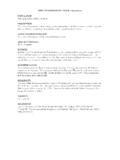
3 COGNITIVE DYSFUNCTION SYNDROME (CDS) is an irreversible degeneration D DISORIENTATION. of the brain similar to Alzheimer's disease in humans, characterized by progressive COGNITIVE impairment beyond that expected to occur with I SOCIAL INTERACTIONS. aging. CDS has a slow onset, can be difficult to manage and affects an estimated 14% of dogs 8 years and older. S SLEEP/WAKE CYCLES. What is DISHAA? H HOUSESOILING, LEARN- ING AND MEMORY. DISHAA is a tool to help you and your veterinarian assess the mental acuity of your dog, and for your veterinarian to potentially diagnose A ACTIVITY. COGNITIVE DYSFUNCTION SYNDROME (CDS). A ANXIETY. Date: Owner's name: Pet's name: Age: Gender: Male Female Neutered/Spayed: No Yes Breed: Weight: BCS (Body Condition Score 1-9): Current Diet: Medications and Dosage Frequency: Please complete this canine senior pet COGNITIVE assessment. If you've noticed changes in multiple behavioral categories, be sure to talk to your veterinarian today about the health of your pet's aging brain.
4 BEHAVIORAL SIGNS. Identify signs that have arisen or progressed since 8 years of age and older. Score as 0=none, 1=mild, 2=moderate, 3=severe Score DISORIENTATION. Gets stuck, difficulty getting around objects, goes to hinge side of door Stares blankly at walls, floor, or into space Does not recognize familiar people/familiar pets Gets lost in home or yard Less reactive to visual (sights) or auditory (sounds) stimuli Please complete assessment on other side. COGNITIVE DYSFUNCTION SYNDROME . ASSESSMENT tool . CONTINUED. BEHAVIORAL SIGNS. Identify signs that have arisen or progressed since 8 years of age and older. Score Score as 0=none, 1=mild, 2=moderate, 3=severe SOCIAL INTERACTIONS. More irritable/fearful/aggressive with visitors, family or other animals Decreased interest in approaching, greeting or affection/petting SLEEP/WAKE CYCLES. Pacing/restless/sleeps less/waking at night Vocalization at night HOUSESOILING, LEARNING AND MEMORY. Less able to learn new tasks or respond to previously learned commands/name/work Indoor soiling of urine ___ or stool ___ /decreased signaling to go out Difficulty getting dog's attention/increased distraction/decreased focus ACTIVITY.
5 Decrease in exploration or play with toys, family members, other pets Increased activity including aimless pacing or wandering Repetitive behaviors, , circling ___ chewing ___ licking ___ stargazing ___. ANXIETY. Increased anxiety when separated from owners More reactive/fearful to visual (sights) or auditory (sounds) stimuli Increased fear of places/locations ( , new environments/going outdoors). TOTAL (BE SURE TO CARRY OVER THE SCORES FROM FRONT SIDE OF SHEET). Once this form is completed, your veterinarian will determine the cause of these signs through a physical examination and recommended diagnostic tests. However, even if your senior pet is experiencing multiple health issues associated with aging, there may be some degree of CDS. A score of 4-15 is consistent with mild, 16-33 is moderate, and >33 is severe CDS. Assessment was created by: Dr. Gary Landsberg, DVM, DACVB, DECAWBM, Vice President, Veterinary Affairs CanCog Technologies; to aid in diagnosing Canine COGNITIVE DYSFUNCTION SYNDROME .
6 Purina trademarks are owned by Soci t des Produits Nestl Printed in USA. VET0938A-0517.