Transcription of Common Types of Informational Text Structure
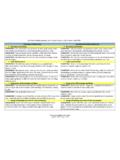
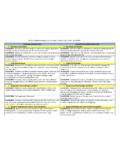
1 Common Types of Informational Text Structure 2012, University of Tennessee Center for Literacy Studies Structure Description Examples Signal Words Sequence Information or arguments are constructed in a chain, so that the writer can lay out steps in a process, series of events, or a hierarchy. Recipes Directions in a manual for using an appliance A timeline for product development Steps to follow in a workplace process first, next, last, another, then, finally, before, preceding, following, additionally. Comparison /Contrast Describes similarities or differences between objects, places or events, and the similar or different qualities are linked back and forth.
2 Sports pre-game stories about two opposing teams News articles explaining candidates positions on issues Descriptions of multiple health insurance options Advertisements for work-related tools or products like, similar to, unlike, in contrast, whereas, while, although, different from, as opposed to, instead of, however, as well as, either/or. Description Explains a topic, often in considerable detail. Often the text is broken into sections, each with a main idea and details that elaborate on it. Information sheets about products for sale, such as a car, an appliance, a house, etc. Articles on things to do at a vacation destination Sections of an employee manual that discuss workplace policies for example, in particular, for instance, to illustrate, such as, most important, another. Cause /Effect Focused on an event or occurrence, the writer names the event/occurrence and then tells the effects it has (on other events, on people, etc.)
3 Or the writer names the event/occurrence and then tells what caused it to happen. An editorial discussing the possible consequences of implementing a policy A troubleshooting guide for the office copy machine that outlines possible causes of malfunctions Warning labels naming possible side effects of using a product therefore, as a result, lead(s) to, because of, in order to, for these reasons, thus, if-then, may be due to. Problem Solution Presents a problem and several possible solutions. The author may also describe the pros and cons of each solution. An newspaper editorial outlining a current difficulty, proposing some solutions and advocating for one of them A workplace memo stating why a certain rule has been put in place A political speech proposing a remedy for a troubling situation the problem is, the difficulty is, it is possible to, if-then, one challenge is, therefore.
4