Transcription of Completing Your Application Form 1 - Human …
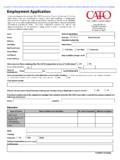
1 Completing your Human rights Application under Section 34 of the Human Rights Code ( form 1) Human Rights legal Support Centre October 1, 2012 Section 1 - Personal contact information OYo u need to provide your name, address, telephone number, fax number, cell number and, if you wish, an e-mail address. OYo u must advise what is the best way to send information to you ( , mail, e-mail or fax) and that is how the Tribunal will contact you. 2 Section 2 - Alternative contact information OIf it will be difficult for the Tribunal to contact you, or if you wish to keep your contact information private, you can provide information about an Alternative Contact OIf so, you must provide contact information for that person. OIMPORTANT: If you complete this section, all correspondence from the Tribunal will go to your Alternative Contact and that person will have to advise you of your Application s ongoing status.
2 3 Section 3 - Representative contact information OIf you retain a lawyer or paralegal to assist you, then you must authorize that person to represent you and provide that person s contact information. OYo u must also indicate the best way to send information to your representative ( mail, e-mail or fax). 4 Section 3 - Representative contact information: who can represent? Yo u have three (3) options for representation at the Tribunal: Oself-representation; Orepresentation by a lawyer or paralegal licensed by the Law Society of Upper Canada (LSUC); or Orepresentation by an unlicensed person if that person falls within a category the LSUC has exempted from its licensing requirements (see ). 5 Section 3 - Representative contact information: exemptions The current exemptions include: Oan unpaid friend or family member; Oan employee or volunteer from a trade union; and Ostudents, volunteers and employees of legal Aid Ontario clinics OA person who is not licensed, whose license is suspended or who is not in a exempted cate go r y, will not be permitted to act as a representative in a Tribunal proceeding.
3 6 Section 4 - Respondent contact information OYo u must provide contact information for all your Respondents ( the person(s) and/or organization(s) who you claim have discriminated against you). OIf you are naming more than one individual or organization as a Respondent, you should attach a separate sheet of paper with the contact information for each Respondent on it. Number each page. 7 Section 4 - Other things to consider when naming respondents OAre you naming the Respondents correctly? OIt is important to name the Respondents correctly and provide all correct contact information. ONOTE: Yo u may be able to ask the Tribunal to amend your Application later to provide the correct names or to add new Respondents, but it is not something that the Tribunal always permits. Ensure you have the correct information from the start. 8 Section 4 Should I name a personal Respondent? OA personal Respondent is an individual who is named by an applicant, often in addition to a corporate Respondent (or organizational respondent.)
4 See the Tribunal s Practice Direction on Naming Respondents. Before deciding to name a personal respondent, you may wish to consider: ODoes the corporate or organizational Respondent share responsibility for the discriminatory conduct? For example, if you experienced racial harassment at work, you may want to name your supervisor as a personal Respondent and the company that employs you as a corporate Respondent. OWhat do you want as a remedy? The corporate Respondent may be in the best position to give you a remedy that would address the discrimination and compensate you. OIs the conduct of the individual (such as a supervisor) a central issue in your claim? If yes, you should name that person as a personal Respondent. 9 Section 5 - Grounds of Discrimination OThe Human Rights Code lists distinct grounds of discrimination or harassment based on your personal characteristics.
5 OYo u must put an X in the box next to the applicable ground. OYe s , you can check off more than one. 10 Section 5 - Prohibited Grounds of Discrimination 11 ORace, colour OAncestry OPlace of origin OCitizenship OEthnic origin OCreed (religion) OReceipt of social assistance (housing only) OSexual orientation OGender identity and expression OMarital status OFamily status ORecord of offences (employment only, must have been pardoned) OAge ODisability OSex (includes being pregnant, sexual harassment) Section 6 - Social Areas of Discrimination OThe Code prohibits discrimination in five (5 ) areas. Yo u must indicate the area in which you believe you have experienced discrimination. OIf your Application involves more than one (1 ) area, then you must indicate that. OYo u will be required to complete one (1 ), or more, of the appropriate additional forms: form 1A Employment form 1B Housing form 1C Goods, Services and Facilities form 1D Contracts form 1E Membership in a Vocational Association 12 Section 7 - Location and date OYo u must indicate whether: Othe events or incidents of discrimination happened in Ontario and in what city or town; Othe date of the last event or incident of discrimination; and Oif you are applying more than one year from the last event or incident, you must explain the reasons for the delay in filing your Application .
6 13 Section 7 - Other things to consider if You are filing a late Application OLimitation Period: Are you filing within one (1) year of the date of the last event or incident? OIf you are not, then you must provide a good explanation for the late filing; and OIt must be a very compelling reason such as a serious medical illness. OIMPORTANT: It is not easy to get an extension of time to file. The Tribunal has set a high standard for the acceptance of late applications . 14 Section 8 - What happened? This is the most important part of your Application (i .e. your story). Yo u must describe your story in as much detail as possible. Yo u must describe what happened, who was involved, when it happened ( d ay, month, year) and where it happened. Yo u must be complete and accurate in describing the events. 15 Section 9 - How the events you described have affected you OYo u must describe how the events affected you in terms of your financial, social, and emotional or mental health.
7 OExample: If you are not working, then you have a financial loss, which may be causing you financial hardship. OExample: Yo u r health has deteriorated because of the loss of your job and there has been a strain on your family. 16 Section 10 - The remedy you are asking for There are 3 types of remedies: 1. Monetary Compensation (including general and special damages); 2. Non-Monetary Remedies; and 3. Remedies for Future Compliance (Public Interest Remedies). 17 Section 10 Monetary compensation OThe Tribunal can order two (2 ) types of Monetary Compensation: Omoney to compensate you for the loss of your right to be free from discrimination, including the insult to your dignity (general damages); and Omoney to compensate you for any special financial costs ( , lost wages) that you experienced because of the discrimination (special damages) 18 Section 10 - Monetary compensation How much money should you ask for?
8 OYo u should provide as many details as possible about how much money you are claiming, including how you calculated that amount. OTo decide how much money to claim as your financial remedy, you will need to add up the amount for general damages and the amount you are claiming as compensation for expenses you incurred as a result of the discrimination (special damages). 19 Section 10 - Monetary compensation: How much money should I claim for my experience of discrimination? OIt is hard to put a dollar amount on the hurt you have experienced because of discrimination. The Tribunal will compare your facts with the facts in other cases and consider the amounts of awards in similar cases. OSome of the factors considered by the Tribunal in making a decision about how much to award include: Othe impact that the discrimination had on you; Ohow badly you were treated; Owhether the discrimination happened on one occasion or over a long period of time.
9 OAlthough there is no limit on the amount of damages that may be awarded, the Tribunal has generally ordered between $5,000 and $15,000 as general damages for the hurt and loss of dignity associated with the experience of discrimination. Every case is different, and amounts ordered by the Tribunal vary depending on the facts of the case. 20 Section 10 Monetary compensation How much money should I claim for my losses, costs or expenses? OAsk yourself if you have had to pay for something, or lost something with a monetary value, because of the discrimination. OYo u can only claim for costs that you have actually experienced. This can include big items, such as lost earnings, as well as out-of-pocket expenses incurred because of the discrimination. 21 Section 10 Monetary Compensation: employment example OExample 1 Employment: If you lost your job because of discrimination, you should calculate the amount of earned income that you lost each week that you were unemployed.
10 For example, if you earned $10 per hour and you were off work for 10 weeks, you would ask for: O$10 per hour x 35 hours per week x 10 weeks = $3,500 OIf you are still unemployed, you will not be able to give a final figure. Yo u can fill in the form by asking for lost wages at the rate of $10 per hour x 35 hours per week. 22 Section 10 Monetary compensation: housing example OExample 2 - Housing: If a landlord refused to rent an apartment to you for a discriminatory reason, and as a result, you had to rent a more expensive apartment, you can ask for the difference in rent for a reasonable period of time. If you were evicted for a discriminatory reason, you could also claim your moving costs. OFor example, if the difference in rent is $200 per month, you could ask for: O$200 X 12 months = $2,400 OMoving truck costs = $ 23 Section 10 Monetary compensation OSometimes it is difficult to include a final and exact figure in the Application form .