Transcription of Computing in the national curriculum - Computing …
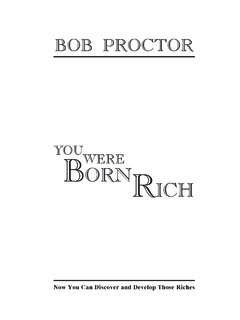
1 Computing in the national curriculumA guide for primary teachersCOMPUTING AT SCHOOLEDUCATE ENGAGE ENCOURAGEIn collaboration with BCS, The Chartered Institute for ITComputing in the national curriculumA guide for primary teachers2 Every effort has been made to trace copyright holders and obtain their permission for the use of copyright materials. The authors and publisher will gladly receive information enabling them to rectify any error or omission in subsequent facts are correct at the time of going to press. All referenced websites were correct at the time this book went to Computing at : Miles : Amanda Jackson, Penny Patterson and Dave Smith of Havering School Improvement design, Typesetting and Cover Design: Burville-Riley : Ron at School are grateful to the following contributors: Phil Bagge, Andrea Carr, Emma Davis, Graham Hastings, Lance G.
2 Howarth, Simon Humphreys, Chris Mairs, Joe McCrossan, Simon Peyton-Jones. Thanks to the children and teachers of Ringwood Infants School and Ringwood Junior School, Ringwood, Abbotswood Junior School, Totton and Gordonbrock Primary School, Lewisham. We would like to acknowledge and thank ARM Holdings and Raspberry Pi Foundation for their kind financial support without which the production of this guide would not have been work is licensed under a Creative Commons Attribution-NonCommercial-ShareAlike Unported License. British Library Cataloguing in Publication CIP record for this book is available from the British : 978-1-78339-143-1 Printed by Newnorth Print, Ltd.
3 Are now part of everyday life. For most of us, technology is essential to our lives, at home and at work. Computational thinking is a skill children must be taught if they are to be ready for the workplace and able to participate effectively in this digital world. The new national curriculum for Computing has been developed to equip young people in England with the foundational skills, knowledge and understanding of Computing they will need for the rest of their lives. Through the new programme of study for Computing , they will learn how computers and computer systems work, they will design and build programs, develop their ideas using technology and create a range of content.
4 But what does this mean for primary schools? How should school leaders be planning for the new curriculum and how can teachers develop the additional skills they will need?The programme of study is expressed in precise but perhaps unfamiliar language. This guide has been written especially for primary teachers, to demystify the programme of study for primary schools. It will enable teachers to get to grips with the new requirements quickly and to build on current practice. It includes help for schools with planning and gives guidance on how best to develop teachers new national curriculum for Computing provides schools with an exciting opportunity to reinvigorate teaching and learning in this important area of the curriculum .
5 We hope this guide will help you on your way. To find out more about Computing At School, please visit us at You will also find an eBook version of this guide there, which can be freely shared with Peyton-JonesChairman, Computing At SchoolForewordContentsIntroduction 4 getting started 5 Subject knowledge 7 Key stage 1 7 Key stage 2
6 10 Planning 14 Starting with the programme of study 15 Starting with projects 16 Using a pre-written scheme of work 16 Using a pupil-centred approach 16 Resourcing 17 Teaching 18 Technologically enhanced learning 20 Inclusion 20 Gifted and talented pupils 21 Informal learning 21 Assessment
7 22 Formative assessment 22 Summative assessment 23 Concluding remarks 26 Glossary 27 Resources 28 Background 28 Subject knowledge 28 Teaching resources and ideas 29 Media 29 Support 30 Background 314
8 Introduction1 Adapted from A curriculum Framework for Computer Science and Information Technology: 2014 national curriculum introduces a new subject, Computing , which replaces ICT. This represents continuity and change, challenge and opportunity. It gives schools the chance to review and enhance current approaches in order to provide an even more exciting and rigorous curriculum that addresses the challenges and opportunities offered by the technologically rich world in which we is concerned with how computers and computer systems work, and how they are designed and programmed. Pupils studying Computing will gain an understanding of computational systems of all kinds, whether or not they include computers.
9 Computational thinking provides insights into many areas of the curriculum , and influences work at the cutting edge of a wide range of disciplines. Why is computational thinking so important? It allows us to solve problems, design systems, and understand the power and limits of human and machine intelligence. It is a skill that empowers, and one that all pupils should be aware of and develop competence in. Pupils who can think computationally are better able to conceptualise, understand and use computer-based technology, and so are better prepared for today s world and the is a practical subject, in which invention and resourcefulness are encouraged.
10 The ideas of Computing are applied to understanding real-world systems and creating purposeful products. This combination of principles, practice and invention makes Computing an extraordinarily useful and intensely creative subject, suffused with excitement, both visceral ( it works! ) and intellectual ( that is so beautiful ).1 The focus of the new programme of study undeniably moves towards programming and other aspects of computer science. Programming has been part of the primary national curriculum right from the start, as control or sequencing instructions , although this has too often been overlooked or treated superficially.