Transcription of County WASD New Biosolids Facts Processing …
1 PROJECT fact SHEETMIAMI- dade County WATER AND SEWER DEPARTMENTNew BiosolidsProcessing Facility PlannedNew BiosolidsThe miami - dade County Water and Sewer Department (WASD) will be issuing a solicitation to design-build-operate (DBO) a Biosolids Processing Facility (BPF). The BPF will be designed to receive and process Biosolids from the North District Wastewater Treatment Plant (NDWWTP), Central District WWTP (CDWWTP), and South District WWTP (SDWWTP). The BPF will allow WASD to produce a higher quality Biosolids product that has greater flexibility in how the material is reused or where it is disposed, thereby lowering disposal costs. It also will provide a solids treatment alternative that is less affected by inclement weather, thus improving operations of all three treatment facilities.
2 The BPF will be located at the SDWWTP, which is at the south end of miami - dade County , near South miami dade Landfill and Black Point Marina. WASD plans to implement the BPF as a DBO project under a public-private partnership (P3). CH2M HILL serves as the design criteria consultant for the project and is not eligible for inclusion on the upcoming P3 solicitation for this Solids ProcessingCurrent operations at the CDWWTP and SDWWTP process solids onsite through gravity thickeners and anaerobic digesters. The CDWWTP also treats solids generated by the NDWWTP, which are pumped to the CDWWTP headworks or gravity thickeners. At the CDWWTP, digested Biosolids are dewatered, then land applied as Class B Biosolids when weather and site availability permit, or disposed in a landfill when there are no available land application sites.
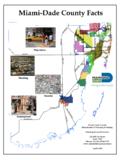
3 At the SDWWTP, digested Biosolids are dewatered by centrifuges prior to Class B land application, composting, or landfill disposal along with grit collected from the SDWWTP. When weather permits, SDWWTP Biosolids are composted onsite using the aerated static pile process, after which the compost product qualifies for Class AA marketing and County WASD Facts Prominence: Largest water and sewer utility in the southeastPopulation Served: million residentsEmploys: 2,500 workersAnnual Operating Budget: $528 millionServices: Water and wastewater to unincorporated miami - dade County , and wholesale water or wastewater to 25 municipalitiesFacilities: Owns and operates three wastewater treatment plantsDRAFTSite Limits for BPFB iosolids Processing Facility LocationThe BPF will be located on the SDWWTP site, including up to 3 acres of an existing paved area that can be made available as a potential site for the BPF if thermal drying is used.
4 If a composting process is used, the operation will be performed at the SDWWTP within the current composting system boundary (Figure 1). If composting is used, WASD and the P3 Provider will negotiate to determine the value, terms, and intended uses of the infrastructure and equipment being provided by WASD and used by the CapacityThe design capacity of the BPF was estimated by projecting historical solids production rates using the 2013 Ocean Outfall Compliance Plan growth projections (WASD, 2013). Based on 5 years of operating data, the SDWWTP and CDWWTP produce dewatered cake at the rate of approximately to dry tons per million gallons of wastewater treated. Both the CDWWTP and SDWWTP have several projects planned to improve digestion and other solids handling processes.
5 With these improvements, the volatile solids reduction achieved in the digesters is estimated to increase to at least 56 percent. Solids projections and capacity FIGURE 1 Current Composting System Boundary at the SDWWTPB iosolids Processing Facility Project Type: Design-build-operate, public-private partnership (P3)Location: SDWWTP 8950 SW 232nd Street miami , FL 33190 Facility Type: Biosolids Processing facilitySchedule: Notice to Proceed issued to the P3 during the 2nd quarter of 2015 Term of Contract: 20 yearsDRAFTFIGURE 3 Projected Annual Average Wet Solids Production for the WTPDSD WTPDWD WTPDBPF Capacity WTPD201520172016201920182021202020232022 2025202420272026202920282030203420332032 2035203120152017201620192018202120202023 2022202520242027202620292028203020342033 2032203520310100200300400500 BPF Capacity WTPDFIGURE 2 Projected Annual Average Dry Solids Production for the BPFS olids Stabilization TechnologiesAnaerobicDigestionPre-Pasteu rization/MADT hermalHydrolisis/MADWASP retreatment/MADE nzymicHydrolysis/MADT hermophillicAnaerobicDigestion inSeriesConvensions(Mesophillic)Anaerobi cDigestionTemperaturePhasedAnaerobicDige stion (TPAD)Two-PhasedAnaerobicDigestion (Acid/Gas)
6 ThermophillicAnaerobicDigestionMesophill icCo-DiegestionMAD/PostAerobicDigestionA naerobicDigestionConventionalAerobicDige stionAuto ThermalThermophillicAerobicDigestion( ATA D )Vertad ProcessAerobic/AnoxicDigestionMicronairA erobicTherophillicPretreatment(ATP)Compo stingWindrowAeratedWindrowVermi-Composti ngOpen AeratedStatic-Pile (ASP)Covered ASPM embraneCovered ASPE nclosed ASPE nclosedAgitated BedAgitated BedBiodryingThermalDryingDirect ThermalDrying (DrumBelt)Indirect ThermalDrying (Paddle,Auger, Disc.)Vertical TrayDryingFlash DryingSolarGreenhouseDryingNeutralizerPr ocess (BCRE nvironmental)Fluidized BedDryingScalpingDryingChemicalStabiliza tionAlkaline (lime)StabilizationEnvesselPasteurizatio n(RDP)LysekSchwing BiosetVitAgHigh TemperatureCombustion/OxidationFluidized BedReactorIncineratorMultipleHearth FurnaceIncinerationSuper-CriticalWet OxidationPyrolysisGasi cationVitri cation(GlassAggregation)of the BPF are based on these improvements being in place and performing as intended.
7 The projected capacity of the BPF in dry tons per day (DTPD) and wet tons per day (WTPD) during its 20-year service period is summarized in Figures 2 and 3. In 2020, new dewatering facilities are expected to be operating at the SDWWTP and producing cake with 22-23 percent dry solids, as compared with 16-17 percent dry solids being produced currently at SDWWTP. This is the reason for a projected decrease in wet solids production in 2020. A new treatment facility, the West District WWTP (WDWWTP), is expected to be in service by 2030 and will manage all its Biosolids separately from the BPF. A predicted diversion of wastewater flows and solids to the WDWWTP is the reason for projected reductions in both dry and wet solids to be managed by the BPF in Alternatives EvaluationSix general technology options for solids stabilization were screened for the BPF: (1) anaerobic digestion, (2) aerobic digestion, (3) composting, (4) thermal drying, (5) chemical stabilization, and (6) high-temperature combustion/oxidation (Figure 4).
8 WASD has FIGURE 4 Technology Alternatives EvaluatedDRAFT decided to maintain and improve its existing anaerobic digestion processes, so options (1) and (2) were eliminated. Chemical stabilization and high-temperature processes also were eliminated because of WASD s concerns with chemical handling and safety. The two preferred and recommended technologies are composting and thermal drying. Several variations of composting may be considered for the BPF. Because of periodic, heavy rainfall in South Florida, a cover over composting and curing areas is required for good operations. The thermal drying process is based on one of the following principles: The materials to be dried are directly exposed to the heat source (direct drying systems) The heat is transferred to the material through a conducting medium (indirect drying systems) Both general types of thermal drying technologies may be considered for the BPF.
9 Heat sources that may be used for thermal drying include natural gas and waste heat from the Cogeneration Facility at the SDWWTP. The WASD intends to identify and use the most cost effective and sustainable of these technologies for the new Facility Waste HeatThere is waste heat available from the SDWWTP Cogeneration Facility, which uses internal combustion engines to produce electricity from biogas produced by the SDWWTP digesters and South dade Landfill. This waste heat is available in two forms, medium-grade heat at approximately 190 degrees Fahrenheit ( F) and high-grade heat at 470 F. The Cogeneration Facility is designed to use gas produced from those two sources. The waste heat produced by the engines is available for other uses. Unused heat is dissipated into the atmosphere or the effluent stream.
10 In 2015, the Cogeneration Facility will have four cogeneration engines (2 MW each) uses of waste heat (for heating the digesters and a chiller) are expected to continue through the 20-year contract term. Table 1 summarizes the estimated available waste heat produced and available to the BPF for startup and design ScheduleThe preliminary project schedule proposes that a Notice to Proceed will be issued to the P3 during the 2nd quarter of ProcessThe procurement process is being conducted under state legislation for P3 (Section , Florida Statutes) and is intended to conclude after an evaluation of proposals by a Competitive Selection Committee with the award by WASD of an Interim Agreement (Phase 1) for planning, development, design, and financing services for the project.